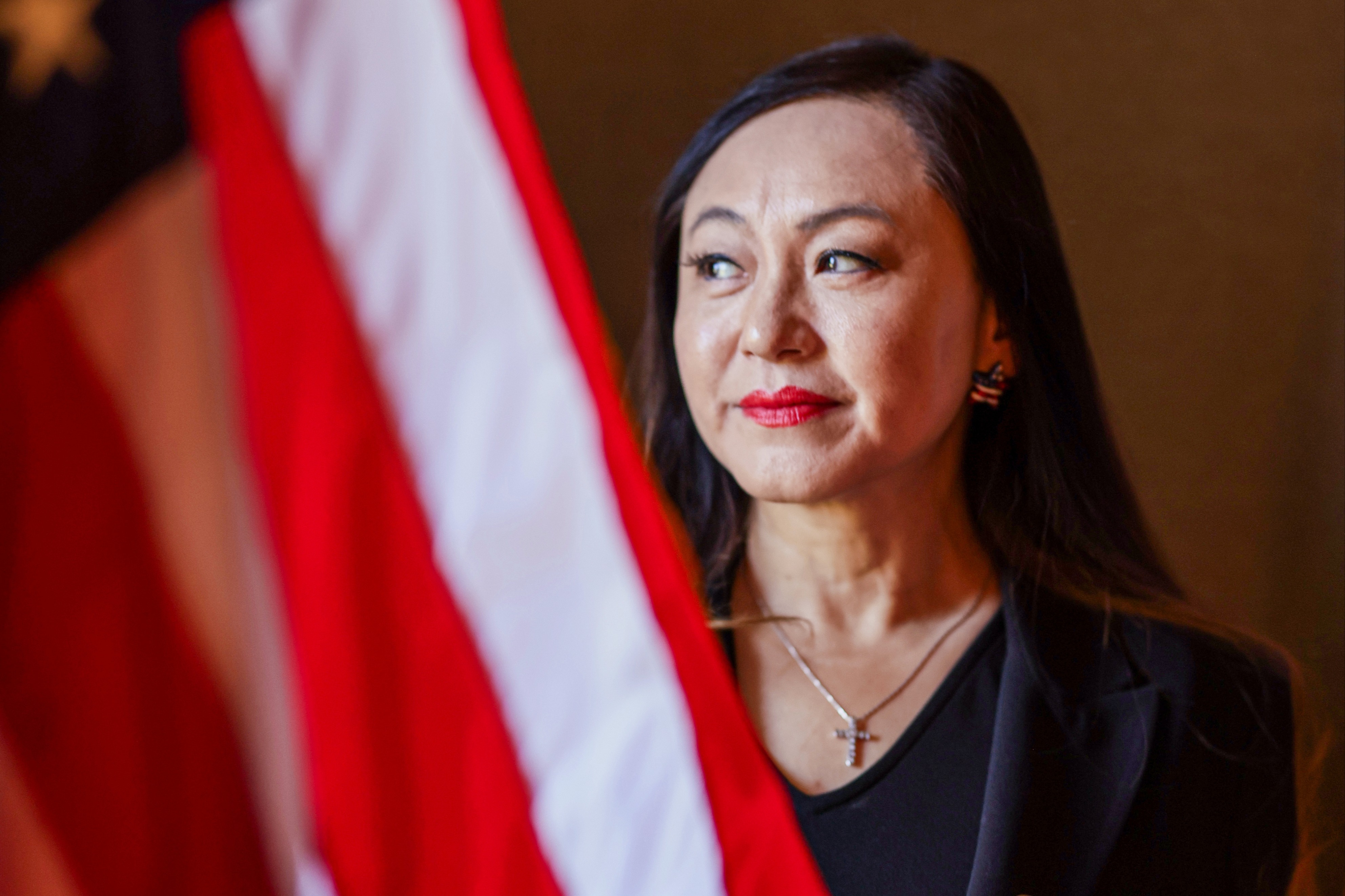
Eileen Wang, the mayor of Arcadia until last week, was forced to resign, pleading guilty to federal charges of acting as an unregistered agent of the People’s Republic of China.
She previously co-ran a fake news site dressed up as a community resource for Chinese Americans.
They copy-pasted propaganda from Beijing handlers — including cheerful denials of atrocities — and bragged about the clicks.
It was almost comically straightforward: Propaganda in, influence out.
That’s the genius — and the gall — of the Chinese Communist Party (CCP) playbook.
Former mayor of Arcadia Eileen Wang acted as an unregistered agent of the People’s Republic of China. AP They don’t need to hack voting machines when they can simply shape what voters read and believe in California’s San Gabriel Valley, the San Francisco Bay Area, or anywhere else they can reach.
Chinese immigrant communities, often tight-knit and linguistically insular, become prime targets for “ethnic media” that look local but march to Beijing’s tune. Gullible populations are exploited because they trust outlets and leaders who speak their language and claim to represent their interests.
When those outlets are secretly directed by a foreign authoritarian regime, trust erodes, one article at a time.
The legal tripwire in these cases is the Foreign Agents Registration Act (FARA). Passed in 1938 to expose Nazi propagandists, FARA demands that anyone acting on behalf of a foreign government register with the Department of Justice, disclose their funding, and label their materials as foreign-directed. It’s a transparency law, not a ban.
But the CCP and its United Front Work Department (UFWD) treat FARA like optional paperwork. Why register when you can launder influence through romantic partners, community websites, and sympathetic officials?
The Eileen Wang case perfectly illustrates how this influence works on the ground. Propaganda doesn’t just float in the ether; it molds perceptions.
Readers absorb Beijing’s version of Taiwan, human rights, US-China relations, Israel, Hamas, Gaza, Iran, Trump, Republicans in Congress — which subtly shifts voter priorities.
That, of course, affects elections — quietly boosting candidates who seem “culturally sensitive” while marginalizing China critics.
Once those candidates win local office, policies follow: zoning decisions, school curricula, sister-city agreements, even resolutions on international issues.
A mayor doesn’t control foreign policy, but he or she can help normalize CCP talking points, and open doors for further cultivation.
Over time, public trust in local institutions frays. If your elected mayor was secretly taking direction from Beijing, who else might be?
Every Chinese American politician suddenly faces extra and unwarranted suspicion, even the loyal ones. That’s the real damage: Generalized distrust that poisons community cohesion.
These operations thrive because local races and community media fly under the radar. A city council seat in Arcadia draws a fraction of the scrutiny of a congressional race. That’s where the CCP plants seeds — and reaps policy concessions or perceptual shifts years later.
The slight chill you should feel isn’t paranoia; it’s pattern recognition.
Neville Roy Singham (a US businessman living in Shanghai) has deep ideological and financial ties to the CCP. He backs a web of far-left groups (People’s Forum, ANSWER Coalition, International People’s Assembly, Code Pink) that organized “Shut It Down for Palestine” (SID4P) protests, No Kings marches, campus encampments, and infrastructure disruptions after the Oct 7, 2023, Hamas terror attack.
Groups received millions from Singham-linked donors and promoted anti-Israel, anti-US messaging that mirrors Beijing’s lines.
The CCP and UFWD exploit genuine activism and leftist networks rather than inventing them.
They weaken US global standing and alliances. They build influence in the deloping world, and the Muslim world. They divide Western societies via polarization.
Prosecutions like Wang’s are big wins, sure. But they also prove the vulnerabilities in local politics and diaspora media remain wide open. Until vetting tightens, Beijing will keep treating America’s officials like soft targets.
Richie Greenberg is a political commentator based in San Francisco.
California Post News: Facebook, Instagram, TikTok, X, YouTube, WhatsApp, LinkedInCalifornia Post Sports Facebook, Instagram, TikTok, YouTube, XCalifornia Post Opinion California Post Newsletters: Sign up here!California Post App: Download here!Home delivery: Sign up here!Page Six Hollywood: Sign up here!