Keith Speights, The Motley Fool Sun, November 8, 2026 at 5:04 AM EST 3 min read CME -0.34% NVDA +3.91% Explore stocks on Coinbase Trading disclosure Trading disclosure The above button links to Coinbase. Yahoo Finance is not a broker-dealer or investment adviser and does not offer securities or cryptocurrencies for sale or facilitate trading. Coinbase pays us for certain activity generated through this link. Prices displayed are informational.
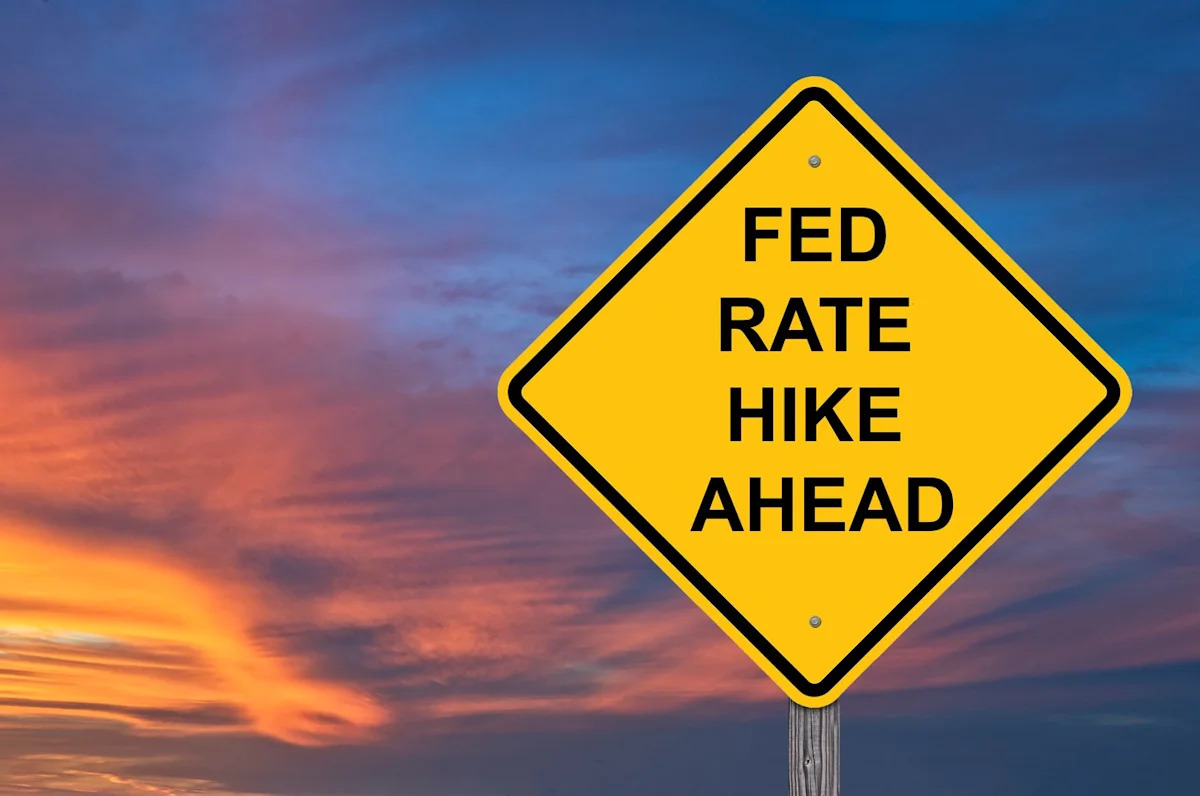
Kevin Warsh has already presided over one Federal Reserve rate hike during his first few months as Fed chair. And now another rate increase could be on the way.
The Federal Open Market Committee (FOMC) voted to leave the federal funds rate unchanged at its October meeting. However, CME Group's (NASDAQ: CME) FedWatch projects an 81.2% probability of a rate hike at the committee's December 2026 meeting.
Missed AI's "Act 1"? Act 2 Could Be 16x Bigger. Most investors think they missed the AI boat because they didn't buy Nvidia in 2005. But according to our analysts, we're only at the end of "Act 1"—the R&D phase. "Act 2" is the global rollout. Continue »
This likelihood of a second rate increase raises a key question for investors: What should I do? History has four good answers to that question.
Investors could be tempted to run for the hills and sell all or most of their stocks. History shows that's a really bad move.
The S&P 500 (SNPINDEX: ^GSPC) has risen by an average of around 9% over the 12 months following a new rate-hike cycle, according to research conducted by Goldman Sachs (NYSE: GS). Granted, the index initially declined by roughly 2% on average during the first three months after the first rate increase of a cycle. But selling stocks en masse early in a rate-hike cycle would have usually cost investors in the past.
Some stocks outperform others in environments with rising interest rates. History shows that focusing on the most promising sectors can pay off.
For example, energy stocks were the clear winner during the Fed's last major series of rate hikes from March 2022 through July 2023. The State Street Energy Select SPDR ETF (NYSEMKT: XLE), which owns shares of 21 energy sector leaders, jumped around 18% during the period. Oil and gas giant ExxonMobil (NYSE: XOM) and pipeline stock Energy Transfer LP (TXSE: ET) delivered even higher returns.
For investors who own bonds, shifting from long-duration to short-duration bonds is practically a no-brainer. When interest rates rise, bond prices tend to fall. Longer-duration bonds get hit the hardest. The good news is that you can buy a short-term U.S. Treasury bond that's essentially risk-free and get a yield north of 4% right now.
As important as the FOMC vote in December is, it's even more important for investors to read between the lines with the Fed's actions. The trick to doing this is to analyze the updated dot-plot projection, a chart that shows how individual FOMC participants expect short-term interest rates to move.
In particular, pay attention to how aggressively policymakers expect rates to increase. Goldman Sachs' research found that especially rapid rate hikes have led to worse stock market performance in the past.
In 2009, a "Double Down" signal flashed for a little-known chipmaker called Nvidia. If you'd invested $5,000 then, you'd be sitting on $2,426,128 today.*
Now, for the first time in years, that same "Total Conviction" signal is flashing for a company 1/100th the size of Nvidia. It's a key player in the $1.8 trillion space race, and with the stock recently sitting 20% off its highs, the window to get in early is closing fast.
*Stock Advisor returns as of November 8, 2026.
Keith Speights has positions in Energy Transfer and ExxonMobil. The Motley Fool has positions in and recommends CME Group and Goldman Sachs Group. The Motley Fool has a disclosure policy.
Markets Are Pricing in a Fed Rate Hike in December. Here's What Investors Should Do, According to History. was originally published by The Motley Fool