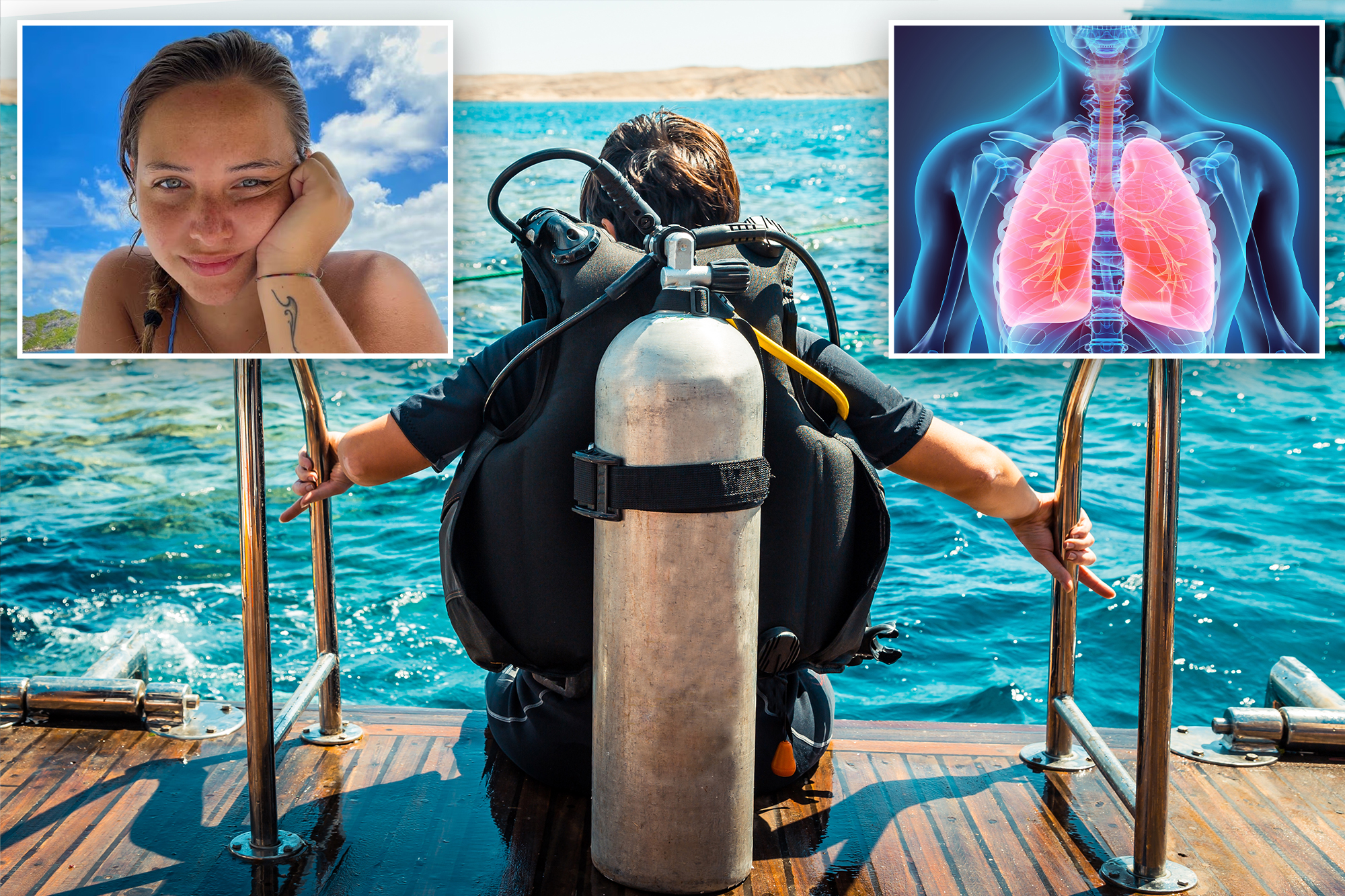
What began as a daring scuba adventure in the Maldives ended in horror this week after five Italian tourists never resurfaced from a deep-water cave expedition.
Officials are scrambling to determine what went wrong during the 160-foot dive, as theories swirl over whether powerful currents, rough weather, panic or even the terrifying effects of oxygen toxicity triggered the deadly tragedy.
“It’s likely that something went wrong with the tanks,” pulmonologist Claudio Micheletto told Italian outlet Adnkronos on Thursday after all five divers perished during the fatal excursion.
“Death from oxygen toxicity, or hyperoxia, is one of the most dramatic deaths that can occur during a dive — a horrible end,” added Micheletto, director of pulmonology at the University Hospital of Verona.
Among the victims were Monica Montefalcone, a marine biology professor at the University of Genoa, and her 20-year-old daughter, Giorgia Sommacal.
Muriel Oddenino of Turin, Gianluca Benedetti of Padua and Federico Gualtieri of Borgomanero were also among the victims.
As investigators search for answers, here’s everything to know about oxygen toxicity.
In simple terms, it’s too much oxygen becoming dangerous.
Humans are built to breathe air containing about 21% oxygen. But when someone breathes oxygen at unusually high concentrations or under intense pressure for too long, it can become toxic to the body, according to UMass Memorial Health.
That happens because excess oxygen creates an overload of unstable molecules known as “free radicals.” Normally, the body can neutralize them with antioxidants. But when too many build up too quickly, they begin damaging cells and tissues.
Doctors generally divide oxygen toxicity into two forms:
Scuba diving is one of the main ways the condition can strike.
Most divers breathe compressed air from tanks made up of roughly the same mix as the air on land — about 21% oxygen and 78% nitrogen. But underwater, pressure changes everything.
The deeper a diver descends, the more pressure the body is under, making oxygen far more potent than it is at the surface.
Some experienced divers also use special gas mixes with higher oxygen levels to stay down longer. But those blends can turn toxic even faster if the depth or conditions aren’t carefully controlled.
Oxygen toxicity can also happen in medical settings.
Patients receiving hyperbaric oxygen therapy — sometimes used for conditions like decompression sickness, severe infections or carbon monoxide poisoning — breathe nearly pure oxygen inside a pressurized chamber. It can be life-saving, but too much exposure under pressure can become dangerous.
It can also occur in ICU patients on ventilators or in premature babies given high levels of oxygen for long periods. In those cases, it more often causes lung damage rather than the sudden neurological effects seen in deep diving.
The warning signs depend on which type of oxygen toxicity a person develops.
Pulmonary oxygen toxicity can cause chest pain, coughing and difficulty breathing as inflammation damages the lungs and airways. In severe cases, parts of the lung can collapse.
Central nervous system oxygen toxicity is far more sudden — and especially terrifying underwater.
Symptoms can include tunnel vision, ringing in the ears, confusion, dizziness, vertigo, nausea, numbness, muscle twitching and even violent, sudden seizures.
“During the dive, dizziness, pain, altered consciousness and disorientation occur, making it impossible to surface,” Micheletto said.
For divers experiencing symptoms of central nervous system oxygen toxicity, the first step is a slow, controlled ascent to reduce oxygen pressure in the body.
If they are using oxygen-rich gas blends such as Nitrox, switching to a lower-oxygen mixture is also helpful.
Most symptoms improve once the diver returns to breathing normal air at lower pressure. But if the condition progresses to a seizure underwater, fatal drowning can happen within moments.In a medical setting, patients who develop pulmonary oxygen toxicity are typically treated by reducing or stopping exposure to high oxygen levels.
While permanent damage is uncommon, lung recovery can take weeks. In more serious cases, a chest tube may be needed if a lung collapses.