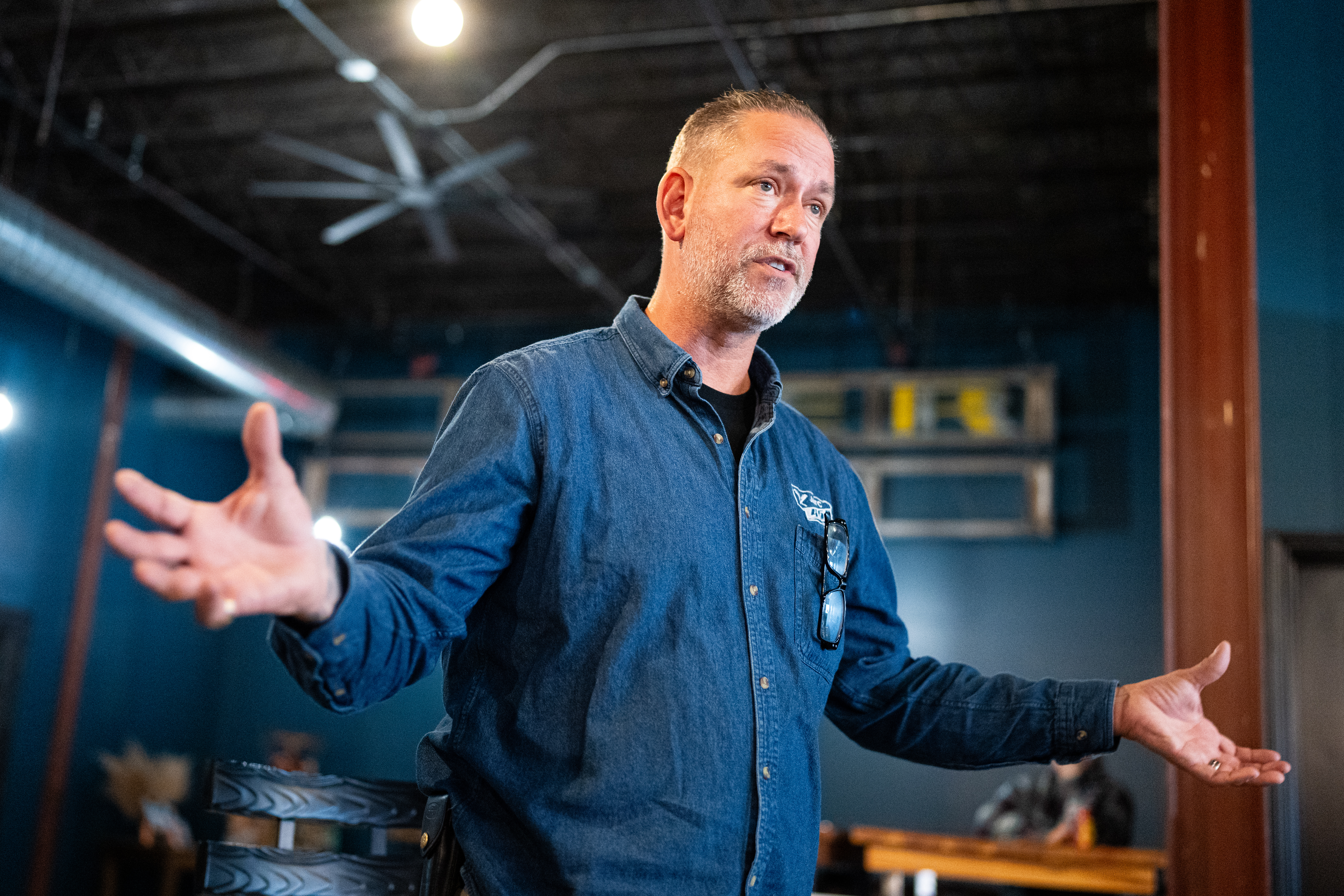
Dan Osborn is running for Senate in Nebraska as an independent candidate. Bill Clark/CQ-Roll Call, Inc via Getty Images In my home state of Montana, former University of Montana President Seth Bodnar is running for the US Senate as an “independent.”
In Nebraska, the Democrat who won the party’s primary for US Senate this week plans to drop out of the general-election race and throw her support to “independent” Dan Osborn.
This rapidly developing trend in Republican-heavy states is not about independence: It’s about big-government policies being deliberately repackaged for voters who have grown skeptical of the liberal brand.
And the left is using party labels to mask what should be a genuine debate about policy direction.
In American politics, the core divide still revolves around the size, scope and role of government.
Conservatives generally argue for decentralization, lower taxes, lighter regulation, domestic energy production and more decision-making authority at the state, local, family and individual level.
Liberals generally place greater trust in federal programs, centralized regulation, subsidies, mandates and national administrative solutions to social and economic problems.
Those governing philosophies have not disappeared — but increasingly, the labels surrounding them are being manipulated.
In 2024, Nebraska offered an early example of the strategy.
Leftists there knew their party label had become a liability in the conservative state, so when Republican Sen. Deb Fischer came up for re-election, Democrats and aligned organizations effectively cleared the field for Dan Osborn, a labor organizer and US Navy veteran, to run as an independent candidate.
Osborn didn’t call himself a Democrat, but he still backed the same liberal policies and benefited from the same left-wing organizations and infrastructure that a Democratic Party candidate would have used.
He lost by 7 points, but outperformed expectations — so now he’s running again, this time against GOP Sen. Pete Ricketts.
And as Nebraska Democrats reprise the model, this strategy of deception is expanding to other conservative states.
In Montana, “independent” Bodnar is being backed by the same political machine voters rejected in 2024, when they ousted Democratic Sen. Jon Tester.
Tester himself is supporting Bodnar, and Barack Obama campaign manager Jim Messina is volunteering for Bodnar’s campaign
What’s more, Bodnar is using ActBlue — the fund-raising platform that powers liberal candidates nationwide.
It’s helped him raise roughly $1.4 million in the first quarter alone, more than the total raised by every declared Democrat in the race combined.
That kind of money, infrastructure and political alignment doesn’t happen by accident.
The logic behind this emerging Democratic strategy is straightforward: In places where voters consistently reject their political brand, they’ll keep the policy agenda and modify the presentation.
If it works, these new red-state “independents” — like Sens. Bernie Sanders of Vermont and Angus King of Maine — would caucus with the Democrats in the Senate and count toward the party’s hoped-for big-government majority.
In states like Wyoming, Nebraska and my own Montana, leftists are increasingly deploying this tactic at the state level — and it’s paying dividends.
In Montana’s last legislative session, so-called “independent-minded” Republican legislators, supported by much of the same national liberal infrastructure, helped the liberal minority pass massive government programs, including Obamacare’s Medicaid expansion and a left-wing property tax scheme that would make California blush.
Party labels have historically given voters insight into a candidate’s likely approach to policies.
Now that shorthand is intentionally being manipulated.
Red-state leftists are softening the label, distancing themselves from the national party brand and campaigning as outsiders — with every intention of then implementing the very policies voters thought they were rejecting.
So Americans need to look beyond the labels.
They must demand honest answers about whether a candidate believes in the Founders’ vision of self-government, individual liberty, and local control — or in the centralized, top-down approach of the modern political left.
And they deserve to know exactly who candidates will align with if they get into office.
We can’t let false branding shield the left from accountability.
Jesse Ramos is a senior advisor for Americans for Prosperity Action and former Missoula, Mont., city councilman.