A progressive cult-like movement known as Effective Altruism (EA) has embedded over 80 journalists in mainstream newsrooms to spread its ‘philosophy,’ a Post investigation can reveal.
The billionaire-backed movement aims to solve the world’s problems, but believes government welfare and foreign aid is inefficient and easily corrupted and that unchecked AI will destroy us all. Their beliefs can be summed up as:
Put more simply, the core of EA is that the billionaires who fund it — notably Facebook co-founder Dustin Moskovitz, LinkedIn co-founder Reid Hoffman and Skype founder Jaan Tallinn — know best, and better than any government.
“Effective Altruists want to be Superman saving the world. They often take dangerous shortcuts to solving very hard problems. And their fatal flaw is their egoism,” Stanford University philosophy professor Leif Wenar told The Post.
“If it’s all about you, then you’re not really an altruist and you won’t be effective at helping other people, much less the whole human race.”
To spread their message the group has the Tarbell Center for AI Journalism — funded in part by EA foundations — which pays full salaries of journalists placed inside such newsrooms as Time, Bloomberg, MIT Technology Review and The Guardian, NBC News and The Verge.
Tarbell states on its website the journalists it funds are impartial, saying: “Our donors have no editorial control over the work of Tarbell, our fellows, or our grantees.”
New York Times superstar columnist Ezra Klein has maintained deep, longstanding ties to EA and its billionaires, and even uses his widely read NYT column to solicit donations to them.
The movement boasts over 45 chapters around the world with an entity known as the Center for Effective Altruism coordinating money movement, chapters management and networking events.
Critics charged toThe Post that EA is a calculating, smug nerd clique that prioritizes numbers over lives while protecting the power of those with the fattest wallets.
“Effective Altruism is really an extended version of globalism. It takes away building relationships with your neighbor, that impulse to give locally that is really important to humans flourishing,” Rebecca Richards, senior director at charity org Philanthropy Roundtable, told The Post.
“I think the real end of philanthropy is not just about survival, but how do you live a good life?” she added.
While the EA community around feel they are serving a noble cause and setting humanity on what they see as the right path, University of Chicago philosophy professor Brian Leiter sums up the view of himself and others who see it as a tax dodging scheme to siphon welfare resources from the state, which means some of its harshest detractors hail from the far left.
“Tech bros eat this up,” Leiter told The Post. “[With EA] there’s no talk about higher taxes, redistribution to a more progressive income tax, anti-trust investigations or more regulation of their businesses. That’s why they love it.”
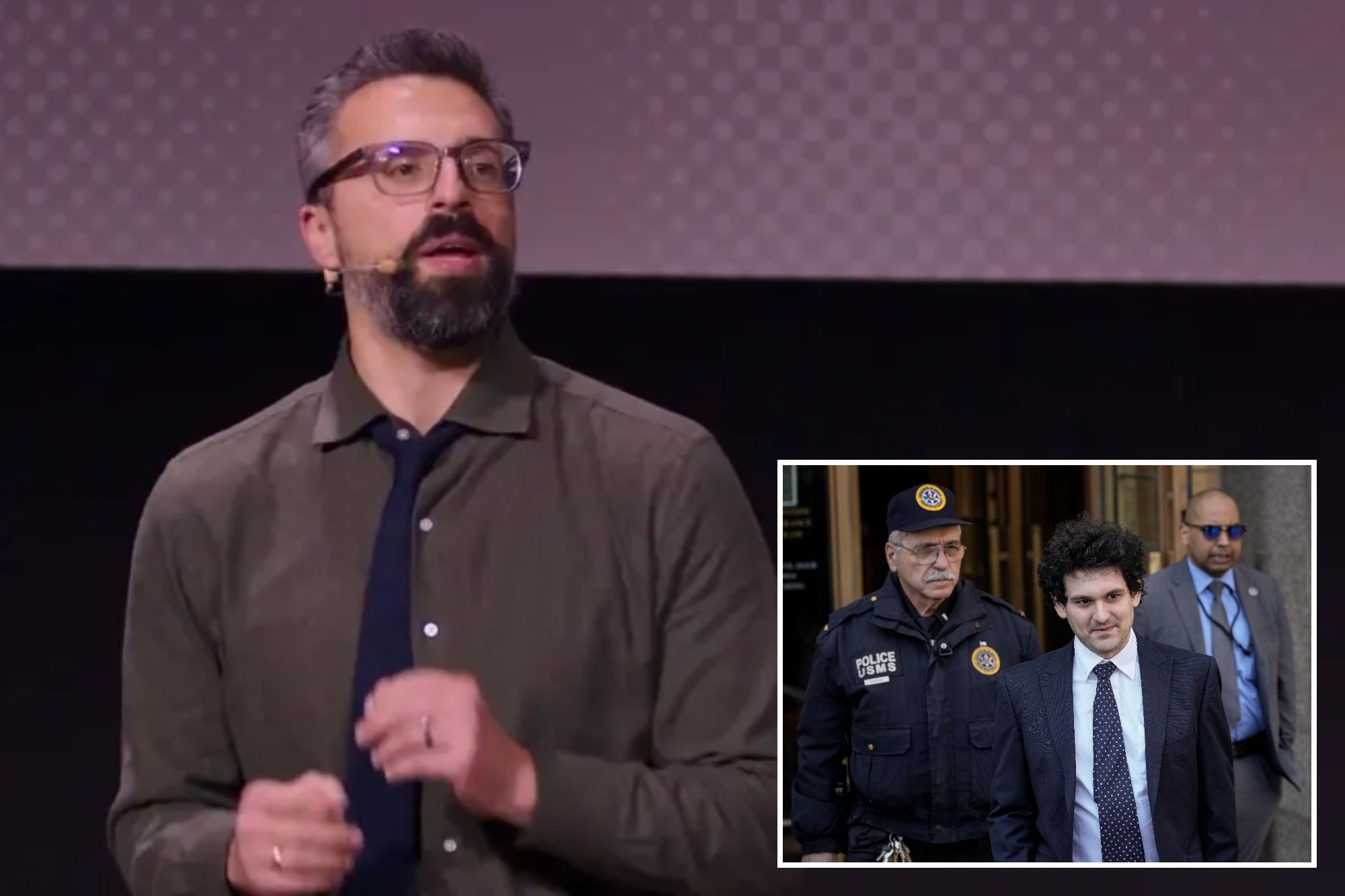
Of course, it doesn’t always work out. In 2024 the largest single benefactor to EA and most prominent public face, Sam Bankman-Fried, was sentenced to 25 years in prison for orchestrating one of the biggest financial frauds in US history, swindling billions from investors through his now defunct FTX cryptocurrency exchange.
Bankman-Fried’s defense in court centered around the idea he made the choices he did because he was trying to be more of an Effective Altruist and do the most good for the world.
The movement was founded by philosopher Peter Singer in the 70s and popularized by University of Oxford philosopher William MacAskill in the 00s. Effective Altruists are instructed to pursue careers to make as much money as possible — then commit to giving ten to 50 percent of their salaries to EA-approved causes and organizations.
That’s not quite how the movement was envisioned, said Leiter.
“Singer basically thinks that people ought to give away most of what they earn above what’s necessary for the basics of their life. The basics of life do not include a private jet and $40 million mansion. So, some of these guys have got a lot of giving left to do.”
EA offshoots proliferated in the wake of the Bankman-Fried scandal with names like “longtermism,” “progress studies” and the “Abundance movement.”
The podcast sphere remains riddled with EA aligned pundits such as atheist blogger Sam Harris, “Rationally Speaking” host Julia Galef and “80,000 Hours” hosts Robert Wiblin and Keiran Harris. Hollywood actor Joseph Gordon-Levitt has also headlined EA events.
“If you think of the world as solvable by algorithms, as something to operationalize, make more efficient, and as something to create more money, you’re going to think this is really attractive,” Rebecca Richards, senior director at charity org Philanthropy Roundtable, told The Post.
Microsoft co-founder Bill Gates — through his vast philanthropic tentacles which extend to everything from vaccines to education to agriculture — has served as model for the movement, while not personally identifying with it.
X Corp boss Elon Musk, while sharing a similar strain of techno-optimism, is not a follower or funder of the movement.
In a March 2021 appearance on the EA-funded “80,000 Hours” podcast Klein explicitly called for private foundations to pay for dedicated reporters inside traditional newsrooms, especially to cover issues like AI.
“I think foundation funding is good. I like the model of trying to build institutions inside institutions,” he said.
Control over AI is a top EA priority and panic point. Adherents fret over scenarios like AIs that hide their true capabilities until they achieve enough power to eliminate humanity.
As well as The Tarbell Center for AI Journalism, the Center for Effective Altruism also endorses two other programs sponsoring reporters: The Pulitzer Center’s AI Accountability Network, largely funded by George Soros, and Omidyar Network’s Reporters in Residence, part of eBay founder Pierre Omidyar’s philanthropic network.
All of the programs say their reporters are impartial, but while they frequently criticize AI they also frequently endorse the company closest to the EA movement: Anthropic.
Anthropic founders Dario and Daniela Amodei came up through the EA world getting early, significant funding from EA investors including Tallinn and Bankman-Fried. Today the San Francisco-based company is worth $183 billion — with major investors including Amazon and Google as well as BlackRock and Blackstone. They have since claimed they no longer receive funding from EA foundations.
However, Omidyar’s network stated in 2024 it had bought shares in Anthropic.
EA’s entrenchment goes well beyond newsrooms. Democrat mega doner Moskowitz even installed EA followers in President Joe Biden’s administration — paying the salaries of a group of aides in the White House’s National Security Council, the Pentagon and the Department of Commerce, The Post previously reported.
Poster boy Klein raised eyebrows at the New York Times last year when he attended a secret retreat for Senate Democrats advising them on how EA can work for the embattled party. He reportedly gave lawmakers a private briefing shortly after the release of his bestselling book “Abundance,” which “challenges liberals to create a more dynamic and prosperous society by cutting regulations and embracing new technologies,” as Axios put it.
Klein also uses his New York Times column to encourage donations to a charity called GiveWell—a partner of Moskowitz’s Coefficient Giving—that describes itself as “helping people in need as much as we can by researching the most cost‑effective ways to save and improve lives.”
“I give to GiveWell’s charities every year, and while that’s not the whole of my giving, that’s the part I feel most confident about,” Klein wrote in 2022 NYT column of the charity, which received over $175 million from Moskowitz this year alone.
Klein, Anthropic and the journalism programs did not respond to requests for comment from The Post. In a statement, a NYT spokesperson did not address questions about ethics and impartiality but said, “Our opinion staff can recommend ideas for charitable giving.”
After another of Moskowitz’s ventures, Coefficient Giving, gave more than $50 million to UC Berkeley for EA-aligned priorities, Klein landed a speaking gig there, where he charges up to $70,000 to give a 45-minute talk, according to leaked records from his agency.
Klein’s connection to the movement goes back to at least 2014, after he started his news explainer website Vox which has long received money from EA-aligned groups.