play Live Sign upShow navigation menuplay Live Click here to searchsearchSign upFeatures|Al JazeeraZimbabweans lured into Russia’s war as families plead for their returnFamilies call on governments in Moscow and Harare to secure the return of loved ones from Ukrainian front lines.
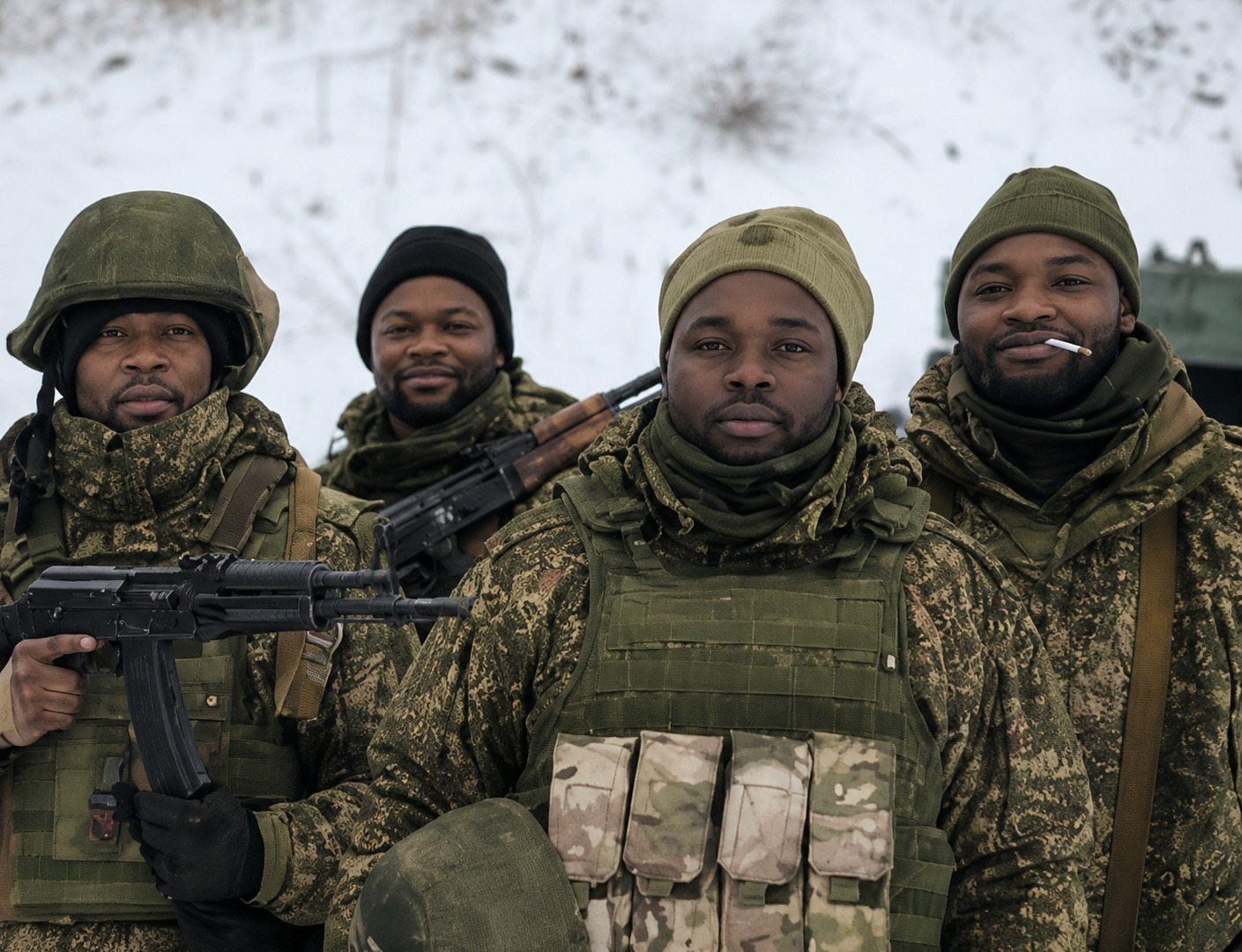
xwhatsapp-strokecopylinkgoogleAdd Al Jazeera on GoogleinfoZimbabweans trafficked to Russia are being forced to fight in its war in Ukraine [Ezra Sibanda/Al Jazeera]By Enos DenherePublished On 14 May 202614 May 2026Harare, Zimbabwe – Elvis Sitshela remains deeply unsettled by the sudden departure of his brother, Dumisani, to Russia in early 2026. Dumisani left in complete secrecy, without telling the family, until a shocking text arrived from an international number.
“Hi, brother, I am in Russia now. It’s me, Dumisani,” recalled Elvis, who requested his real name be withheld for safety.
“He was unemployed for a long time and tried to settle in South Africa, but it didn’t work out; he returned home last December. By January, he was gone,” Elvis said.
Weeks later, the family received more troubling news: A neighbour who had travelled with Dumisani was killed in Ukraine, where Russia has been waging a full-scale war for the past four years.
“I am appealing to the Zimbabwean and Russian governments to work together to bring our brothers home,” he added, urging officials in Harare and Moscow to act before it is too late.
In late March, four people appeared before Harare Magistrates’ Court facing human trafficking charges.
The group is accused of sending Zimbabweans to Russia, where the victims were allegedly forced to participate in Moscow’s war on Ukraine.
The accused – Obert Hlavati, Tonderai Maphosa, Tanaka Malcon Gwarada, and Edson Dudzayi Nyamudeza – were not asked to plead during their appearance before Magistrate Jessi Kufa.
According to the prosecution, the four conspired with a Russian national named Ivan to traffic six Zimbabweans to Russia.
Separately, a few days ago, security officials at the Joshua Mqabuko Nkomo international airport intercepted two brothers attempting to board a flight to Russia. Although the pair claimed they were travelling to attend a university open event in Moscow, authorities grew suspicious and prevented them from leaving.
While these incidents remain isolated, the larger problem persists: Zimbabweans continue dying in Russia’s war.
Elvis’s plea to the Zimbabwean and Russian governments to bring his brother home comes as Zimbabwean authorities confirm that a growing number of citizens have died while serving with Russian forces.
Government spokesperson Nick Mangwana said Harare is working to repatriate four citizens killed in Ukraine.
“Zimbabweans have been trafficked as foreign fighters. Eighteen have died abroad, yet the government can repatriate only four; the others are held up by documentation problems,” Mangwana said on X.
Minister of Information Zhemu Soda blamed predatory employment agencies that promise high salaries and secure work to lure desperate job seekers into conflict zones.
Zimbabweans have been trafficked as foreign fighters. Eighteen have died abroad, yet the government can repatriate only four; the others are held up by documentation problems
by Nick Mangwana, government spokesperson of Zimbabwe
“Our citizens are being preyed upon by unscrupulous networks who operate with complete disregard for human life,” Soda told a news briefing in Harare on March 25. He warned that traffickers use social media to target young people.
Former Senator Tshepiso Helen Mpofu urged people to be cautious of job advertisements circulating online.
“Our young people must verify opportunities before applying, especially those abroad, and not fall for schemes that promise wealth or stability,” Mpofu said.
She called on the government to focus on economic empowerment and genuine job creation while engaging Russia to prevent citizens from being exploited in military service.
“Upon arrival in Russia, recruits are reportedly met by men in military uniform. They are placed on buses and taken to army barracks, where the process quickly turns dangerous,” explained veteran journalist Ezra Sibanda, whose investigation into recruitment networks gained traction in early March.
“At the barracks, they are processed, fingerprinted, and pressured into signing military contracts. Their passports and phones are confiscated, and they undergo brief training lasting 10 days to a month,” Sibanda said.
Through live Facebook broadcasts, Sibanda confronted Zimbabweans on the front lines and their alleged recruiters. His investigation revealed a sophisticated cross-border network that lures recruits with financial incentives, targeting those struggling economically.
“A Zimbabwean known as ‘Tshaka the Zulu,’ originally from the Matobo region and formerly based in South Africa, is operating out of Moscow, alongside a Russian national known as ‘Poma’,” Sibanda told Al Jazeera.
“They are the ringleaders. Their networks across Zimbabwe and South Africa are secretive and decentralised, making it nearly impossible to determine how many people have been sent to the front lines.”
Sibanda noted that the network’s activities are contributing to the continuing casualties among Zimbabweans deployed abroad.
Efforts by Al Jazeera to reach “Tshaka the Zulu”, “Poma”, and other alleged recruitment agents in Zimbabwe and South Africa were unsuccessful, with multiple calls and text messages going unanswered.
Sibanda noted that Zimbabweans, particularly those living in South Africa, are being enticed by life-altering sums, a reported sign-on bonus of up to $37,000, followed by monthly wages of approximately $4,000.
However, the job advertisement is often a deadly bait-and-switch. Some believe they are joining the military; others are misled into thinking they will work as truck drivers or in construction, only to discover the truth once it is too late.
“Most of the promises made to them are not fulfilled. In some cases, a small amount, around $2,000, is reportedly sent to their families back home via South Africa, but thereafter, many receive nothing further,” Sibanda added.
Recognising the urgency, Sibanda began engaging the Zimbabwean government directly.
The impetus came from the soldiers themselves, he said. Multiple Zimbabweans stationed on the front lines had reached out to him with a desperate request to see if their government could intervene and help them return home.
“I have engaged the government of Zimbabwe on this matter and am happy with their positive response,” said Sibanda.
“They have shown interest to assist, and are currently working on compiling details of Zimbabweans who may have been recruited into these mercenary operations linked to the Russian army, so I will provide them to the authorities,” he said.
“It is important to note that many of these individuals left to join without the knowledge or approval of Zimbabwean authorities. The situation is further complicated by the fact that recruitment is reportedly taking place in South Africa, making it difficult for the government to monitor or protect its citizens, as there is no clear oversight or record of the agencies involved.”