F1 CorrespondentPublished44 minutes agoFormula 1 is in the midst of two parallel sets of engine discussions, both important for the future of the sport.
The more immediate one is to find a short and medium-term fix for some of the problems that have arisen with the new engines introduced this year.
This one needs an answer within a couple of weeks or so if changes are to be made in time for next year. These discussions are well under way.
The other one is longer-term - what sort of engine should be introduced when the regulations change again in four or five years' time?
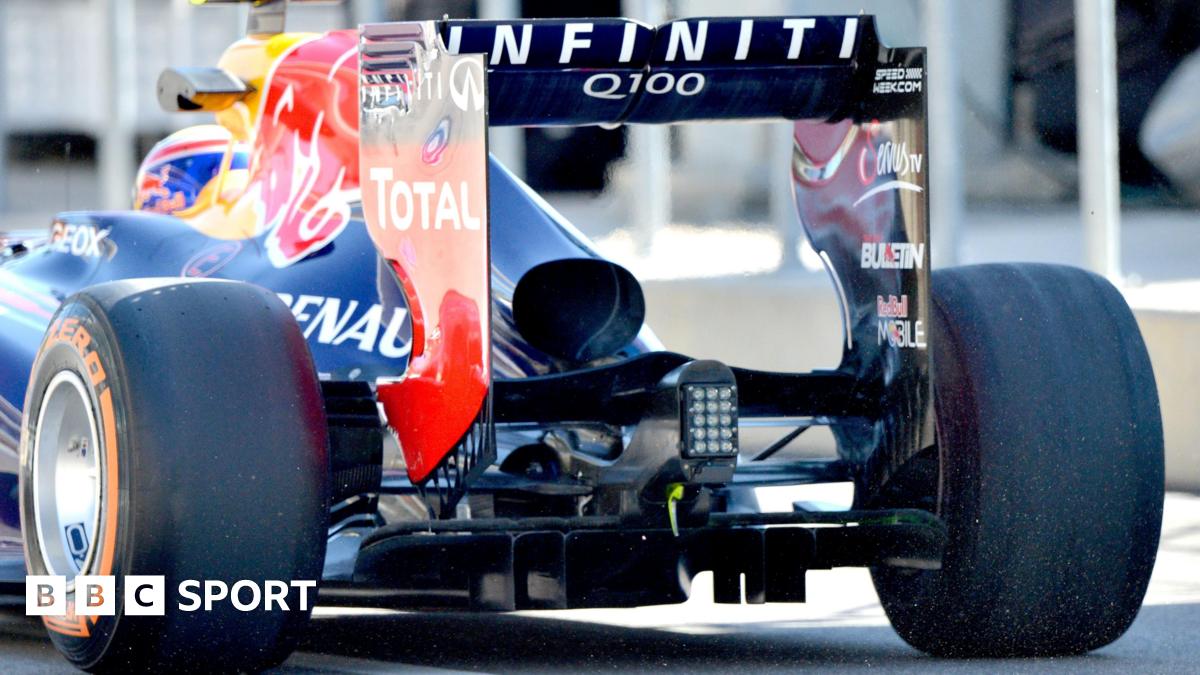
Mohammed Ben Sulayem, the president of governing body the FIA, is pushing the idea of a return to a naturally aspirated V8, with a token hybrid system - essentially the rules F1 last had in 2013.
But why take what appears to be a step back to the past that still runs counter to the direction of road-car technology, even if the transition to electrification is taking longer than was expected a few years ago?
There is widespread agreement across F1 that the sport has dropped the ball with the new set of engine regulations, even if no-one is quite saying it in public.
There are positive aspects to the new style of racing and the increased number of overtaking manoeuvres, and the television viewing figures are encouraging - the first three races all showed significant audience increases.
But it is accepted that the impact of the excessive need for energy management on the purity of the driving experience, especially in qualifying, needs to be addressed.
On a philosophical level, this has changed what it means to be an F1 driver - and not in a way anyone who understands the sport thinks is positive.
The fundamental problem is that the nominal 50-50 energy split between internal combustion and electrical power with the current engine architecture does not work without major compromises.
Looking forward, the next set of engine regulations are not due to come into force until 2031. The contracts that bind the teams, commercial rights holder F1 and the FIA together - the so-called Concorde Agreement - run out at the end of 2030.
In theory, that means Ben Sulayem can impose any engine rules he wants in 2031, as the current governance processes don't exist then. And he is using that threat to try to bring forward the change he wants to 2030. "It is happening," he says, "but of course consultation is needed."
Ben Sulayem could act unilaterally, but that risks the departure of one or more manufacturers - which would be a bad look given the new rules attracted three new companies, Audi, Ford and General Motors, and persuaded another, Honda, to reverse a decision to quit.
Sources say that stakeholders are open to discussing both a reduction in the amount of electrification and a change to the internal combustion engine, which is currently a 1.6-litre V6 turbo.
The carbon-neutral sustainable fuels introduced this year would be retained, fending off any accusations about increased emissions from engines that would require substantially more fuel.
Where problems started with 2026 rules & calendar congestion - F1 Q&A
The weight argument fits in with a general sense the cars are too heavy - even after the 30kg or so reduction this year.
The current power-units weigh 185kg, including the engine, turbo, electrical components and battery. The 2.4-litre V8s used in 2013 weighed 130kg, including the small kinetic energy recovery systems used then and batteries. The internal combustion engines themselves weighed just 95kg.
However, in 2026, F1 cars start a grand prix with just 90kg of fuel. In 2013, that number was 160kg. Without the hybrid aspect, an engine would be lighter again, but would need even more fuel.
So an F1 car in 2013 had a total race-start weight about 15kg heavier than now. But this number would at the end the race - and in qualifying - be about 55kg less than now.
The total car weight cannot be compared because of the increased mass of the modern safety systems, such as the halo head-protection structure.
A smaller, simpler engine could also allow chassis to be slightly narrower and lighter, insiders say.
Image source, Getty ImagesImage caption, F1 boss Stefano Domenicali (right) is open to the return of V8s, which FIA president Mohammed Ben Sulayem (left) wants to see implemented by 2030 or 2031
Ben Sulayem is also arguing that a return to the dramatic, loud noise created by the V8s - and the V10s before them - would be popular.
On the one hand, there is unquestionably a portion of the audience that say they prefer the louder, more strident noise of the naturally aspirated engines that were used in different capacities and displacements by F1 from 1989 until 2013.
However, there is no data or research to prove how big that part of the audience is. Only anecdotal evidence which is far from conclusive.
The flip side is a whole generation of fans have become involved in F1 since turbo hybrids were introduced in 2014.
And the engines have existed while there has been a significant increase in growth since Liberty Media bought the commercial rights in 2017 and opened up social media and introduced the Netflix Drive to Survive series, among other changes.
Maybe noise is a big deal. Maybe the majority would prefer really loud engines. But without conclusive research, it's just a guessing game - and one in which F1 risks, not for the first time, taking a wrong step because it failed to undertake rigorous analysis.
The fans and corporate guests who have come to the sport in the past 12 years have no conception what it is like to attend a race where they cannot hold a conversation while the cars are on track, and have to wear ear protection.
And after more than a decade and a half of quieter engines, significantly louder ones would threaten the existence of some of the races that are held in city centres - especially the ones in Miami, where F1 had to give guarantees about noise levels to land the race, Las Vegas, Singapore and even, sources say, Monaco.
These are some of the most important races to F1 on a commercial basis on the calendar.
Ben Sulayem addressed this issue by acknowledging that under his proposals an engine would need to rev high to produce the necessary power, but that because there was a risk that the noise that created would be "annoying to young kids", engine speeds could not be more than 15,500-16,000rpm.
There has been talk that mufflers could be used if the engines were considered too loud, despite the obvious logical inconsistency of that as an approach.
In general, the manufacturers seem not opposed to the idea of changing the engines, nor to the principle of switching to a V8.
This is important, because Ben Sulayem was outflanked by the manufacturers when he last tried switching to a naturally aspirated engine, a V10, a little over a year ago.
There is also general agreement on the need to reduce costs after the expense of developing the latest engines.
But there is no agreement on exactly what the architecture of the engine will look like.
Mercedes have said they are "open" to discussions, and their F1 boss Toto Wolff said in Miami that they "loved V8s".
But Wolff also added: "How do we give it enough energy from the battery side to not lose connection to the real world? Because if we swing 100% combustion, we might be looking a bit ridiculous in 2031 or 2030. So we need to consider that, make it simpler and make it a better engine."
Honda told BBC Sport in a statement a return to V8s "is something we should discuss healthily, the FIA and the stakeholders, while ensuring that it is for the benefit of the fans".
In his Car and Driver interview, Ben Sulayem mentioned an engine with a capacity of between 2.6 and three litres, with 10% of its total power provided by the electrical elements. Some insiders say that in reality he would prefer 5% or even zero electricity, but knows that won't fly.
F1 boss Stefano Domenicali is also open to a V8, but at the same time he has spoken enthusiastically about the new style of back-and-forth - or "yo-yo racing" - created by this year's engines. And that has come about because of the increased electrification. Remove it, and all the levers F1 has to continue this style of racing disappear.
Equally, Mercedes driver George Russell has pointed out that F1 20 years ago - at the time of naturally aspirated engines - was "arguably was the purest Formula 1 we've ever seen, but the racing was dull".
In reality, a figure in the region of 30% electrical power is said by some to be more realistic as a compromise.
And should the engine have a turbo? Audi, for one, is said to want that.
Honda said: "Regardless of the turbo or hybrid application or the format of the power-unit, we highly regard F1 as essential technological challenges."
A turbo engine is not only arguably more road-relevant, but is also more efficient than a naturally aspirated one, which means less fuel, even if turbos and their associated architecture are heavy and complicated. It's also less loud.
While initial discussions are taking place on this, the real conversations can only start when the FIA puts forward a blueprint for a proposal.
But given the time it usually takes to prepare for new engine rules - the current ones were started in 2020-21, for example - that needs to happen quite soon.
What information do we collect from this quiz?What about next year?The drivers' biggest concerns about the new rules focus on the effect they have had on qualifying.
The need for large amounts of energy management has prevented drivers from being on the limit in the traditional way in qualifying, and reduced some challenging fast corners to what Aston Martin's Fernando Alonso has called "charging stations".
This issue was addressed to a degree with a series of changes to the engines for the last race in Miami, which essentially allowed faster energy recovery and reduced the total amount of energy that could be used.
But all agree further changes are needed, and in the wake of Miami the engine manufacturers have agreed to look at ways to increase the proportion of power coming from the internal combustion engine for 2027.
A conclusion is expected within a couple of weeks or so.
It's not an easy task. The simplest solution is to increase the fuel-flow limit - but that means design changes to the engines.
It also means they would use more fuel. That would mean larger fuel tanks. But that's an issue because some teams want to carry over their chassis into 2027 for cost reasons.
The solution would be either a cost-cap allowance to modify the chassis to accept larger tanks, or slightly shorter races. Or F1 could leave the races as they are in terms of energy management, given that has been a perceived positive of the new rules, and just fix qualifying.
Other options to reduce the impact of energy management could be to increase the harvesting limit of the engines so they can recover energy faster, reduce the maximum deployment from the electrical system, or increase the battery size so more energy can be stored.
Chequered Flag Extra: Palmowski’s F1 Academy dream & Norris’ title advice
Chequered Flag Extra: Hamilton's Drive For Opportunity In F1