AMD’s Lisa Su Says the Market Is Being “Short-Sighted” About AI Omor Ibne Ehsan Fri, November 6, 2026 at 10:48 AM EST 6 min read AMD +9.96% MSFT +0.29% Explore stocks on Coinbase Trading disclosure Trading disclosure The above button links to Coinbase. Yahoo Finance is not a broker-dealer or investment adviser and does not offer securities or cryptocurrencies for sale or facilitate trading. Coinbase pays us for certain activity generated through this link. Prices displayed are informational.
AMD plunged 17% to $404 in a chip rout, yet CEO Lisa Su shrugged: "The market can be short-sighted, but it is what it is."
AMD guided to more than 80% revenue growth in 2027, with data center AI revenue more than doubling, and Su says demand exceeds supply.
Regulation could delay Helios racks for Meta, Microsoft and OpenAI, while inventory jumping 35% turns risky if orders slip.
Building a portfolio and living off one are two completely different skills, and almost nobody teaches the second. This problem is what The Definitive Guide to Retirement Income helps, and it is free today. Read more here. (Sponsor)
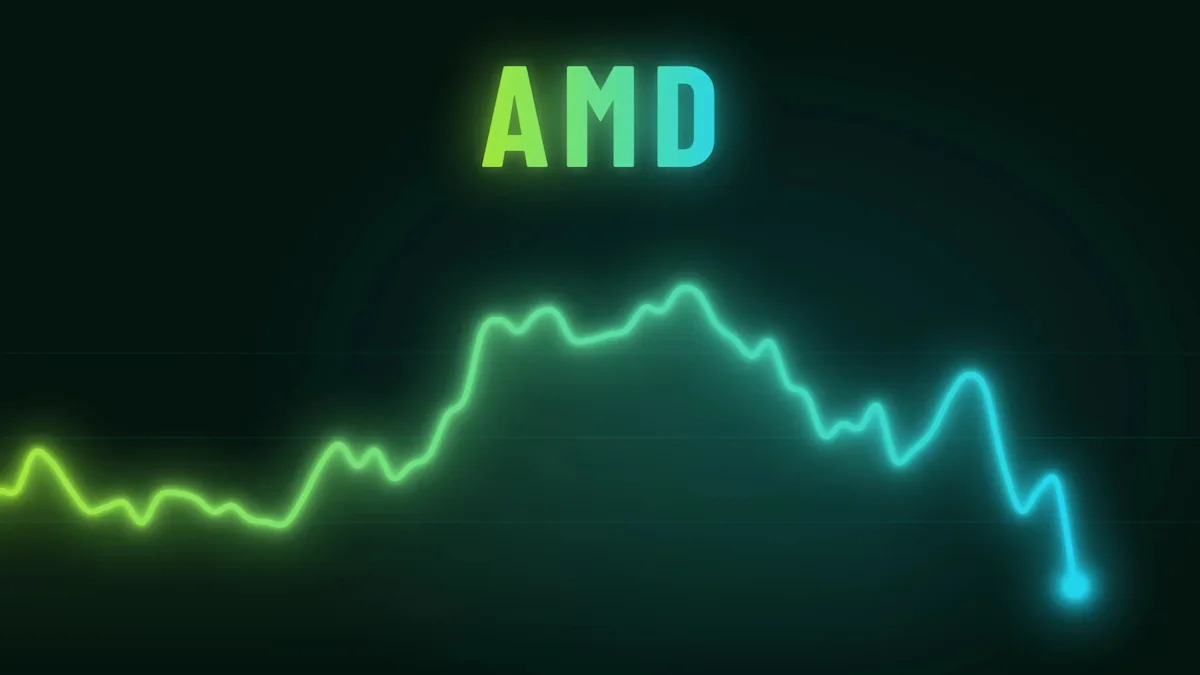
AMD (NASDAQ:AMD) Chair and CEO Lisa Su spoke publicly about patience on a day when chip stocks fell sharply. On November 5, 2026, AMD closed at $404.40. That was a 17.26%, or a $84.38 per share decline, which left the stock well below its 52-week high of $658.52.
The rest of the market fell too. The Dow lost 3.4%, or more than 1,800 points. The Nasdaq Composite dropped 5.5% into correction territory, and the Nasdaq 100 fell 6.3%, wiping out $2.3 trillion in market value.
The Philadelphia Semiconductor Index fell 12%. Coverage linked the selloff to fears of AI regulation and a data center slowdown after Democrats won Congress.
Su addressed the selloff in an interview that day. "The market can be short-sighted, but it is what it is," she said in a clip posted to X on November 5, 2026. After hours, AMD rose 3.38% to $418.05 as of 7:59 p.m. ET, regaining only a small part of the day's loss.
Su focused on demand rather than the day's drop. That was the focus. She said she does not expect demand for AI chips to slow any time soon and that she believes in many of the investments being made.
Many successful investors eventually reach the same moment. The saving is done, the portfolio is built, and the question quietly changes from how much can I grow this to how much can I take out? Get that second question wrong and decades of good investing can come apart in a handful of years.
That is exactly what The Definitive Guide to Retirement Income helps answer. It covers what your retirement could actually cost, which income sources are worth using, and the withdrawal math that decides whether the money lasts. It is free today from Fisher Investments. Read More Here ›
Lisa Su defined the long term as three to five years and beyond. Her reasoning is that more compute makes a company smarter and better at solving problems, so investing ahead of demand is the right move.
Everything she said in the interview is belief and intent, and AMD's actual commitments are in the guidance it issued two days earlier.
Any chief executive will defend demand for their products, so the numbers matter more than her tone. On November 3, AMD reported record third-quarter revenue of $13.38 billion, up 45%, compared with a Wall Street analyst consensus of about $13.06 billion.
Adjusted EPS (earnings per share, excluding one-time items) was $2.09, up 74% and above Wall Street's consensus of $1.94. Data Center revenue reached a record $8.5 billion, up 97%.
AMD guided to about $17 billion in fourth-quarter revenue and about 50% sequential data center growth. For 2027, Lisa Su guided to revenue growth above 80%, with server revenue doubling and data center AI revenue more than doubling.
That outlook is more than double the long-term model AMD presented at its November 2025 Financial Analyst Day. Su also told analysts that "demand is higher than supply." Citi analyst Atif Malik named AMD a top pick, arguing its AI business is reaching escape velocity as Helios and Venice ramp.
For the selloff to be justified, AMD's biggest customers would have to slow their orders before the 2027 ramp arrives, because guidance is built on customer plans, and those plans can shrink when a spending cycle overshoots.
Regulation is the newest risk. Rules that slow permitting or AI deployment could delay Helios racks for lead customers such as Meta, Microsoft, and OpenAI, however good the hardware is. The expansion those hyperscalers are funding also has to be powered, cooled, and networked by somebody, which is the whole point of a free report we put together on seven AI infrastructure suppliers outside the chipmakers.
AMD's own balance sheet also shows a warning sign. Inventory rose to $11.463 billion, up 35% sequentially. That build makes sense for a company preparing a ramp, but it becomes a problem if orders slip.
The selloff looks excessive relative to AMD's outlook. The November 5 drop priced in a policy fear, while AMD's own guidance describes demand running ahead of supply into 2027.
At $404.40, the stock trades far below its high even though its outlook improved during the same week. A bounce in after-hours trading suggests some buyers agree, although one evening session shows little.
Su's view is wrong if AMD lowers its fourth-quarter or 2027 data center outlook, or if a lead Helios customer cuts its 2027 spending plans. The first test to check is whether the stock closes back above $488.78, its starting level for the November 5 session. A close above that level would show the market accepting her longer time frame.
(Sponsor) Most people spend their entire working lives focusing on one thing: growing a pile of money. Then they retire and discover the skill they actually need is close to the opposite. Turning that pile into steady income, year after year, through good markets and bad, without ever running out.
It may be the least discussed and most consequential transition in personal finance, and plenty of otherwise careful investors walk into it with no real plan. That is exactly what The Definitive Guide to Retirement Income helps answer. It is a free guide from Fisher Investments covering what your retirement will really cost, where the cash flow should come from, and how much you can safely withdraw each year. Learn more here. Learn More Here ›
Contact editorial@247wallst.com for any questions or corrections.