China is dominating the chemistry race. Congress needs to catch up. By Stephanie Kempadoo Published May 14, 2026, 12:01 a.m. ET Shutterstock Sponsored by: With a September 30 deadline looming, more than 100 manufacturers are urging Congress to course-correct America’s chemical safety law before the United States is left behind.
America’s industrial comeback is real. Factories are humming and investment is returning home. President Trump and Environmental Protection Agency (EPA) Administrator Lee Zeldin are clearing red tape that stalled American innovation for years. But one quiet bottleneck continues to threaten the next chapter of American manufacturing, and it’s sitting in the U.S. Capitol.
It’s called the Toxic Substances Control Act, or TSCA. It’s a 50-year-old law that determines whether the chemistry behind semiconductors, automobiles, body armor, life-saving medicines, medical devices and more gets made in the United States or in China. Right now, the answer is increasingly the latter, and the clock is ticking for Congress to do something about it.
Image provided by American Chemistry Council Getty Images A backlog strangling innovation Federal law gives EPA 90 days to review new chemicals before they can enter the market. In practice, the program has been broken for years. As of April 28, more than 444 new chemicals were stuck in EPA’s TSCA review queue — with roughly 92% already past the statutory deadline and more than 307 waiting longer than a year. Each one represents a product that did not go to market, a job that wasn’t created, or an investment that quietly went overseas.
The Government Accountability Office (GAO), Congress’s own watchdog, has flagged the problem in two separate reports, warning that EPA’s review process is unpredictable, inconsistent, and falling short of the law. Administrator Zeldin and Assistant Administrator for Chemical Safety Doug Troutman have begun to course-correct after years of mismanagement, and the work is showing results. Administrator Zeldin announced at a Senate hearing recently that EPA will approve more premanufacture notices (PMN) – or new chemical submissions – in 2026 than each of the last prior five years. But EPA action alone can’t fix what’s broken. Only Congress can.
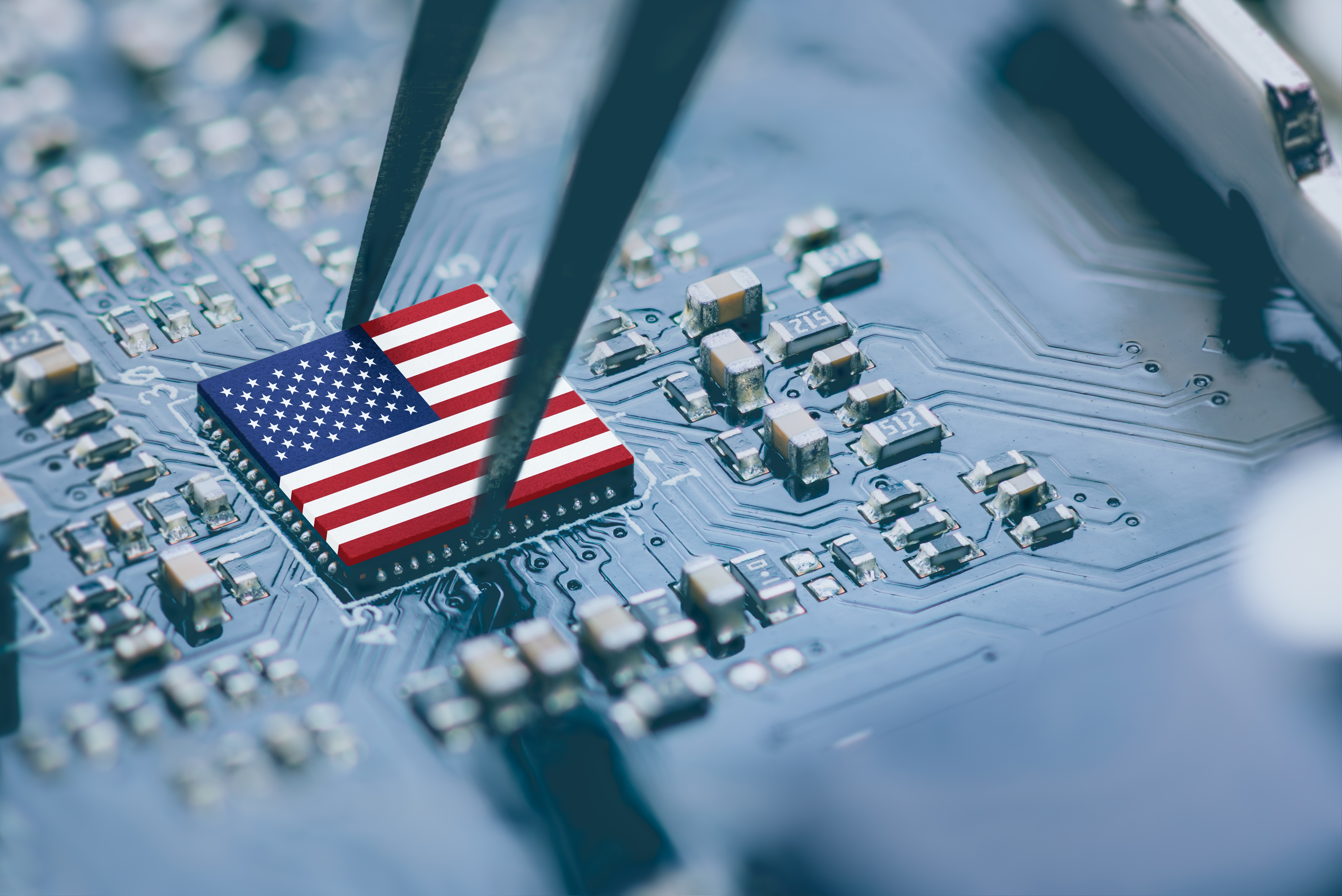
Chris Jahn, ACC president & CEO said, “If we want the next generation of semiconductors, AI, and advanced technologies made in the United States, Congress must put science first and provide a regulatory framework that encourages investment here at home.”
This isn’t an abstract Washington fight. America’s chemistry industry supports more than 4 million jobs, and innovations and technologies made possible by chemistry touch nearly all of the products we use every day. When TSCA stops working, the damage shows up at the gas pump, on grocery shelves, and in paychecks.
Slow-walked reviews don’t just delay products — they kill them. Capital investments flee, production lines move to Asia, and American workers lose ground to competitors who don’t share our standards. The public knows it: roughly 7 in 10 Americans want Congress to modernize how this law is run.
Image provided by American Chemistry Council Getty Images U.S. manufacturers speak up Earlier this year, ACC joined more than 100 leading manufacturers and trade associations urging Congress to act. The coalition isn’t asking for a free pass — it wants a system grounded in real-world science, run on the timelines the law already requires, that gives American innovators and manufacturers a fighting chance against foreign competitors.
Charlotte Bertrand, ACC’s senior director for chemical management, testified before Capitol Hill lawmakers that EPA’s reliance on worst-case assumptions, instead of how chemicals are actually used, is fueling regulatory uncertainty and pushing investment offshore. Translation: when Washington assumes the worst, America loses.
The 100+ coalition members are urging Congress to lock in five common-sense improvements:
These aren’t radical ideas. They are the original promise of the bipartisan amendments to reform TSCA – the Frank R. Lautenberg Chemical Safety for the 21st Century Act – finally delivered as Congress intended nearly ten years ago.
In the Senate, Environment & Public Works (EPW) Committee Chairwoman Shelley Moore Capito (R-W.Va.) and Chemical Safety Subcommittee Chairman John Curtis (R-Utah) have opened hearings on TSCA modernization and proposed draft legislation.
In the House, Energy and Commerce Chairman Brett Guthrie (R-Ky.) and Environment Subcommittee Chairman Gary Palmer (R-Ala.) are advancing parallel oversight and have released draft language — pairing reauthorization of EPA’s chemical management resources with the structural fixes manufacturers say are essential to keep innovation onshore.
Sen. Pete Ricketts (R-Neb.) recently introduced the Sound Science Act of 2026 to enhance the science behind TSCA risk evaluations and chemical assessments.
ACC’s Jahn added “President Trump and EPA are working to make America healthier and more affordable. Now we need Congress to help America win the global innovation race and ensure the best available science is used to make the U.S. a manufacturing superpower.”
Image provided by American Chemistry Council Getty Images The September 30 deadline A key function supporting EPA’s implementation of TSCA expires on September 30, 2026. If Congress doesn’t act, the agency will lose critical resources at the exact moment America most needs the program to work. Congress has a narrow, closing window to do two things at once: keep America’s chemical safety program running and fix what’s broken inside it.
President Trump has set a clear bar: a stronger, more competitive America with manufacturing brought home and supply chains made resilient. Administrator Zeldin’s team has started clearing the runway at EPA. Now Congress needs to land the plane.
America’s future depends on American chemistry. American chemistry depends on a TSCA program that succeeds. A stronger, more affordable America is within reach and Congress must act now to achieve it. Click here to learn more about ACC’s mission to support American innovation and strengthen global competitiveness.