Elon Musk warns AI could surpass all human intelligence by 2032. Can investors ride the wave or get crushed? Laura Grande Fri, November 6, 2026 at 7:30 AM EST 8 min read TSLA +1.64% MSFT -0.96% MSFT) AMZN +0.17% GOOG -0.26% Explore stocks on Coinbase Trading disclosure Trading disclosure The above button links to Coinbase. Yahoo Finance is not a broker-dealer or investment adviser and does not offer securities or cryptocurrencies for sale or facilitate trading. Coinbase pays us for certain activity generated through this link. Prices displayed are informational.
Moneywise and Yahoo Finance LLC may earn commission or revenue through links in the content below.
Elon Musk believes artificial intelligence is advancing faster than almost anyone realizes — and he has an increasingly bold prediction for just how powerful it could become.
In a July 2026 interview with The Economist, the Tesla (NASDAQ: TSLA) CEO predicted that AI could exceed the combined intelligence of all humans in roughly five years. That puts his forecast at roughly 2031.
Jeff Bezos backs a platform that lets anyone invest in rental homes for as little as $100 — 6 ways to build wealth like a landlord without actually being one
A single line on your car insurance policy could be inflating your premium by up to 30% — here's what to change
Gold has overtaken U.S. Treasuries as central banks' top reserve asset. Get Goldco's 2026 Precious Metals IRA Playbook for free
"So there really won't be anything that AI can't do better than humans, apart from being human, perhaps," Musk said at the time (1).
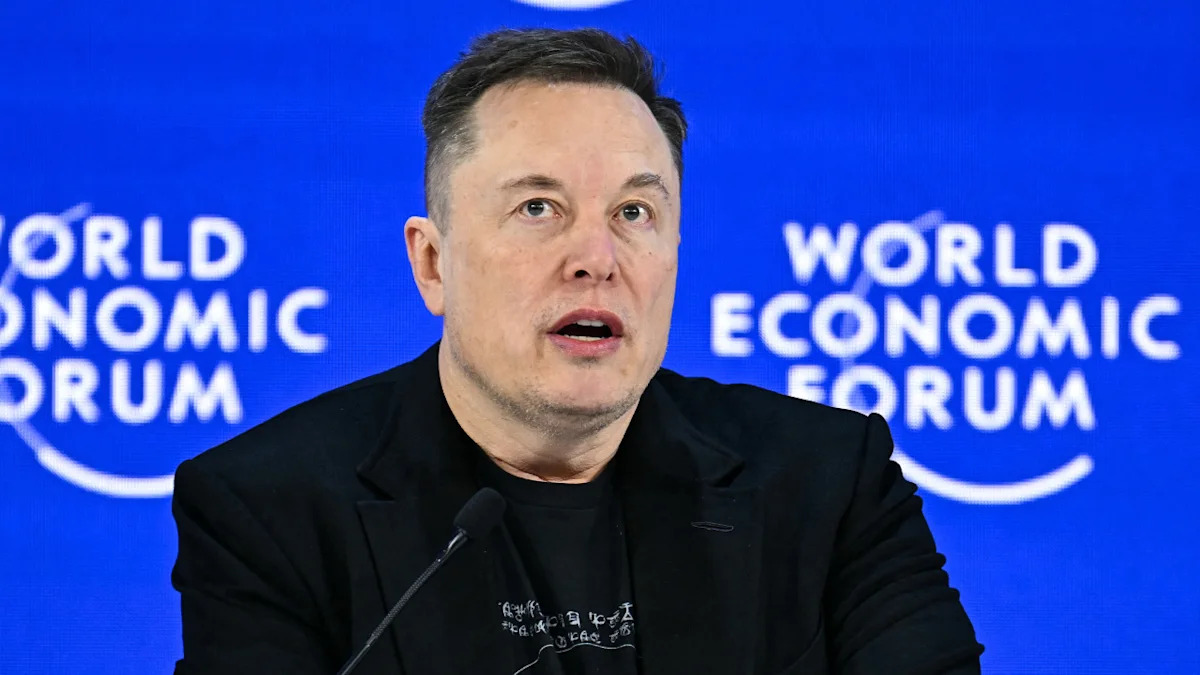
The forecast follows comments Musk made at Davos in January.
Speaking with BlackRock CEO Larry Fink, he said AI could outsmart any individual by the end of 2026, or 2027 at the latest. He put the timeline for AI to surpass humanity's collective intelligence at either 2030 or 2031 (2).
It's a familiar theme for Musk: He sees enormous potential in AI, but has also warned that its rapid development could carry serious risks.
"If the difference in intelligence between AI and humans is vastly greater than the difference in intelligence between AI and chimpanzees," he said to The Economist in July. "It's hard to imagine that the chimpanzees would be in charge."
Musk has also questioned whether humans will even be able to keep increasingly powerful AI under control. He seems less focused on slowing its development now than on accepting that it's coming.
He sees a brighter side, too, predicting AI will usher in an era of enormous prosperity.
Whether that happens remains to be seen, but investors are already feeling AI's impact. It has become one of Wall Street's biggest investment themes, with billions pouring into the technology. The question now is whether those investments will pay off — particularly as high valuations leave less room for disappointment.
Despite acknowledging the risks surrounding advanced AI, Musk painted an optimistic picture of what the technology could eventually make possible.
"The most likely outcome is an age of amazing abundance where anyone can have anything they can think of," he said in July. "This may sound preposterous, but well, here we are in 2026. Let's see where we stand in 2036" (1).
Musk acknowledged that a global war or other catastrophe could get in the way, but if that doesn't happen, he sees AI making life much better, describing his outlook as "a message of optimism and excitement about the future."
That's a more upbeat take from someone who has spent years warning that AI could threaten humanity. Musk hasn't dropped those concerns, but he seems to think the technology is moving too quickly for anyone to put the brakes on.
"My sort of philosophical conclusion is to look on the bright side," said the man who is currently the richest person in the world. "I can't see any way to really stop this incredible momentum of AI and robots. Let's enjoy the ride" (1).
Skip 6 decades of reading: Get Warren Buffett's best investing lessons in 1 free guide
Investors don't have to agree with Musk's timeline to recognize AI's growing influence.
But the investment landscape is looking less straightforward as questions grow about how much all that spending will actually pay off**.**
The biggest names in artificial intelligence aren't simply racing against one another — they're also helping fuel each other's growth (3).
With more than $20 billion in cumulative investment alongside infrastructure sharing, companies like Microsoft (NASDAQ: MSFT), Amazon (NASDAQ: AMZN) and Google (NASDAQ: GOOG) have invested in AI startups while simultaneously spending heavily on cloud infrastructure, advanced semiconductors and data centers that power the technology.
That interconnected ecosystem has helped drive demand across the industry.
AI developers need massive computing power from cloud providers. Cloud providers need cutting-edge chips from companies like Nvidia (NASDAQ: NVDA). And many of those same firms continue investing directly in emerging AI businesses as they compete for leadership in the sector.
The scale of that investment is becoming harder for markets to ignore as tech companies are expected to spend more than $730 billion on AI this year alone, while six major U.S. hyperscalers are projected to spend more than $7 trillion on data centres and other AI infrastructure between 2025 and 2030 (4).
But investors are increasingly asking when those investments will start paying off.
In October, the tech-heavy Nasdaq 100 fell more than 5.8%, putting more than $2 trillion in market value at risk as concerns mounted over Big Tech's rising AI bills and whether the technology can generate enough returns to justify the cost (5). Financial leaders have also warned that lofty expectations could leave AI-related stocks vulnerable to a correction.
The European Central Bank has also flagged high AI-stock valuations as a financial stability risk, adding to concerns that expectations for future growth may have gotten ahead of what companies can deliver (6).
Today's leader could be overtaken by tomorrow's breakthrough, making it important to have up-to-date information.
That's where platforms like SoFi can come in. SoFi is designed for both beginners and seasoned investors, with real-time investing news, curated content and the data you need to make smart decisions about the stocks that matter most to you.
SoFi's easy-to-use DIY investing platform lets you buy stocks, ETFs and more with no commission fees and no account minimums.
Plus, for a limited time, you can get up to $1,000 in stock when you fund a new account.
Beyond gaining access to companies before they have the potential to take off, leveraging the right investment platform can help you turn your financial goals into a retirement reality — even if you're struggling to curb your spending.
By resisting indulgences, you could limit your chances of overspending and overborrowing, putting you on a clearer path to financial freedom — and helping you build the capital needed to capitalize on major trends like AI. But it's easier said than done.
According to a survey conducted by Clever Real Estate, 74% of respondents reported having a spending problem, with 55% admitting they often spend recklessly. Both of these behaviors can cut into your ability to sock away money.
If you find it difficult to stop overindulging, you could start by building savings habits into everyday spending. With Acorns, you can automatically invest spare change from your everyday purchases into a diversified portfolio of ETFs managed by experts at leading investment firms like Vanguard and BlackRock, which include significant exposure to the companies driving the AI revolution.
For instance, if you buy a donut for $3.25, Acorns will round up the purchase to $4 and invest the change in a smart investment portfolio. So that purchase automatically becomes a 75-cent investment in your future.
Even better, if you sign up today with a small recurring contribution, you can get a $20 bonus investment.
Musk's predictions are bold, but there's still plenty we don't know about how AI will change the economy and financial markets. And even if he's right about how quickly technology advances, that doesn't mean every company betting on AI will come out ahead.
While it's tempting to treat your portfolio like a beta tester for the next big AI breakthrough, don't let the allure of "AI-everything" distract you from a disciplined strategy.
If you're unsure how much exposure your portfolio should have to the AI gold rush, or if you're just worried your "AI-optimized" strategy is actually just panic-buying tech stocks, it might be time for a more human touch.
Research from Vanguard (7) shows that working with a financial advisor can add about 3% to net annual value over time. That's the kind of boost that can turn a $50,000 portfolio into a massive $1.3 million windfall over 30 years.
Finding the right human to temper your AI enthusiasm is simple with Advisor.com. Their platform connects you with licensed financial professionals who can look at your AI-heavy watchlist and help you determine if it actually aligns with your financial goals, like retirement.
Through Advisor.com, you can schedule a free, no-obligation consultation to discuss your long-term financial plan, ensuring that while you enjoy the ride into the AI-future, you don't accidentally tank your hard-earned savings.
The tax breaks in Trump's 'big beautiful bill' expire after 2028. Here are 4 moves to make before the window closes
Vanguard reveals what's coming for U.S. stocks — and it could be bad news for this group of investors
Robert Kiyosaki issued grim warning for baby boomers. Many could be 'wiped out' and homeless 'all over' the country. How to protect yourself now
Dave Ramsey says this 1 indulgent purchase stops Americans from becoming wealthy. Here's what he recommends instead
We rely only on vetted sources and credible third-party reporting. For details, see our ethics and guidelines.
The Economist/ YouTube (1); World Economic Forum (2); Federal Trade Commission (3); Reuters (4), (5), (6); Vanguard Canada (7).
This article provides information only and should not be construed as advice. It is provided without warranty of any kind.