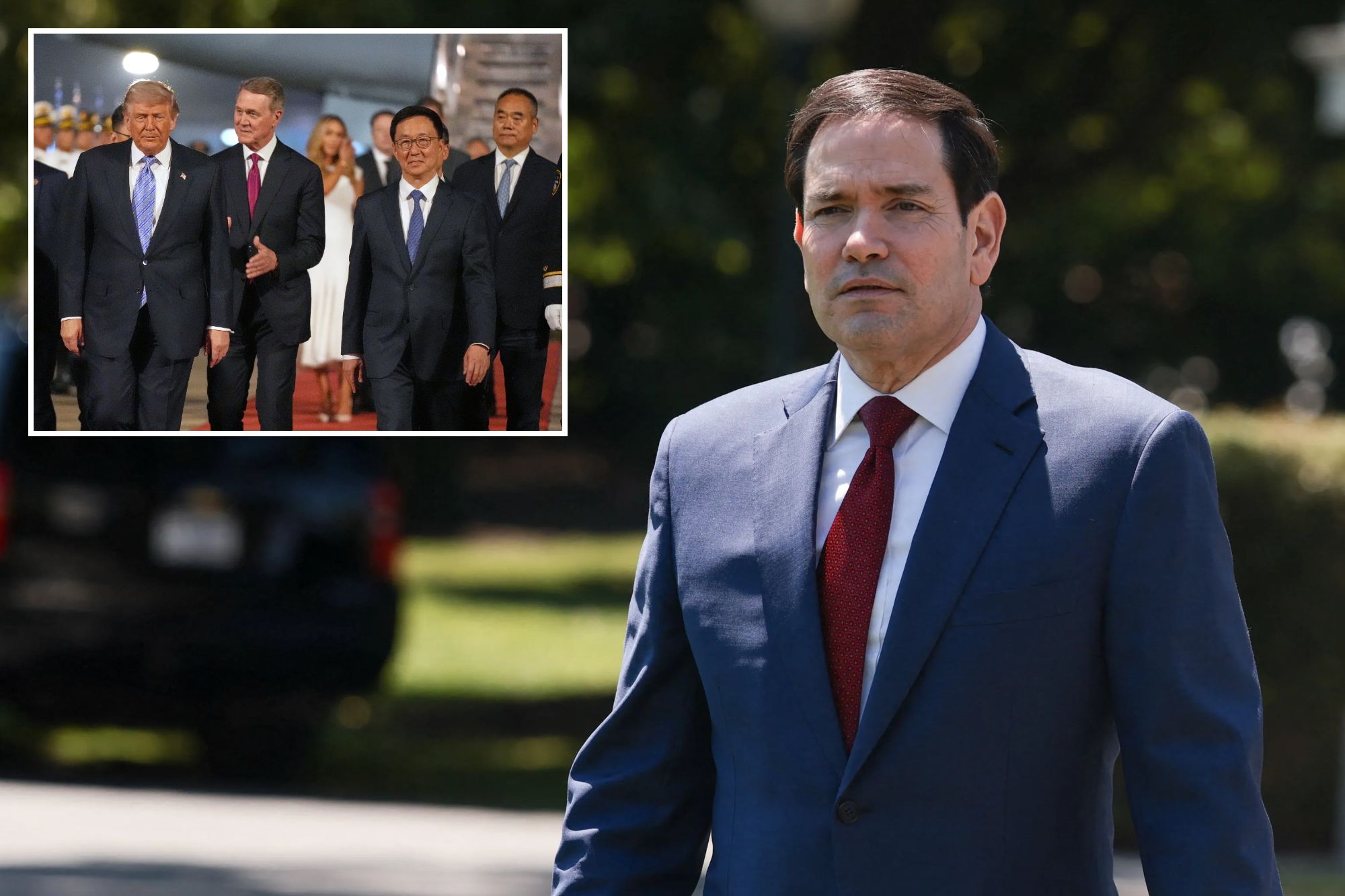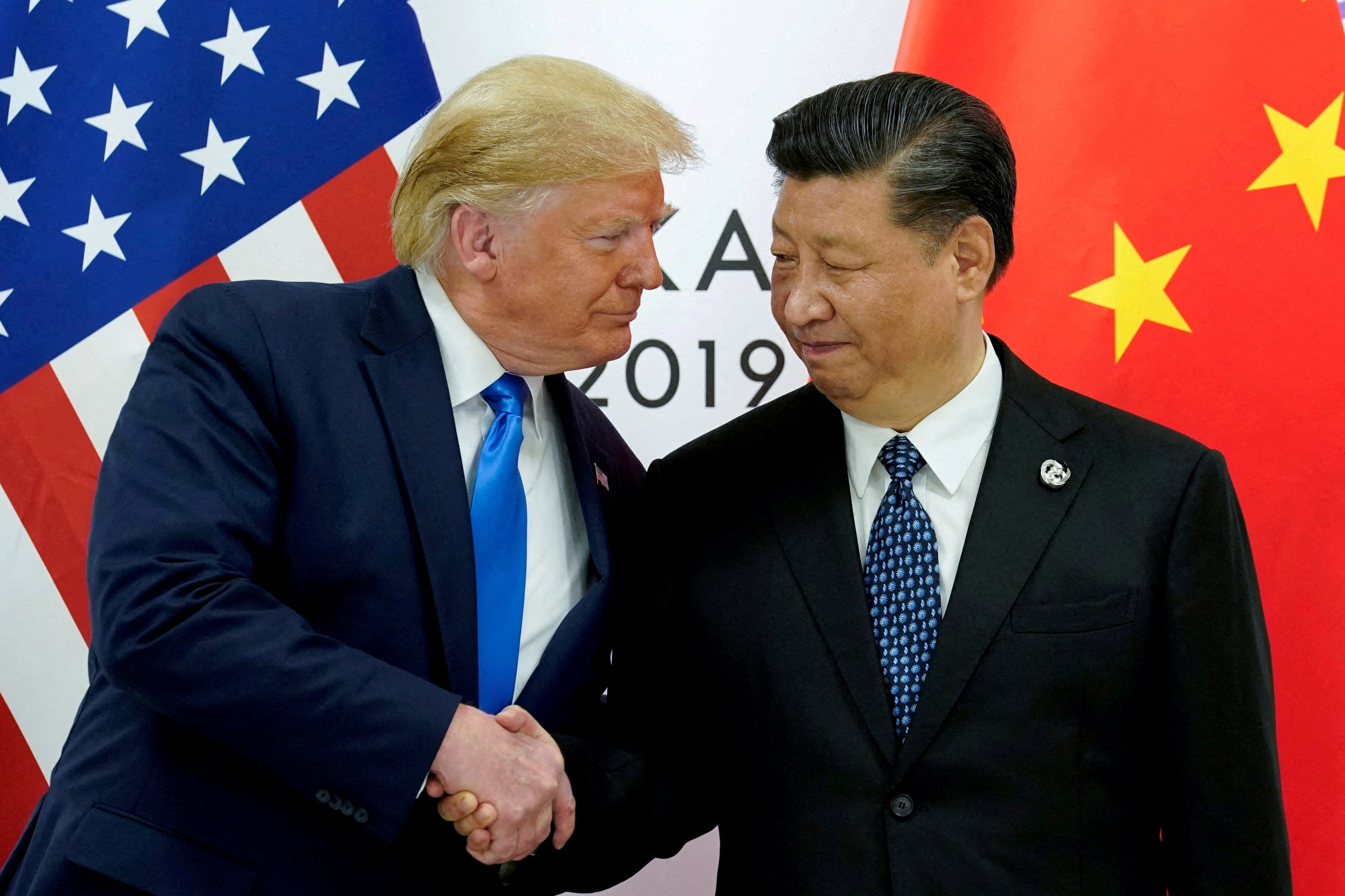
U.S. President Donald Trump meets with China's President Xi Jinping at the start of their bilateral meeting at the G20 leaders summit in Osaka, Japan, June 29, 2019. REUTERS A bombshell report this week laid bare a startling truth: Hong Kong is the lifeline for the Iranian regime and its terrorist proxies.
Hong Kong-registered shell companies are funneling billions of dollars in illicit oil revenue, along with weapons technology and surveillance tools, to the Islamic Revolutionary Guard Corps, fueling Tehran’s repressive military machine.
But more than two months into the war, not one of Iran’s most important financial enablers — in Hong Kong or anywhere else in China — has been taken offline.
It’s a glaring loophole in President Donald Trump’s “Economic Fury” and “Maximum Pressure” campaigns that he’s promised will break the regime.
So this week, as the president meets with Xi Jinping in Beijing, he should present the Chinese Communist Party with the bill for its continued support of Tehran’s terror.
Last week, China invoked its 2021 Anti-Foreign Sanctions Law for the first time, barring Chinese firms from complying with US sanctions on refineries processing Iranian crude.
At the same time, however, China’s financial regulator is reportedly telling the country’s top banks to stop extending loans to those same sanctioned refineries.
In other words, Beijing is projecting defiance publicly — while quietly trying to limit its exposure to damaging US sanctions.
That suggests China is more vulnerable to US economic pressure than it wants to admit, and is counting on Washington not to apply it.
To turn “Economic Fury” and “Maximum Pressure” from bumper sticker into behavior change, Trump needs to deploy the strongest tools of US economic statecraft — and deploy them now, before the summit talks give Beijing the chance to pocket concessions without making any.
That means using Section 311 of the USA PATRIOT Act to designate banks or jurisdictions in China as primary money-laundering concerns, slamming them with a range of consequences from enhanced due-diligence requirements to loss of dollar access.
A Section 311 designation would require US banks to restrict or even cut off their correspondent banking relationships with that institution, effectively severing it from the American financial system.
Targeted Section 311 actions against Chinese banks processing Iranian crude payments — or against Hong Kong itself, as a sanctions-evasion hub — would force Beijing to make a real choice: Either halt Iran’s financing while the United States continues its war, or face serious financial consequences.
Treasury Secretary Scott Bessent rightly called out China last week for “funding the largest state sponsor of terrorism.”
By purchasing roughly 90% of Iran’s exported oil, China props up the brutal IRGC, Tehran’s ballistic-missile program and its proxy network across the region.
At least 95 Hong Kong-incorporated entities have been sanctioned by the United States for supporting Iran since 2020, according to this week’s report issued by the Committee for Freedom in Hong King Foundation.
Yet Treasury has not moved beyond individual designations to impose consequences on the Hong Kong banks that enable Iranian sanctions evasion at scale.
Cautious critics may argue that cutting off the banks that support the Iranian regime will cause too much disruption to the global economy, inflicting costs that Washington can’t absorb.
The real question is whether those costs are smaller than the cost of leaving Iran’s financial infrastructure intact, potentially enabling the regime to quickly rebuild after the war.
Treasury has already exposed meaningful nodes in Iran’s sanctions-evasion architecture — companies sitting atop thousands of accounts across multiple jurisdictions, processing oil revenue and foreign currency on the regime’s behalf.
But exposure without consequence won’t change behavior in either Tehran or Beijing.
And if Washington continues to leave the banks responsible for Iranian sanctions evasion untouched, China will conclude that the United States lacks the will to impose serious financial costs, even during active armed conflict.
That will be read in Beijing as a direct preview of what the CCP would face if it moved on Taiwan — which is why China’s enabling role in Iran must be at the top of the summit agenda.
Trump has plenty of objections to raise about Chinese subsidies, overcapacity, market-access barriers and more, but none carries the urgency of China’s sustained support for the Iranian war machine.
Nor will any other issue tell Beijing more clearly what consequences it should expect if it acts against Taiwan.
Trump talks about having “all the cards” against Iran — but when it comes to applying maximum pressure, he hasn’t yet played the most important ones.
It’s time to put those cards on the table and turn Hong Kong into a proving ground for what effective US economic statecraft can actually achieve.
Elaine K. Dezenski is senior director and head of the Center on Economic and Financial Power at the Foundation for Defense of Democracies, where Max Meizlish is a research fellow.