Relief may finally be on the horizon for renters in the high-priced Northeast as the region outpaces the rest of the US in new apartment starts and completions, setting the stage for a wave of fresh inventory.
In the first quarter of 2026, the Northeast posted a 42% year-over-year surge in completed multifamily units, making it the only region to record growth, according to the latest Realtor.com® rent report. And multifamily starts in the Northeast nearly doubled, rising 81% from a year earlier.
Developers say that the Northeast’s tight for-sale housing market, combined with solid wage growth, are keeping rental occupancy levels high and ensuring new projects pencil out.
“The economics of renting versus homeownership remain very favorable,” Benjamin Schall, the CEO of multifamily developer AvalonBay Communities, said in a recent call with investors. “Market occupancy in our established regions remains solid.”
Schall said that in the latest quarter, the percentage of renters who left the company’s apartments to purchase a home declined to just 8%. The company plans $800 million of development starts in 2026, including two major projects in suburban New Jersey.
Investments like that have helped keep the rental market competitive. April saw the median asking rent across the 50 largest US metros dip nearly $30 compared with a year ago, coming in at $1,673 following nearly three consecutive years of declines — yet it still remained higher than in 2019, according to Realtor.com data.
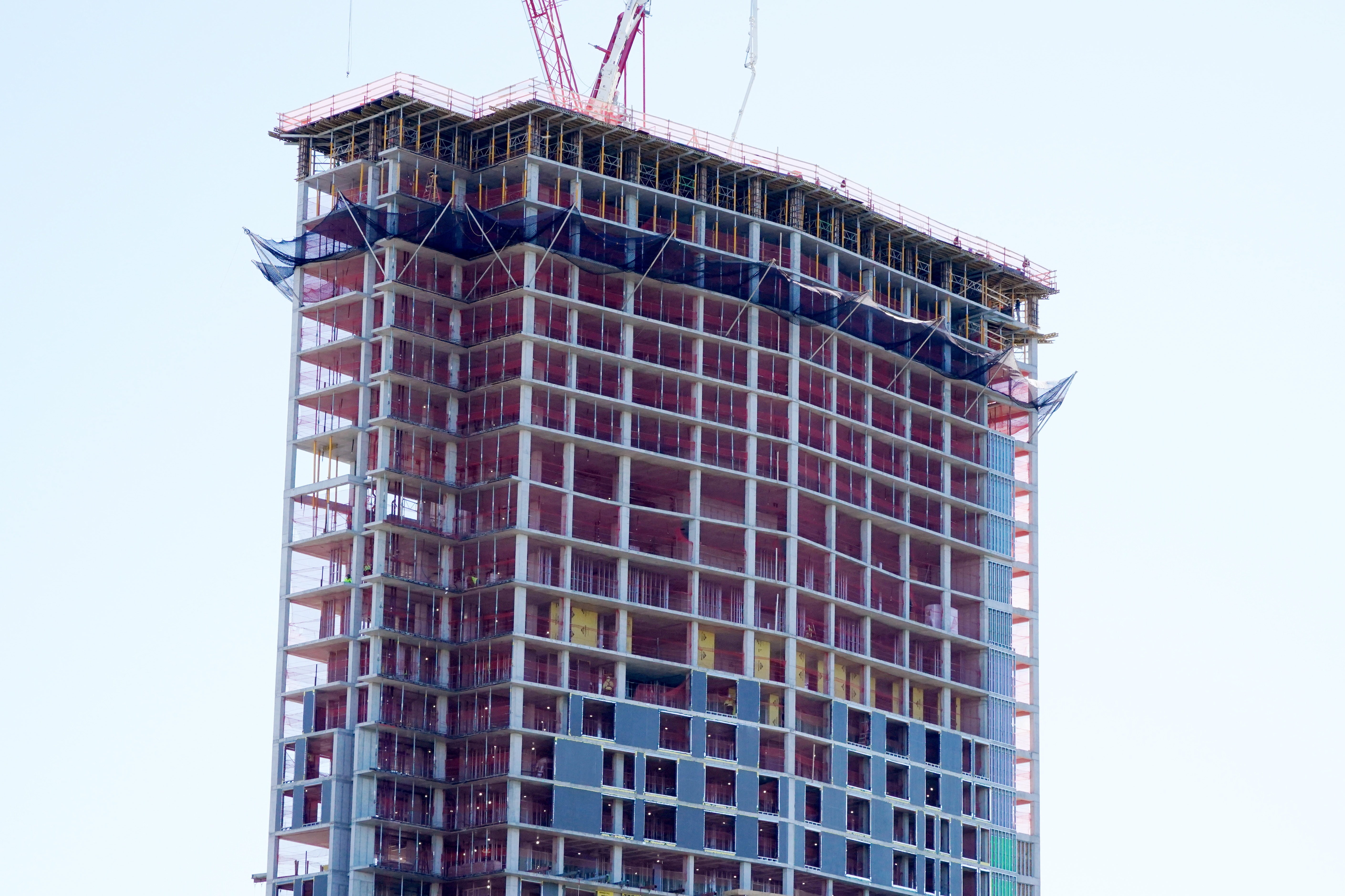
An apartment building under construction in The Bronx seen on Oct. 16, 2025. Christopher Sadowski Outside of the Northeast, multifamily construction is more of a mixed bag, with the West facing the greatest challenges. But overall, the multifamily housing pipeline is proving remarkably resilient, despite the economic headwinds and geopolitical volatility, with under-construction units averaging 684,000 on a seasonally adjusted basis at the start of the year.
While Realtor.com economist Jiayi Xu points out that the figure is lower compared with the first quarter of 2025, when there were 765,000 units under construction, it is still more than 11% above the pre-pandemic baseline.
Completions were also down from last year and the year before across the top 50 metros, but groundbreakings were up.
“This suggests that while the construction boom is unwinding, the pipeline remains meaningfully elevated by historical standards, and a steady stream of new rental supply should continue reaching the market in the near term,” says Xu.
At the regional level, all four corners of the US experienced year-over-year declines in multifamily units under construction in the first quarter of 2026. The West saw the most dramatic pullback at -14.7%, followed by the South (-11.1%), the Northeast (-7.1%), and the Midwest (-5.4%).
However, when looking at unit completions, the Northeast is the clear standout defying the national trend, having posted a 42.1% year-over-year surge in completed apartments—the only region to record growth.
Xu explains that the reason for the Northeast’s outstanding performance is twofold.
“High home prices and mortgage rates keep pushing people toward renting,” says the economist. “At the same time, many Northeast cities have been underbuilt for years, so the supply base is low and even a modest increase can look like a big surge.”
Start your day with all you need to know Morning Report delivers the latest news, videos, photos and more.
Policy changes, such as zoning reforms and affordable housing incentives, also support more multifamily development in Northeastern markets.
Renters in parts of the region are already starting to feel relief thanks to the expanding supply putting downward pressure on monthly prices.
In April, median asking rents in Boston and Philadelphia fell 2.9% and 1.5%, respectively, from a year ago, signaling that inventory is outstripping demand in these metros.
New York City, however, saw a 1.1% year-over-year increase, which Xu attributes to the Big Apple’s tight supply-and-demand dynamics.
“The benefit of operating in New York and Philadelphia is that these markets never experienced the over-building seen elsewhere. So, when the market slowed, demand continued to build,” Brad Korman, co-CEO of Korman Communities, a Philadelphia-based developer, tells Realtor.com. Consequently, new projects achieved significant success, and lease-ups occurred quickly.”
The other three regions saw their completion rates plunge year over year, with the West experiencing the most dramatic contraction (-37.9%), followed by the South (-26%), and the Midwest (-1.6%).
“Many Western markets have recently seen higher rental vacancy rates, slower rent growth, or even rent declines, such as in Los Angeles,” notes Xu. “Combined with high construction costs in the West, this makes developers more cautious about starting new multifamily projects there.”
Instead, she says some developers previously active in the West may now be looking to the Northeast where rental units are more in demand and supply is still constrained.
The completion rate observed in early 2026 is not expected to continue throughout the entire year. But by the start of 2027 the Northeast’s supply of rental units is predicted to grow by the biggest margin (+1.1%), with the South in second place (+0.9%), followed by the Midwest and the West with 0.7% each.
A look at regional multifamily construction starts offers further good news for renters in the Northeast, where the number of units entering the pipeline surged 81%, rising from just 58,000 at the start of 2025 to 105,000 in the first quarter of 2026.
The South also experienced a healthy boost in starts, from 164,000 to 230,000, up more than 40% year over year.
Once again, the West was left in the rearview mirror, with starts in Q1 2026 dipping to their lowest level of any quarter since at least 2017, signaling that the region’s supply of multifamily housing may be in for a correction in the coming years.
Nationally, 420,000 additional rental units are expected to go on line at the start of 2027, marking a 0.8% uptick that would bring the total US supply to roughly 50.5 million units.