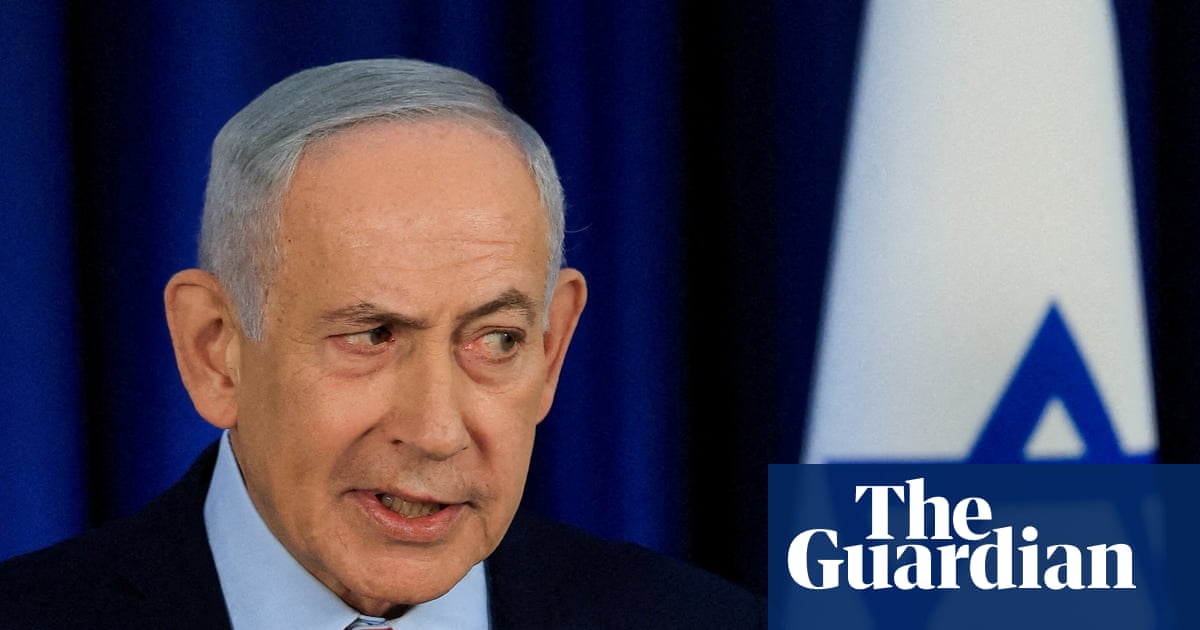
The Israeli prime minister’s office said the talks led to a ‘historic breakthrough’. Photograph: Ronen Zvulun/ReutersView image in fullscreenThe Israeli prime minister’s office said the talks led to a ‘historic breakthrough’. Photograph: Ronen Zvulun/ReutersBenjamin Netanyahu made secret trip to UAE at height of the Iran warThe covert meeting with the UAE’s president is the latest milestone in a rapidly developing Middle East alliance
Benjamin Netanyahu has revealed he made a secret trip to the United Arab Emirates at the height of the Iran war to meet president Sheikh Mohamed bin Zayed Al Nahyan.
“This visit has led to a historic breakthrough in relations between Israel and the UAE,” the Israeli prime minister’s office said in a statement on Wednesday night.
The two leaders met for several hours in Al Ain, an oasis city by the Oman border, on 26 March, Reuters reported.
A source told the news agency that Mossad director David Barnea made at least two visits to the UAE during the war with Iran to coordinate military actions. The intelligence chief’s visit was first reported by the Wall Street Journal.
The covert visit and meeting between the two leaders is the latest milestone in a rapidly developing Middle East alliance. On Tuesday, the US ambassador to Israel, Mike Huckabee, disclosed that Israel had shared its air defence system with the UAE, sending Iron Dome batteries and military specialists to operate them over the course of the war.
“There’s an extraordinary relationship between the UAE and Israel,” Huckabee said.
Read moreIt was also reported that the UAE had secretly carried out its own strikes on Iran, including an attack on a refinery on Lavan island in early April, in retaliation for Iranian attacks on its oil facilities, according to the Wall Street Journal.
In 2020, the UAE was the first Islamic country to sign an agreement normalising relations with Israel, and was followed by three other Islamic countries: Bahrain, Morocco and Sudan, in what were described as the “Abraham accords”.
The UAE has gone much further than the other members in tightening the relationship into a de facto alliance.
The Emirati rulers have increasingly sought to chart an independent foreign policy course from their larger neighbour, Saudi Arabia. At the beginning of the month, the UAE left the Saudi-led oil cartel, Opec, severely weakening the organisation’s clout in global markets.
Both Israel and the UAE have close relationships with the Trump administration, which have been deepened by their involvement in the Iran war. But they are vulnerable to a change of administration and policy direction in Washington. Both are under intense scrutiny for their alleged involvement in war crimes.
Israel has been accused of genocide in Gaza, and arrest warrants have been issued by the international criminal court for Netanyahu and his former defence minister, Yoav Gallant.
The UAE is widely believed to be arming and funding the Rapid Support Forces, which have been accused of mass atrocities in Sudan. Its government has denied the allegations, despite considerable evidence underpinning them.