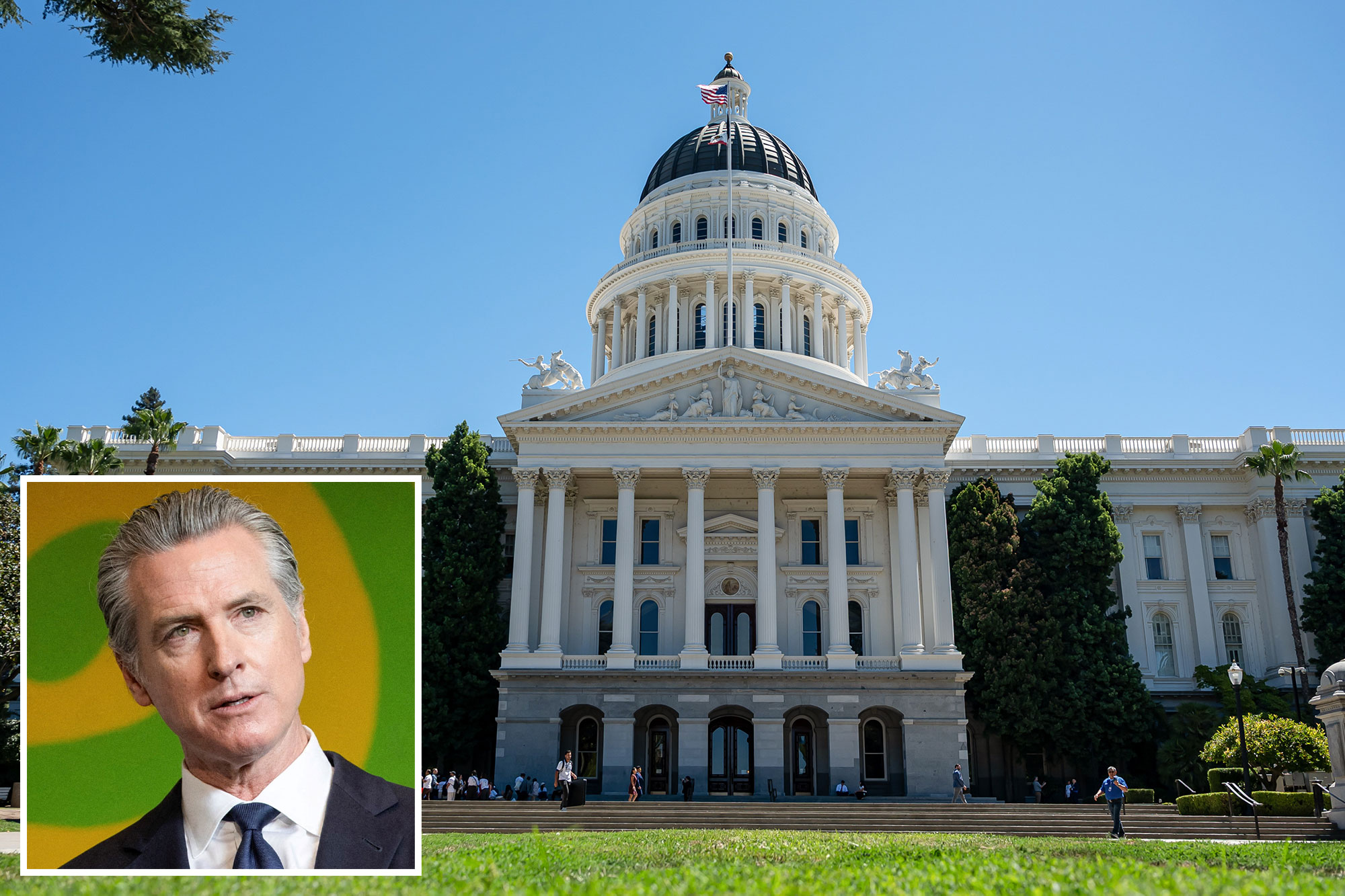
California Gov. Gavin Newsom will reveal his updated budget plan Thursday as state Democrats grapple with what they claim are “Trump inflation” impacts on public services, particularly health care.
The state is seeing higher-than-expected revenues — but those could be offset by more state spending amid inflationary costs.
“California’s finances are under incredible pressure,” Assembly Democrats wrote in their recently released budget proposal. “Harder choices are coming, and spending at every level of government needs to be looked at honestly today to avoid even more dire choices down the road.”
In a financial report released Tuesday by the state controller, the last fiscal year saw $595 billion in revenues, more than 8% from the prior year, much of it driven by capital gains from a strong artificial intelligence sector and corporate taxes.
The last five months, more than $10 billion in tax revenue have come in above projections, and throughout the next two years, tax revenues should be “tens of billions” above January estimates, legislative staff predicted.
“The economy in this state is remarkable, resilient, dominant,” Newsom said last Friday when asked to comment on the upcoming budget reveal. “No economy in the United States of America, no state has outperformed the state of California.”
However, the state’s eye-popping spending also increased at a similar rate last fiscal year, totaling $582 billion that year. The state’s Medicaid and education programs drove much of that spending.
But Democrats say the Trump administration’s actions on Medicaid and other programs, plus potential wild swings in the stock market, means California still faces future deficits of tens of billions per year, as they try to use state money to help backfill federal cuts.
In January, Newsom proposed a $348 billion budget, a $30 billion increase from the current state budget. At the time, he projected a $2.9 billion shortfall.
That shortfall may end up being smaller after a $2 billion budget accounting error that wasn’t publicly announced.
That extra windfall, from both the error and higher revenues, may be put to use when Newsom announces his new plan.
The Democratic governor already said he is going to include $300 million tomorrow to fight a Republican-controlled Congress’s inaction on extending subsidies, his office told Politico.
The money will stabilize the state’s private insurance marketplace, and Newsom will propose getting rid of monthly health insurance premiums for low-income enrollees and costs for others. Covered California premiums doubled on average this year after the subsidies expired.
“Governor Gavin Newsom is protecting Californians from Trump’s decision to strip Obamacare funding,” his office announced Tuesday night.
There will be other issues for Newsom to balance. Legislative Democrats have cited the revenue surge as reason to avoid cuts on homelessness, education and home health services. Lawmakers also stressed about the need to seat aside any revenue for rainy day funds in anticipation of the future deficits.
The governor is also known to add policy ideas to his budget — which he may do Thursday — but it’s a practice that Assembly Democrats have appeared to sour on for this year.
State Republicans lambasted Newsom for the potential budget deficits in future years despite tax revenues growing. Newsom needs to address that issue, they said in a letter to Newsom on Monday. Potential tax increases proposed by state Democrats are not the answer, they said.
“This is the governor’s last opportunity to demonstrate fiscal responsibility and deliver a balanced and sustainable budget,” said Sen. Roger Niello (R).
Republicans highlighted priorities of fire prevention, fighting fraud and funding Proposition 36, which stiffens penalties for certain drug and theft crimes.
Budget negotiations will be underway after Thursday. By state law, lawmakers must pass a balanced budget by June 15. The next fiscal year begins July 1.