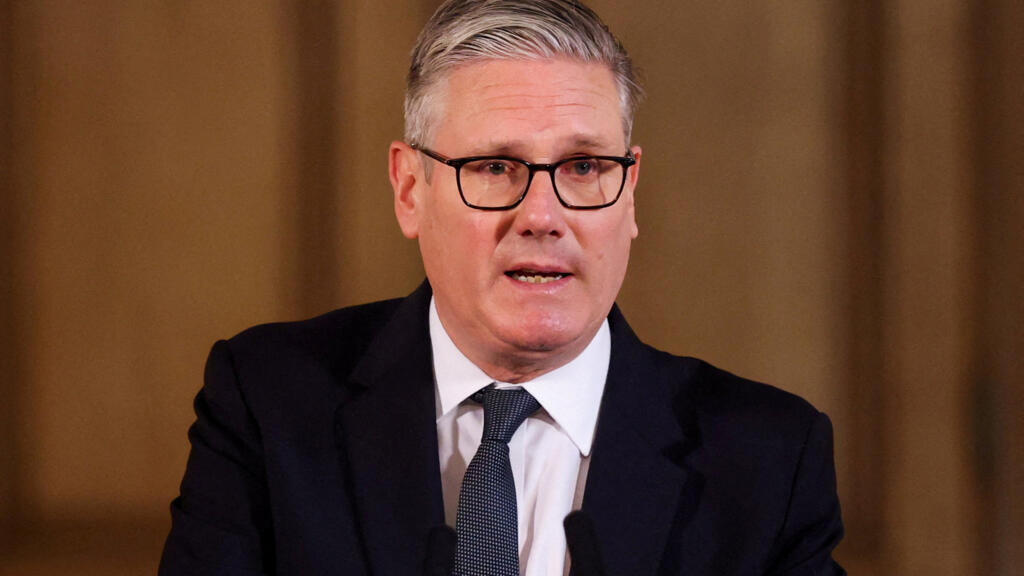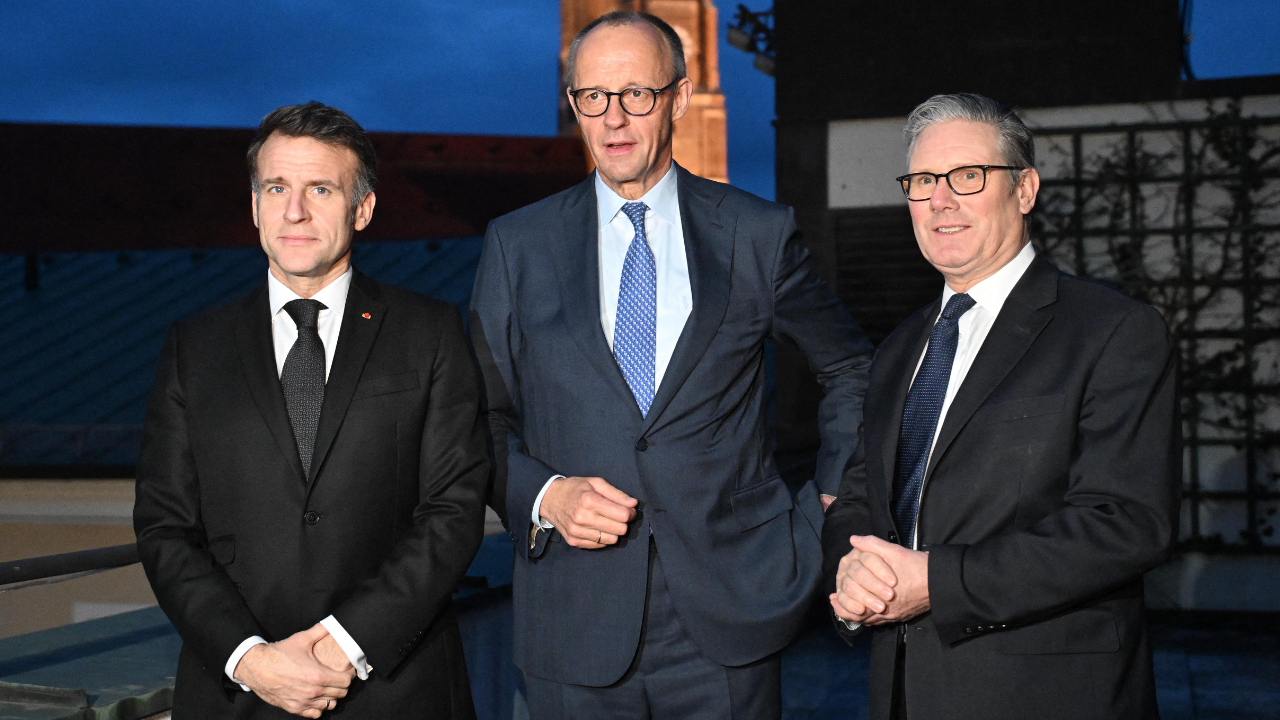
Video Europe reportedly preparing for a future without US in NATO President Trump reflects on King Charles' visit, hoping it improves US-UK relations despite tensions with PM Keir Starmer over Iran.
The most important line in the transatlantic debate is not coming from Brussels, Ottawa, Paris or Berlin.
The 2026 National Defense Strategy says the quiet part out loud: America is changing the bargain with its allies. The United States will still remain engaged abroad, but it will no longer treat every theater as America’s first responsibility. The new hierarchy is clear: defend the homeland, deter China in the Indo-Pacific, increase allied burden-sharing, and rebuild the defense industrial base.
That is the real story behind Europe’s sudden defense awakening.
PENTAGON WARNS FUTURE WARS MAY HIT US SOIL AS 'DIRECT MILITARY THREATS' GROW
European leaders would rather describe this as a response to an unpredictable President Donald Trump. Recent reporting from Europe captured the mood after Trump announced plans to withdraw 5,000 U.S. troops from Germany, reporting that European lawmakers feared Washington was moving toward a more "unpredictable and transactional" approach to alliances amid tensions over the Iran war.
That story is not entirely false. It is just too flattering to Europe.
President Donald Trump meets with European leaders following a call with Russian President Vladimir Putin on Aug. 18, 2025, in the Oval Office. (Daniel Torok/White House)
Trump has been signaling this shift since his first term, and with renewed force since returning to office in 2025. Now the administration has turned it into doctrine. The Pentagon’s 2026 National Defense Strategy makes clear that the old transatlantic bargain is being rewritten. Its four priorities are defending the American homeland, deterring China in the Indo-Pacific, increasing allied burden-sharing, and rebuilding the U.S. defense industrial base. Its treatment of Europe is even more direct: Russia is described as a serious but manageable threat, and European allies are expected to assume primary responsibility for their conventional defense with "critical but more limited" U.S. support.
TRUMP ADMIN LABELS ISRAEL 'MODEL US ALLY' AHEAD OF MAJOR MILITARY AID TALKS
The Pentagon strategy says it will strengthen incentives for allies to take "primary responsibility for their own defense" in Europe, the Middle East and Korea, with "critical but limited support" from U.S. forces. It also says Washington will prioritize cooperation with "model allies," meaning those spending what they need to and doing visibly more against threats in their own regions.
This is not unpredictability. It is prioritization, written into strategy. Perhaps "unpredictable" is simply the word Europe uses when Washington becomes predictable in a way it dislikes. And Iran has made that prioritization visible faster than Europe expected.
The Iran war is not only a Middle East crisis. As I have stated from the start of the Iran war, it is in fact acting as a catalyst for the reordering Washington is forcing across the globe, and Europe is where that reordering is now most visible. Pressure applied through Iran moves outward through energy markets, shipping lanes, NATO cohesion, European defense planning, and the old question Europe has long avoided: what can Europe actually do when America is busy elsewhere?
STOP CALLING THIS BRINKMANSHIP. TRUMP'S HORMUZ MOVE IS THE REAL PRESSURE
The Strait of Hormuz crisis was the first live demonstration.
Europe was not the main battlefield, but it was directly exposed. Hormuz affects oil, LNG, shipping insurance, inflation, industrial costs, and political stability. It also forced Washington to ask how much U.S. capacity it could commit to the Middle East while still preserving forces and attention for the homeland and the Indo-Pacific.
The Hague, Netherlands - In photos, NATO leaders participate in the summit in The Hague, Netherlands, on June 25, 2025. NATO countries pledged to increase their defense spending to 5% of GDP by 2035, as demanded by U.S. President Donald Trump. The summit's final declaration states that countries will invest "at least 3.5%" of their GDP annually in military capabilities and an additional 1.5% in protecting critical infrastructure. (Handout / Latin America News Agency via Reuters Connect)
So when Trump called on other nations to help police the strait, it was not simply Trump being Trump. It was the National Defense Strategy in practice: allies directly affected by a crisis should not expect the United States to provide the first and last answer.
MORE KEY US ALLIES BLOCK MILITARY FLIGHTS AS IRAN WAR RIFT WIDENS WITH TRUMP
After Iran responded to U.S.-Israeli attacks with drones, missiles and mines that effectively closed the channel for tankers carrying about a fifth of global oil and liquefied natural gas, EU foreign ministers discussed whether to expand the bloc’s Aspides naval mission toward Hormuz. Kaja Kallas said there was a "clear wish" to strengthen Aspides because it did not have enough naval assets, but "no appetite" to change the mandate.
EUROPE STEPS UP TO FUND ITS OWN DEFENSE, PROVIDE SECURITY FOR UKRAINE AFTER TRUMP THREATS
Europe is exposed enough to need security, but not yet organized or willing enough to supply it at scale. It wants more autonomy, but autonomy requires ships, mandates, stockpiles, command structures and political willingness to accept risk. Europe is too exposed to remain strategically underbuilt. While it may have spoken for years about an anchor of the global order, institutions alone cannot create a global order. The military and industrial backing for it, is what needs to be a shared burden. Soemthign that Trump has been pushing through as a message relentlessly.
After Iran, it appears that Europe is finally getting the memo.
Kallas’ own language shows the shift. In 2025, European leaders still spoke of strategic autonomy as an aspiration. Europe had to become more geopolitical, more sovereign, more capable. By January 2026, after Washington had made its defense priorities unmistakable, Kallas’ wording had hardened. Europe, she said, was no longer Washington’s primary center of gravity. After Iran, she admitted that the shift was "structural, not temporary." NATO, she added, needed to become "more European" to stay strong.
SEN MCCORMICK: SECRETARY RUBIO SETS THE COURSE FOR NATO’S FUTURE. WILL EUROPE LISTEN?
The only serious path is a heavier European pillar inside NATO. That does not mean fantasy independence from the United States. It means Europe must assume far more conventional military responsibility in its own theater, while the U.S. preserves the strategic backing and irreplaceable capabilities that allies cannot easily replicate. NATO Secretary Rutte has been blunt about the limit. If anyone thinks Europe can defend itself without the United States, he told European lawmakers, they should "keep on dreaming." Europe and America still need each other.
That is a serious statement. It is also an admission.
In February, Pentagon policy chief Elbridge Colby told NATO defense ministers that "NATO 3.0" requires allies to "step up and assume primary responsibility for the conventional defence of Europe." He added that Europe should field the preponderance of the forces needed to deter, and if necessary defeat, conventional aggression in Europe. NATO Secretary General Mark Rutte called the meeting pivotal, pointing to a "real shift in mindset" and a stronger European defense within NATO.
TRUMP’S NATO WARNING PUSHES EUROPE TO FACE THE COST OF DEFENDING ITSELF
Not Europe leaving America or America abandoning NATO, but Europe carrying more weight because Washington has made clear it will not carry the old load on the old terms.
NATO Secretary General Mark Rutte holds a press conference ahead of NATO Defense Ministers' Meeting at NATO Headquarters in Brussels, Belgium on February 11, 2026. (Dursun Aydemir/Anadolu via Getty Images)
European officials are beginning to translate that into capability language. EU defense commissioner Andrius Kubilius told European lawmakers that Europe depends on America for strategic enablers such as space intelligence data and air-to-air refueling. Europe, he said, must be ready to replace American enablers with European ones, making that a strategic priority. He also stressed that European responsibility means strengthening Europe’s posture inside NATO.
MORNING GLORY: CANADA IS A SMALL POWER BITING THE HAND THAT PROTECTS IT
This matters because it moves the debate from speeches to machinery.
For decades, Europe enjoyed a bargain that was politically convenient and strategically indulgent. European governments could talk about autonomy, criticize American power, regulate American technology, underinvest in defense, and still rely on U.S. nuclear deterrence, intelligence, logistics, airlift, missile defense, command systems and high-end capabilities when the moment became serious.
Canada has had its own version of the same comfort: geography, NORAD, access to U.S. procurement, and the strategic depth of living next door to the world’s dominant power. Prime Minister Mark Carney has tried to frame the allied adjustment in moral terms, warning against a more transactional and brutal world and presenting Canada and Europe as defenders of a rules-based order. That language is useful politically. But it avoids the harder question: who pays for that order, who arms it, and who takes the first risk when America has other priorities?
The new U.S. strategy is not about ending alliances but ending the subsidy model underneath them.
CLICK HERE TO DOWNLOAD THE FOX NEWS APP
Europe has gotten the memo. While most American attention has been focused on Iran as a theater, a multi-theater reordering of Europe is getting fortified with real policy and projects now across military, industrial and other spheres, as I will discuss in upcoming pieces. European officials may try describing the result as a response to American unreliability. But the reorganization was not something Europe simply discovered on its own. It was pushed, structured, and accelerated by Washington’s new strategy. The Pentagon put it in writing. Iran made it impossible to ignore. The reset is now moving from theater to reality.
This article is a Fox News Digital exclusive from the author’s Substack series on different theaters President Trump is realigning with the Iran War.
Tanvi Ratna is a policy analyst and engineer with a decade of experience in statecraft at the intersection of geopolitics, economics, and technology. She has worked on Capitol Hill, at EY, at CoinDesk and others, shaping policy across sectors from manufacturing to AI. Follow her takes on statecraft on X and Substack.
Get the recap of top opinion commentary and original content throughout the week.
By entering your email and clicking the Subscribe button, you agree to the Fox News Privacy Policy and Terms of Use, and agree to receive content and promotional communications from Fox News. You understand that you can opt-out at any time.
You've successfully subscribed to this newsletter!