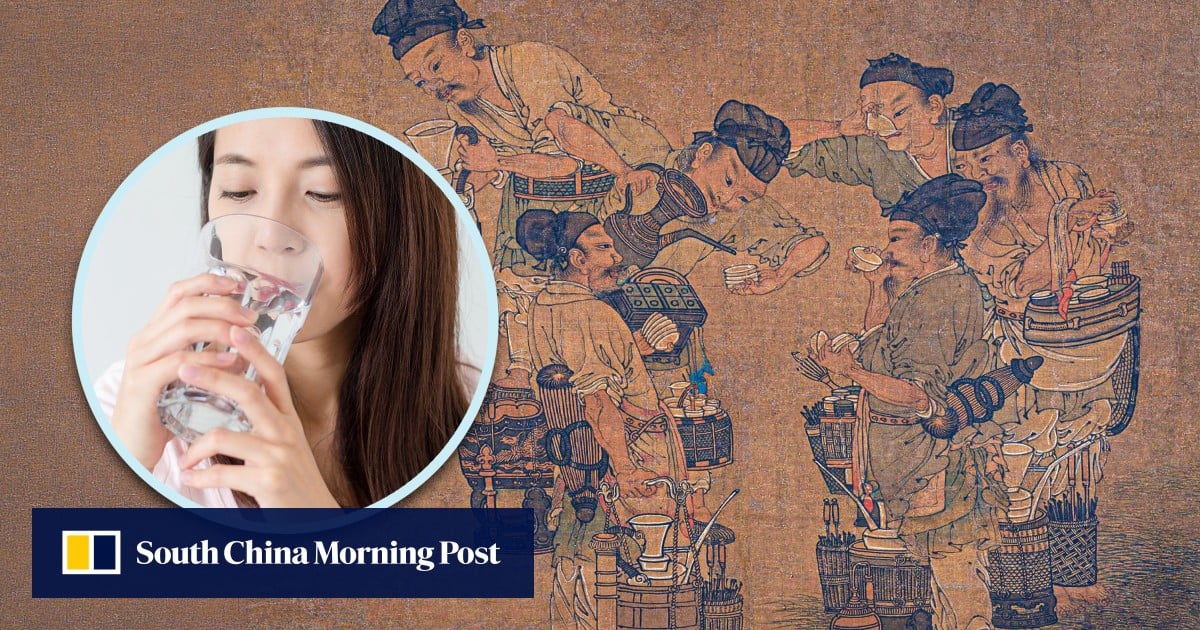
In ancient times a simple drink was nothing of the kind; type of water consumed was thought to cause everything from baldness to tumours
In ancient China, however, it carried far greater meaning. Water was bound up with social rank, health beliefs, ritual practice and etiquette.
As early as the pre-Qin period (Paleolithic Period – 221 BC), Chinese thinkers were already classifying natural water.
The ancient encyclopedic text Master Lü’s Spring and Autumn Annals claimed that “heavy water”, rich in minerals, could cause swelling in the legs and feet, while “light water”, with fewer minerals, could lead to baldness and tumours.
It also linked local water quality to the appearance of the people who drank it: sweet water was said to produce healthy, attractive residents; pungent water was associated with sores.
This helped shape later elite tastes, with emperors and nobles seeking out sweet, clean-tasting spring water or dew to brew tea.