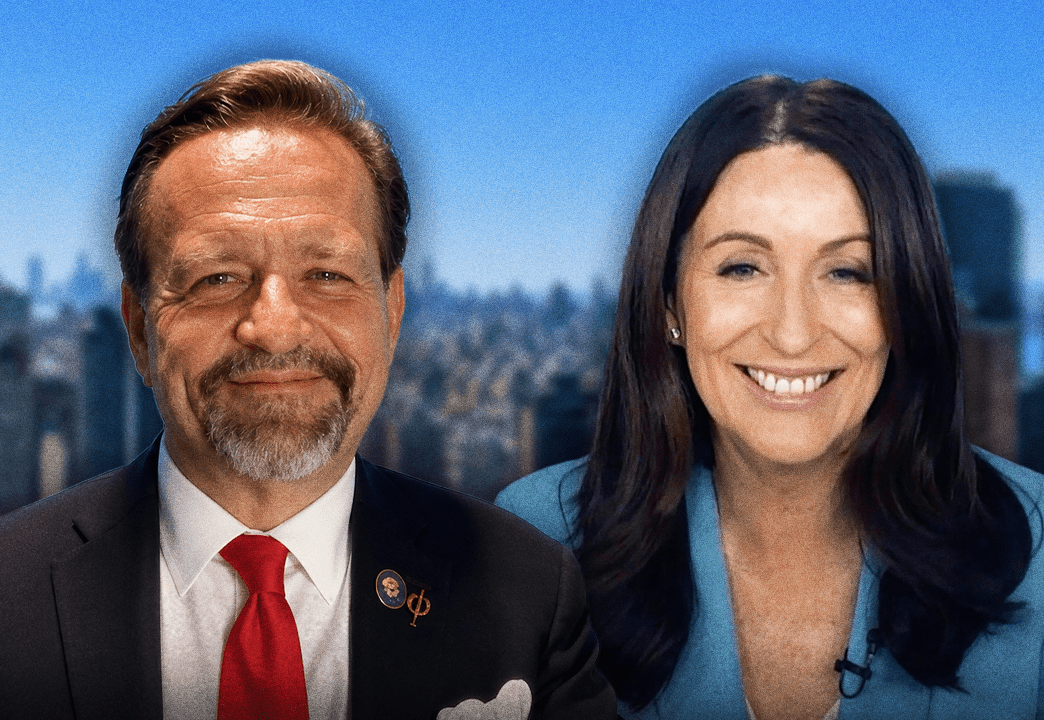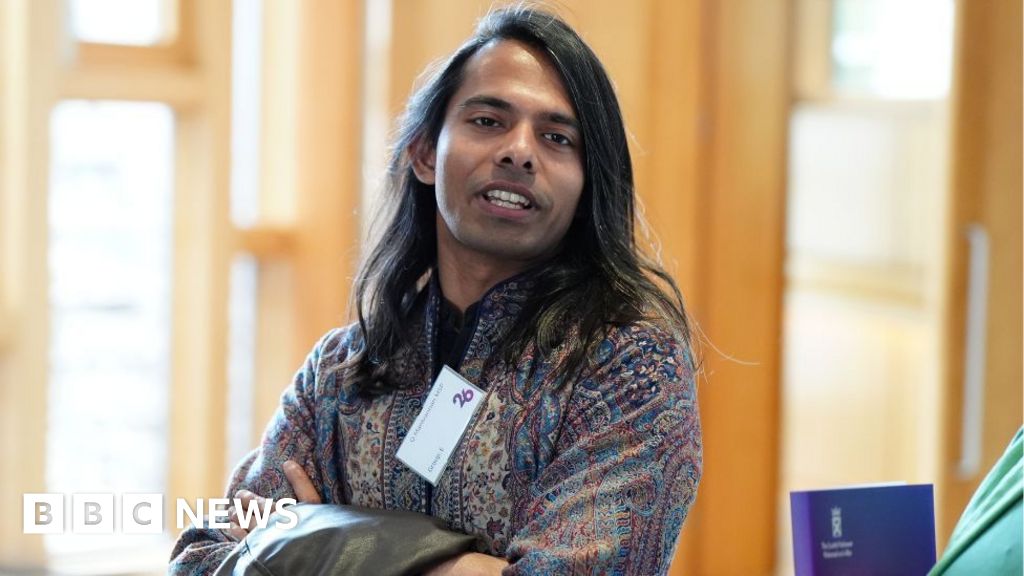
ShareSaveAdd as preferred on GoogleAngus CochraneSenior political journalist, BBC ScotlandPA MediaQ Manivannan was elected on the Edinburgh and Lothians East list Who should be allowed to stand for election to the Scottish Parliament?
That is the question at the centre of a debate sparked by the ballot box success of a Green candidate.
Q Manivannan, originally from India, is on a student visa which is due to expire at the end of the year. That did not prevent the political novice from being elected on the Edinburgh and Lothians East regional list.
Opponents believe Manivannan should not have been selected in the first place - while the Greens have accused critics of "disgusting" attacks on their new parliamentarian.
Manivannan moved to Scotland in 2021 to study for a PhD in international relations at the University of St Andrews.
The politician uses they/them pronouns and along with Glasgow's Iris Duane will be Holyrood's first trans parliamentarians.
Manivannan, who also identifies as non-binary, has worked as a community organiser, adviser and teacher with the United Nations, trade unions and human rights groups.
The Green is currently on a student visa but they have applied for graduate visa, which would allow them to stay in the UK for up to three years.
Manivannan has also applied for a global talent visa, which would allow them to stay in the UK for up to five years - covering the duration of the new Scottish Parliament term.
Rachel Turner, an immigration case worker in Aberdeen, told BBC Scotland News it was "fairly common" for students to progress to a graduate visa once they had completed their course. She said it usually took about eight weeks to get a response from the Home Office once an application had been submitted.
In the year ending March 2024, more than 99% of graduate applications were successful, according to Universities UK.
Global talent visas - which the Home Office offers to senior workers in the science, digital technology, and arts and culture sector - are much more difficult to attain, Turner said.
Until recently, foreign nationals were only eligible to stand for election to Holyrood if they had indefinite leave to remain - an immigration status allowing them to live and work in the UK in perpetuity.
In 2024, the Scottish Parliament unanimously voted to extend election candidacy rights to non-UK citizens with limited leave to remain - which grants them permission to stay in the UK for a time-limited period.
That rule change allowed Manivannan to stand for election to the Scottish Parliament.
Those on student visas can only work for a maximum of 20 hours per week while completing their course.
That does not affect Manivannan since they have finished their course. Even if they had not, the rules would not apply to the work of an MSP under the Home Office's immigration laws.
Concerns had also been raised about Manivannan's ability to hire staff - who help MSPs carry out parliamentary and constituency business. But Turner said this would be not be a problem for Manivannan under the current visa arrangement.
It is unclear precisely what would happen to a sitting MSP's Holyrood status if they lost their right to remain in the UK.
Following questions about their immigration status, Manivannan said in a statement: "Every MSP from every party represented in the Scottish Parliament unanimously voted to allow everyone with the right to live here to stand in elections, including new Scots on visas like me."
They added: "I am proud of my heritage and who I am. I am also proud to be a voice for all my constituents, including migrants and people on visas who are often shut out of our national debate."
Former SNP Westminster leader Ian Blackford has accused the Greens of "treating the electorate with contempt" by selecting a candidate on a temporary visa.
The ex-MP - now a member of the Ethics and Integrity Commission, which aims to uphold standards in UK public life - told The Times that "selecting such a candidate undermines trust in politics".
Reform UK Scotland deputy leader Thomas Kerr claimed it was "madness" for the Greens to have selected Manivannan as he called for the party to withdraw their candidacy.
"I think it's ridiculous that voters are asked to put in a representative to the national parliament when we don't know if they are going to be able to do the job for the next five years."
The Scottish Conservatives have called on the Home Office to investigate whether Manivanan had breached the terms of their visa.
Stephen Kerr - who was among the Tory MSPs who voted to change the eligibility criteria for Holyrood candidates in the last parliament - claimed the Greens had "shown immense disrespect to the Scottish electorate" by selecting Manivannan.
Kerr told the BBC that he "took on board" arguments that he and other MSPs had not properly considered the implications of the legislation they passed in the last parliament, but insisted he had particular concerns about Manivannan because the Green was elected while on a visa that is due to expire by the end of the year.
He added that Manivannan was unable to guarantee voters that they could serve the duration of the five-year term.
Green co-leader Ross Greer accused opponents of "nasty and unseemly" attacks.
He told BBC Scotland News: "It is disgusting to see the Tories and Reform to be attacking a legitimately elected MSP who just wants to get on with the job."
Greer said that while some arrangements may have to be "slightly different" for Manivannan, they would be "laser-focused" on serving constituents.
SNP MSP Emma Roddick, responding to Blackford's comments, said: "We can't go booting out someone who was just democratically elected, in line with the rules.
"Suggest a change to the rules, fine. This is targeting one person who seems to have done nothing wrong."
The change to the eligibility rules was introduced as part of the Scottish Elections (Representation and Reform) Bill, which was passed unanimously in December 2024.
Although expanding candidacy rights to foreign nationals with limited leave to remain was one of the key provisions of the bill, debates and media coverage were largely focused on an amendment banning MSPs from holding a seat at Westminster.
While the bill was being considered by a Holyrood committee, Alistair Clark, professor of political science at Newcastle University, told MSPs there was no "compelling reason" to expand candidacy rights to people with limited leave to remain.
The Law Society of Scotland also said the most common duration of limited leave to remain granted in the UK was two-and-a-half years, whereas Holyrood elections are held every five years.
It warned of the prospect of costly by-elections if MSPs lost their seat after being refused leave to remain.
"We are concerned that the expense, administration requirements and uncertainty created for constituents could be overwhelming," the law society said.
A by-election is only triggered if a constituency MSP loses their seat. If a regional MSP loses their seat, they are replaced by their party's next candidate on the list.
The law society's comments were cited by Conservative MSP Annie Wells during the final debate on the bill - though she and her party still voted for it.
The only other mentions of the provision in the debate were from Lib Dem leader Alex Cole-Hamilton, who reiterated his strong support for the change, and government minister Jamie Hepburn.
He said it was "perfectly possible" for people with limited leave to remain to stand for election, adding that it was for the electorate to decide whether such a person "can represent them adequately".