Video Trump's China summit: Families plead for imprisoned Americans President Trump heads to a high-stakes China summit as the families of Nelson Wells Jr. and Dawn Michelle Hunt plead for their release from Chinese prisons.
As President Donald Trump and hundreds of aides, security personnel and officials prepare to travel to China, many will leave behind one of the most basic tools of modern government: their everyday cellphones.
Instead, officials entering China often travel with stripped-down "clean" devices, temporary laptops and tightly controlled communications systems designed to minimize the risk of surveillance, hacking or data collection in what U.S. officials consider one of the world’s most aggressive cyber environments.
The precautions can transform even routine tasks into logistical headaches. Messages that would normally travel instantly through encrypted apps or synced devices are instead routed through controlled channels, temporary accounts or relayed in person.
CHINA-LINKED HACKING GROUP TARGETS PHONES BELONGING TO TRUMP FAMILY, BIDEN AIDES: REPORT
Contacts disappear. Cloud access is limited. Some officials operate for days without their normal digital footprint.
Current and former officials say the measures reflect a longstanding assumption inside the U.S. government: anything brought into China — phones, laptops, tablets or even hotel Wi-Fi connections — should be treated as potentially compromised.
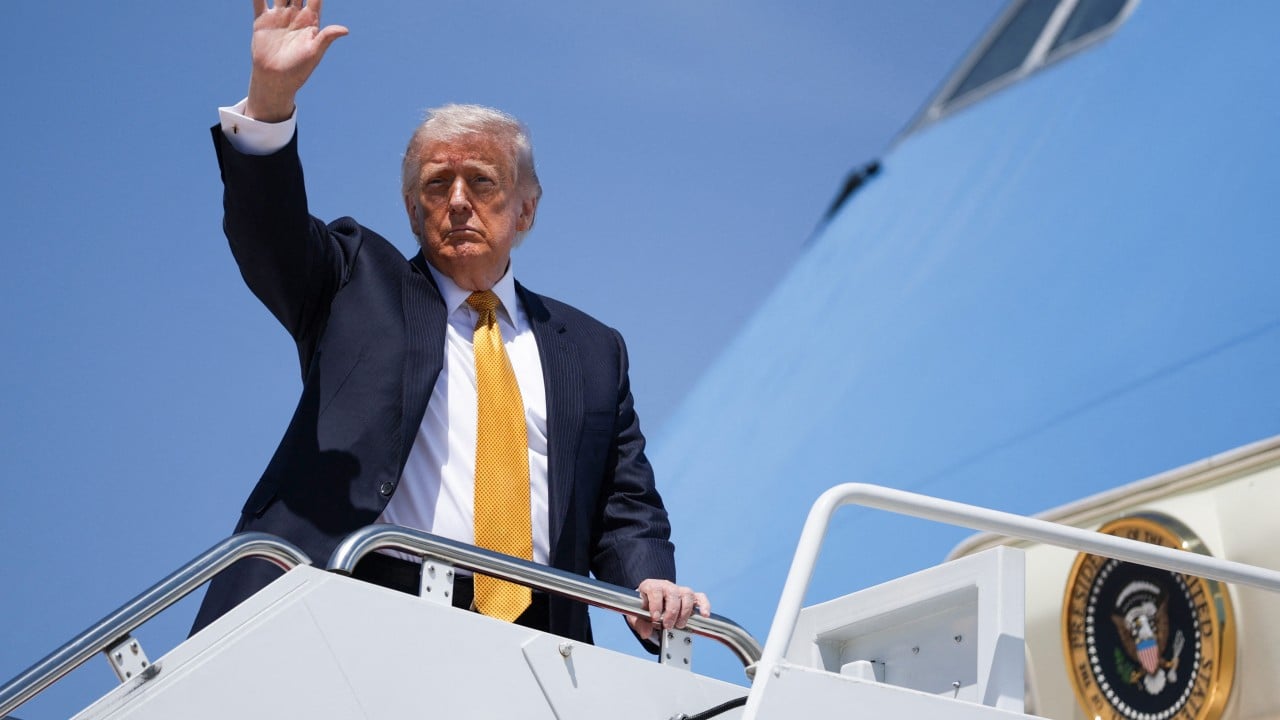
As President Donald Trump and hundreds of aides, security personnel and officials prepare to travel to China this week, many will leave behind one of the most basic tools of modern government: their everyday phones. (Evelyn Hockstein/Reuters)
"China is a mass surveillance state," said Bill Gage, a former Secret Service special agent and now director of executive protection for Safehaven Security Group. "Briefings for U.S. officials begin well before the president arrives, and they make clear that everything is monitored."
"We always tell people to assume everything you say and do — both in person and digitally — could be monitored," said Theresa Payton, former White House chief information officer and CEO of cybersecurity firm Fortalice Solutions. "And to conduct themselves accordingly."
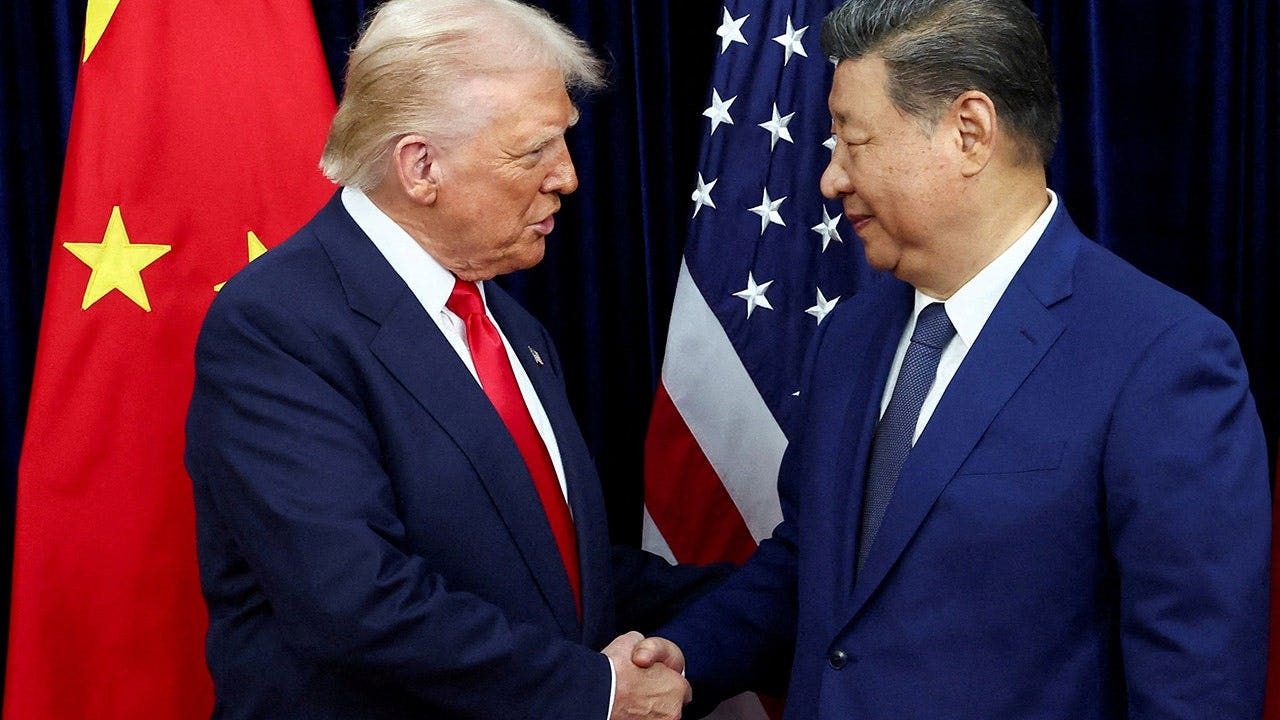
Ahead of Trump’s high-stakes meetings with Chinese President Xi Jinping, the digital precautions underscore the broader mistrust shaping the relationship between Washington and Beijing, where cybersecurity, espionage and surveillance concerns now permeate nearly every aspect of official engagement.
TRUMP TO CONFRONT XI AT HIGH-STAKES SUMMIT OVER CHINA BACKING FOR IRAN, RUSSIA
The precautions will extend beyond government officials. The delegation traveling with Trump also is expected to include executives from major American firms, including Apple, Boeing, Qualcomm and BlackRock — companies operating at the center of the U.S.–China economic and technological relationship.
In Washington, officials are often told to leave their phones behind when entering places like the Chinese Embassy. Those same concerns are amplified when traveling to China itself, where U.S. officials operate under the assumption that devices, networks and even hotel rooms could be monitored.
Even charging a phone can become a security concern.
Federal cybersecurity guidance has long warned travelers to avoid plugging devices into unknown USB ports or untrusted charging systems because compromised hardware can potentially be used to extract data or install malicious software — a tactic commonly referred to as "juice jacking."
As a result, officials traveling to high-risk countries often carry preapproved charging equipment, external battery packs and government-issued accessories rather than relying on local infrastructure.
"There are no safe electronic communications in China," Gage said, noting officials are advised to limit digital activity to only what is necessary for the mission.
The Chinese government has rejected claims that it engages in improper surveillance.
"In China, personal privacy is protected by law," Chinese Embassy spokesperson Liu Pengyu told Fox News Digital. "The Chinese government places a high priority on protecting data privacy and security in accordance with the law. It has never required—and will never require—enterprises or individuals to collect or store data in violation of the law."
"China is a mass surveillance state," said Bill Gage, a former Secret Service special agent and now director of executive protection for Safehaven Security Group. "Briefings for U.S. officials begin well before the president arrives, and they make clear that everything is monitored." (iStock)
Payton said officials may also be issued temporary devices configured with known "golden images," allowing security teams to detect whether a device has been altered or accessed during the trip.
"You may see executives issued loaner phones with a known ‘golden image,’ meaning security teams can compare the device before and after use to see if it’s been tampered with," she said.
"There may be controlled ‘safe zones’ set up where officials can communicate back to the U.S., but everything is tightly managed," Payton added.
When sensitive conversations need to happen, the logistics become even more complex.
U.S. officials traveling overseas frequently rely on temporary sensitive compartmented information facilities, or SCIFs — secure spaces designed to prevent electronic surveillance and eavesdropping. Those facilities can be established inside hotels or other controlled locations during major diplomatic trips.
"The White House Military Office and communications teams create controlled spaces where they can monitor both physical and digital access to ensure sensitive conversations remain secure," Payton said.
The precautions can create a surprisingly analog environment for a modern presidential delegation. Paper documents become more common, digital access is restricted and aides accustomed to constant communication often operate through tightly controlled channels.
Officials entering China often travel with stripped-down "clean" devices, temporary laptops and tightly controlled communications systems designed to minimize the risk of surveillance, hacking or data collection in what U.S. officials consider one of the world’s most aggressive cyber environments. (iStock)
The White House could not immediately be reached for comment.
U.S. officials have spent years warning about Chinese cyber espionage campaigns targeting American government agencies, critical infrastructure, defense contractors and telecommunications networks.
Intelligence officials have accused Beijing-linked hackers of infiltrating everything from federal systems to power grids and water utilities, while repeatedly attempting to collect information on senior American officials and policymakers.
"China will conduct extensive research on every member of the U.S. delegation — from senior officials down to junior personnel," Gage said, describing the level of intelligence targeting officials are warned about before traveling.
Payton said the high-profile nature of a presidential visit only increases the risk.
"This is a well-publicized event, so you have to assume everything from nation states to opportunistic actors may be trying to listen in," she said.
CLICK HERE TO DOWNLOAD THE FOX NEWS APP
The issue exploded into public view in 2023, when a suspected Chinese surveillance balloon crossed the continental United States before being shot down by the U.S. military after traversing sensitive military sites. U.S. officials later said the balloon was part of a broader surveillance effort linked to Beijing.
More recently, federal officials have warned about sophisticated China-linked cyber groups such as Volt Typhoon and Salt Typhoon, which U.S. authorities say targeted critical infrastructure and telecommunications systems in ways that could support espionage or disruption during a future conflict.