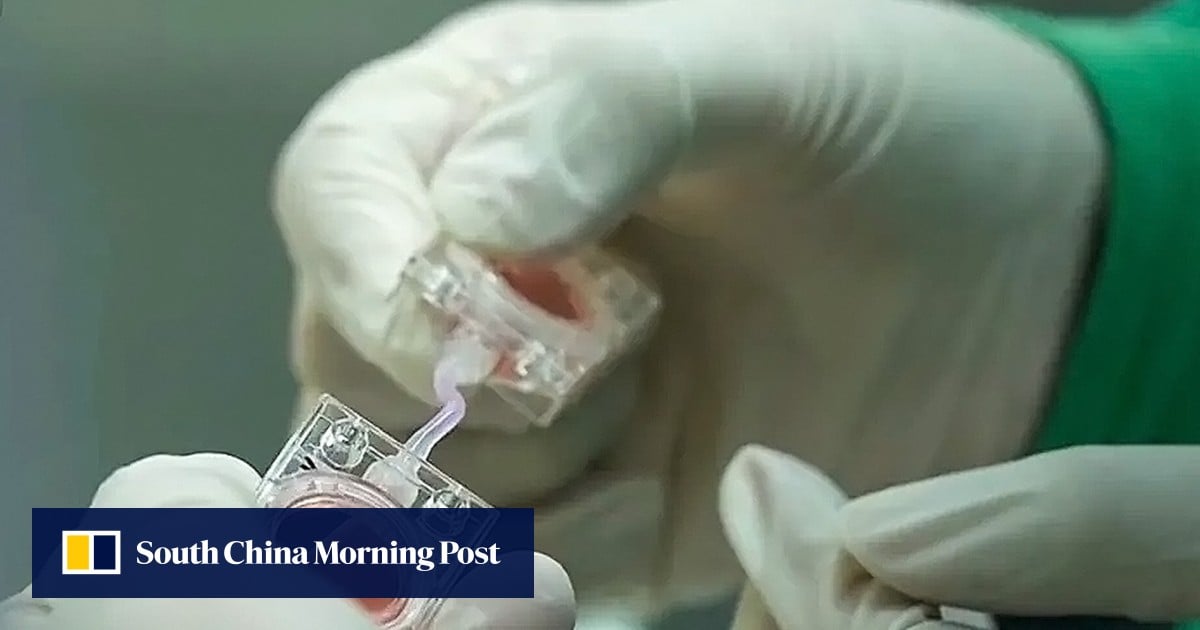
Artificial embryos sent to the Tiangong space station to study impact of zero-gravity on human development, CCTV reports
The experiment was reported on Tuesday by state broadcaster CCTV.
Project leader Yu Leqian said the main goal was to study the impact of gravity – and its absence – on early development, in preparation for eventual human settlement off Earth.
Once the impact of the force on embryos was understood, scientists could develop interventions to control its effect, he told CCTV.
Yu is a professor and investigator at the State Key Laboratory of Stem Cell and Reproductive Biology of the Institute of Zoology, Chinese Academy of Sciences.
“[We might] use certain technologies to mitigate the impact. This is our first attempt to answer [the questions]: Can humans survive and reproduce in space? I hope the answer is yes,” he said.