Zo’s nickel and diming New Yorkers to save a buck.
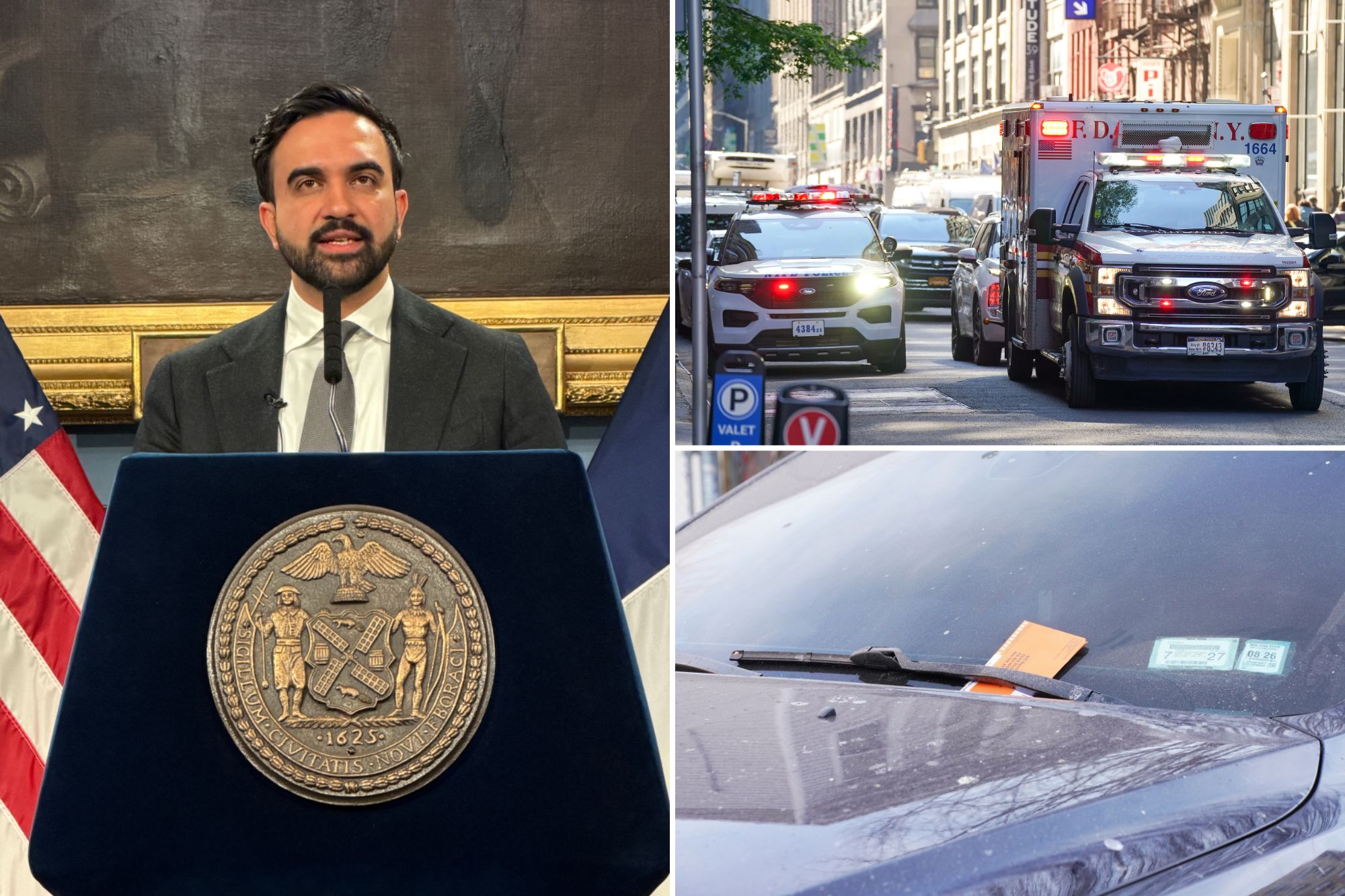
Mayor Zohran Mamdani officially rolled out his $124.7 billion spending plan Tuesday as he patted himself on the back for closing a so-called multibillion-dollar budget gap with short-term fixes — but included a menu of hidden fee hikes.
Fiscal watchdogs poked holes in Hizzoner’s cheers that his first-ever budget was “evidence of a new era of government in our city” as his administration touted numerous ways the city would hold onto $1.7 billion over the next two years.
Critics called it “fake savings” even after he ditched a wildly unpopular plan to hike property taxes by a whopping 9.5%.
“Banking on yet to be determined revenue-raising gimmicks and identifying fake savings are not wins,” a Democratic operative said. “This budget plan is as real as Kim Kardashian’s lips.”
Mamdani, who campaigned on an affordability agenda, said over several months new “Chief Savings Officers” were able to identify about municipal savings — but some of the supposed extra cash would come from soaking residents and businesses for more dough.
City Hall plans on jacking up the costs for ambulance transportation to net nearly $25 million more a year and charge people for EMS help even if they aren’t taken to a hospital, which would add another $10 million to the coffers, according to the mayor’s savings program.
Ticketing more cars in bus lanes, upping enforcement on the trade waste industry and public wholesale markets and hiking tree replacement fees were also tied to the savings, city docs stated.
The city also plans to crack down on the popular STAR credit for property owners and “abatement compliance” by increasing audits to collect at least an estimated $24 million more a year, the budget states.
An insider cautioned, “There’s not enough savings at all.”
“The only good thing is he gave on property tax and the rainy day fund,” the politico said. “Otherwise, the budget is not where it needs to be at all.”
The Department of Veterans’ Services is also ready to slash unspecified veteran events to save a measly $60,000, and Sanitation is expecting to cancel a battery disposal program to the tune of $353,000.
Under the “savings” plan, officials merely re-estimated revenue they believed would be more accurate, including counting on millions of dollars more for handgun licenses, permit applications to the Landmark Preservation Commission and Taxi and Limousine Commission license renewal fees.
The lion’s share of savings stems from the Department of Education, leaning heavily on vaguely defined “cost containment.”
About $149.5 million this fiscal year is expected to be saved from “improved financial controls,” while an eye-popping $922 million would be saved next year, which would be driven by “improved financial control, including a $30.3 million in procurement “reform.”
Mamdani, during a Tuesday press conference announcing his first budget, insisted his team searched “for every efficiency and savings we can find.”
“It is evidence of a new era of government in our city, one that can balance both ambition and fiscal responsibility, one that can invest in housing, childcare, libraries, parks, schools and climate resiliency, while also cutting waste and finding efficiencies,” he said.
“One that does not accept austerity as the only answer to adversity, one that refuses to kick structural challenges down the road for someone else to have to solve.”
During his presentation, he listed about $94 million in saved funds thanks to “pursuing better contract rates, and terminating contracts where city workers can do it better” and stowing away another $28 million by “modernizing city technology and software license.”
He also boasted the city would save $368 million by “improving the efficiency of public services” while cutting down on overtime and obsolete programs and highlighted saving a whopping $947 million by merely “improving our financial management, claiming revenue that the city is owed, and accurately estimating expenses.”
The city would also save by consolidating, giving up unused space, combining agency leases and not filling vacant positions.
City Hall officials also insisted it was narrowing the budget gap by stretching out payments to the city’s pension funds to save $2.3 billion over two years and implementing a pied-à-terre tax on ritzy second homes that is supposed to generate $500 million — though that sum has come under scrutiny.
The admin also made lofty claims that it would save hundreds of millions of dollars by slowing down the growth of cases around special education reimbursement and housing vouchers — but offered up little in real-world fixes on the ballooning budget lines.
Mamdani’s new Office of Community Safety was budgeted for $270 million — a fraction of the $1.1 billion he vowed to spend on the campaign trail on a proposed newly created department focused on responding to New Yorkers with mental health crises.
City Comptroller Mark Levine warned in a statement that the budget still “relies on $2.8 billion in one-time measures and $2.3 billion in short-term pension savings, without solving for the fact that City government continues to spend more than we take in, even in a year of record revenues.”
Citizens Budget Commission president Andrew Rein also said while the city deserves kudos for reining in some spending, more belt-tightening is needed.
Start your day with all you need to know Morning Report delivers the latest news, videos, photos and more.
“Holistic transformation is the best path for the excellence in government the Mayor rightly promotes and New Yorkers need,” he said in a statement.
“Unfortunately, we get the types of maneuvers we’ve seen in the past.”
Mamdani’s budget will now be reviewed by the City Council as the two sides look to reach an agreement before the new fiscal year starts on July 1.