The World Health Organization announced it expects more cases of hantavirus to crop up in the days and weeks ahead, but assured there are no indications of a wider outbreak on the horizon.
“We expect more cases given the dynamics of spread on a ship and the virus’ incubation period,” the UN agency wrote on X Tuesday morning.
Three passengers from the MV Hondius have died of hantavirus, but health officials say there’s ‘no sign’ of a widespread outbreak. AP “At the moment, there is no sign that we are seeing the start of a larger outbreak.”
The agency confirmed a total of 11 cases so far, including three deaths, with nine of the cases confirmed and two “probable.”
All of the cases so far are among the 147 passengers and crew who were aboard the MV Hontius, the Dutch-flagged cruise ship that became the locus of an isolated outbreak of the deadly virus after setting sail from Ushuaia, Argentina on April 1.
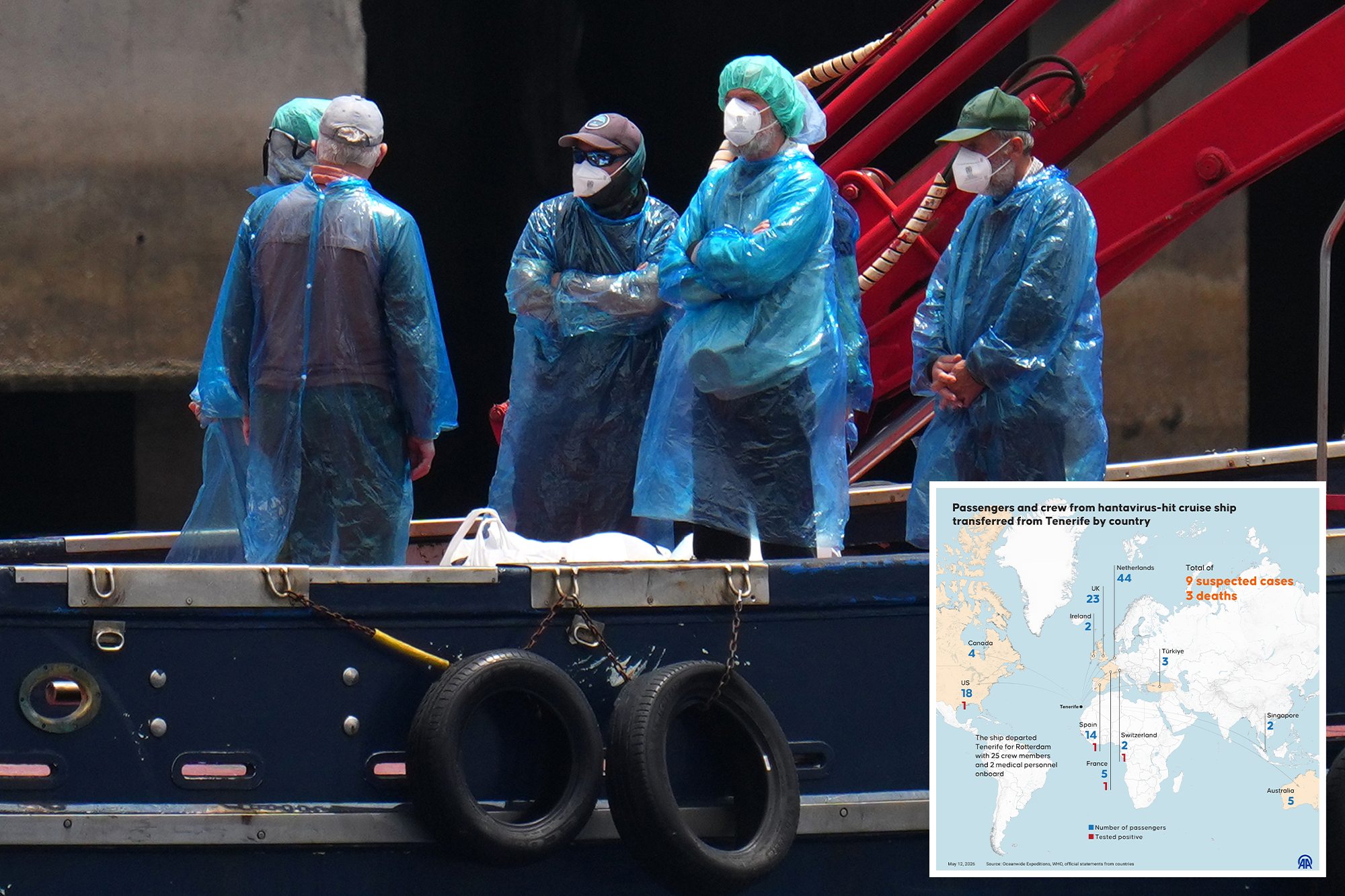
Most of the passengers — including 17 Americans — have been brought to their home countries for follow-up monitoring.
WHO is recommending a 42-day quarantine period either at home or in a facility, but no mandatory isolation order has been made.
Sixteen of the Americans were brought to the National Quarantine Center in Omaha, Nebraska for screening — while two others, one who tested positive and another showing mild symptoms, were flown to Emory University Hospital in Atlanta.
There have been nine suspected cases so far, and WHO says it expects there will be more. Anadolu via Getty Images Health officials have emphatically downplayed fears of the outbreak resulting in a COVID-19-like pandemic.
“Let me be crystal clear: the risk of hantavirus to the general public remains very, very low,” said Admiral Brian Christine of Health and Human Services.
“The Andes variant of this virus does not spread easily, and it requires prolonged close contact with someone who is already symptomatic.”
Most strains of the virus are spread through rodent urine, saliva and feces and are not easily transmissible human-to-human, experts said.