Gigafactory stakes and a push for self-driving software approval cast the billionaire as a key US envoy while seemingly sealing a reconciliation with Trump
3-MIN READ3-MIN ListenSylvia Main Hong KongandAnn Caoin ShanghaiPublished: 9:30pm, 12 May 2026When US President Donald Trump’s delegation touches down in Beijing on Wednesday night, he looks to be flanked by a cadre of corporate executives, headlined by a man seen by much of the Chinese public as the most familiar American entrepreneur of his generation: Elon Musk.The Tesla and SpaceX chief’s presence alongside Trump for meetings with President Xi Jinping adds a distinctive commercial and personal layer to a diplomatically delicate trip.
“Musk’s inclusion in Trump’s China delegation has indeed come as a surprise to many,” said Bai Wenxi, chief economist at China Enterprise Capital Union (CECU).
Bai suggested that the move signals Washington’s effort to ease tensions by prioritising commercial interests, recognising that progress – including on issues such as Taiwan, tariffs and artificial intelligence controls – requires leveraging business figures deeply embedded in the Chinese market.
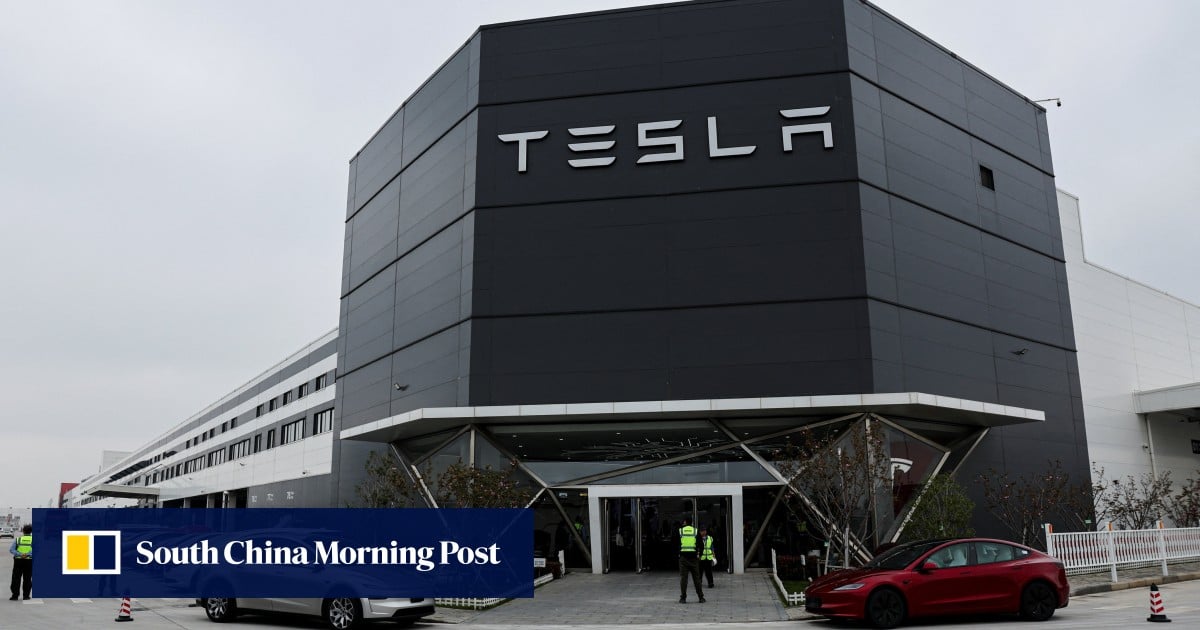
Musk’s local standing was most visibly cemented with the rise of Tesla’s Gigafactory in Shanghai – the firm’s first wholly foreign-owned automotive plant in China. The facility was approved unusually quickly and became a flagship project in Beijing’s broader push to signal openness to advanced manufacturing and global capital.
It rapidly grew into one of Tesla’s most efficient plants, churning out Model 3 and Model Y vehicles at a scale that helped the carmaker weather global supply-chain disruptions.
“Given [Musk’s] deeply intertwined business interests in mainland China, he serves as a natural bridge for both the atmosphere and the communication between the two sides,” said Kenny Ng, a securities strategist at Everbright Securities International.