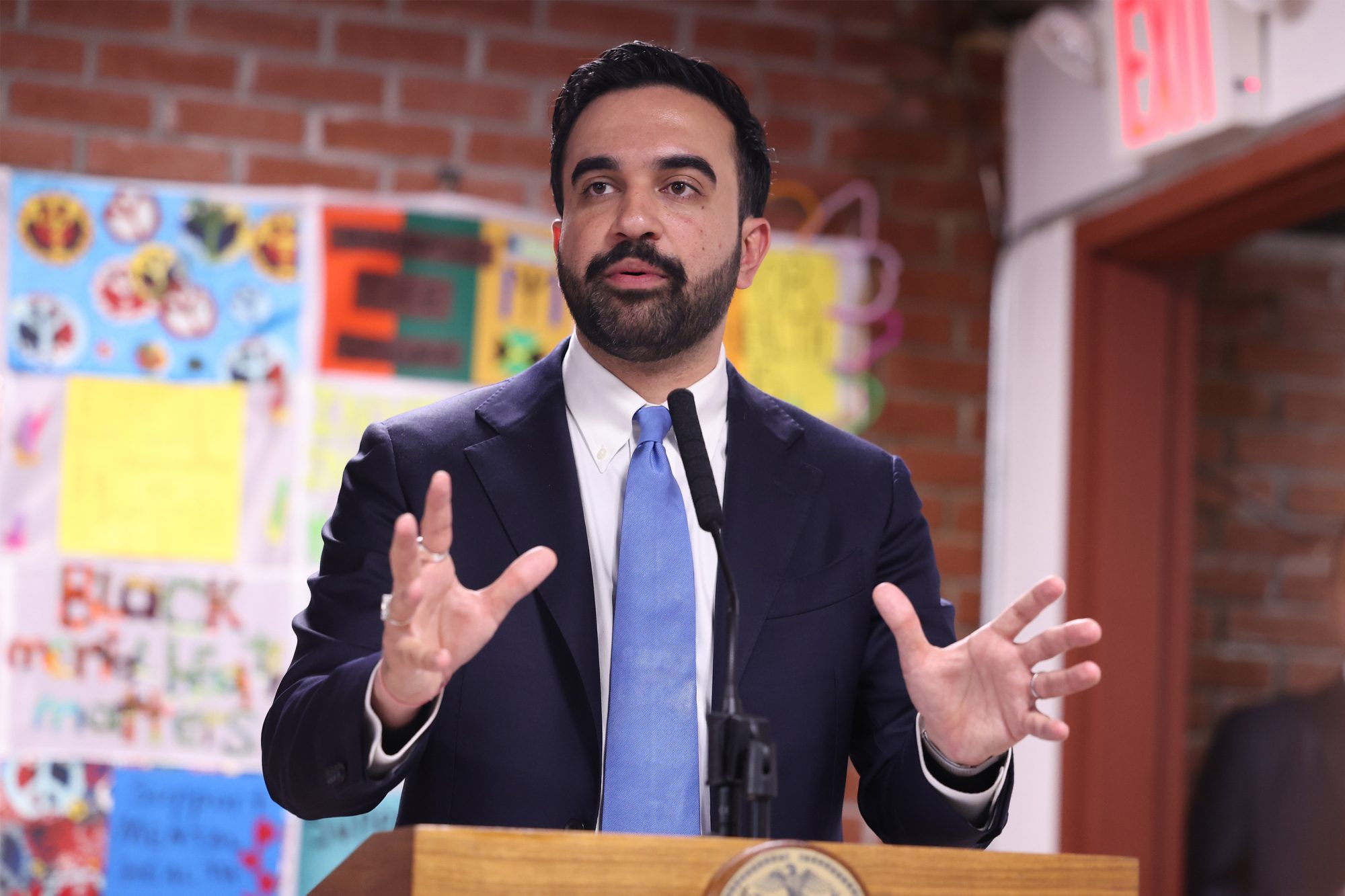
NYC public schools face an enrollment crisis, projected to lose 153,000 students in 10 years. William Farrington for NY Post New York City’s public schools are in a full-blown enrollment crisis, losing students by the tens of thousands each year — and Mayor Zohran Mamdani has shown no interest in dealing with it.
A new report by the NYC School Construction Authority projects that city schools will lose 153,000 students over the next 10 years.
That means the decline the city has seen recently — with nearly 120,000 students disappearing from public schools since the 2019-20 school year — is set to continue.
Meanwhile, Gov. Kathy Hochul has announced that Albany will opt in to the Federal Tax Credit Scholarship program, giving city parents more opportunities to exit public schools.
Yet last month, when Chancellor Kamar Samuels proposed a mild response — closing or relocating three under-enrolled schools, while still opening six new ones — the Panel for Education Policy, which must approve all education decisions made by City Hall, balked.
Instead, PEP chose to throw good money after bad by keeping empty and failing schools open, while preventing successful schools from expanding.
It voted to create five new schools, to cancel the only proposed high school offering advanced math, and to abandon all closures and relocations.
It’s a shocking failure to adapt at a time when city families are plainly voting with their feet and leaving the system en masse.
But rather than up their game, the city’s public schools are wasting millions to keep failing schools open.
According to the Citizens Budget Commission, 380 of the city’s nearly 1,600 schools are below 60% capacity — close to a quarter of the total.
This school year, 112 schools have fewer than 150 students; next year, that figure is expected to rise to 134 schools.
Despite low and declining enrollment, these inadvertent microschools don’t lose funding as their students vanish.
Under the nonsensical “hold harmless” policy, every school in the system receives at least as much funding as it did the year before, regardless of enrollment.
That policy alone is costing taxpayers approximately $400 million annually.
The mayor claims he’s facing a historic budget challenge, yet he refuses to halt this waste.
In fact, he’s going in the opposite direction, proposing $3 billion more in Department of Education spending — and opening new schools, too.
PEP voted to create five brand-new schools, including a new Bronx high school focused on hip-hop.
It canceled, however, the proposed Next Generation Technology High School, a first-of-its-kind school focused on AI and other emerging technologies.
Over 1,000 students had applied for only 100 available seats.
But PEP Chairman Greg Faulkner objected that Next Generation, which planned to screen its students for the basic math proficiency necessary for its rigorous program, wouldn’t promote “equity and equitable access.”
PEP also voted to cancel the proposed relocation of Center School on the Upper West Side, which would have allowed the overcrowded PS 9 to expand.
That means PS 9 students with special needs will have to keep receiving therapy sessions in front of other children, due to lack of space.
PEP declined to close the under-enrolled, underperforming PS 191 and Manhattan School for Children.
PS 191 had only 138 students last year (down from 172 a decade ago), when just 42% of fifth graders met grade-level standards in reading or math.
Enrollment at Manhattan School for Children declined from 687 in the 2019-20 school year to 437 in 2024-25, as academic performance there kept sliding; 54% of its eighth graders read at grade level, with even worse results in math.
It’s an ongoing vicious cycle: The more City Hall denies academically rigorous programs and fails to create more seats in thriving schools, the more parents will seek other options.
And keeping emptying schools open translates to lower per-pupil funding for students in more successful, higher-attendance schools.
Instead of bankrolling failure, the public-school system requires leaders willing to make difficult decisions.
As a first step, Samuels should carefully examine which city schools are attracting and retaining families, and implement a plan to expand on their success.
Next, funding should track enrollment: Per-pupil spending should be more equal across the city’s schools, thereby boosting resources for those functioning well.
Finally, Samuels and Mamdani must say plainly that empty and failing schools need to close.
Propping up the status quo will only deepen the mayor’s budget woes and prevent any meaningful academic improvement for our kids.
DOE can take a cue from other large school systems: Philadelphia is closing 17 schools next year, Houston is closing 12, and Boston plans to shutter 20 schools by 2030.
As Boston Public Superintendent Mary Skipper recently put it, “When . . . there are fewer students to educate, we also need to make reductions in teachers and staff positions because the students aren’t there.”
A school system with fewer students needs fewer schools — and better ones.
Danyela Souza Egorov is a fellow at the Manhattan Institute.