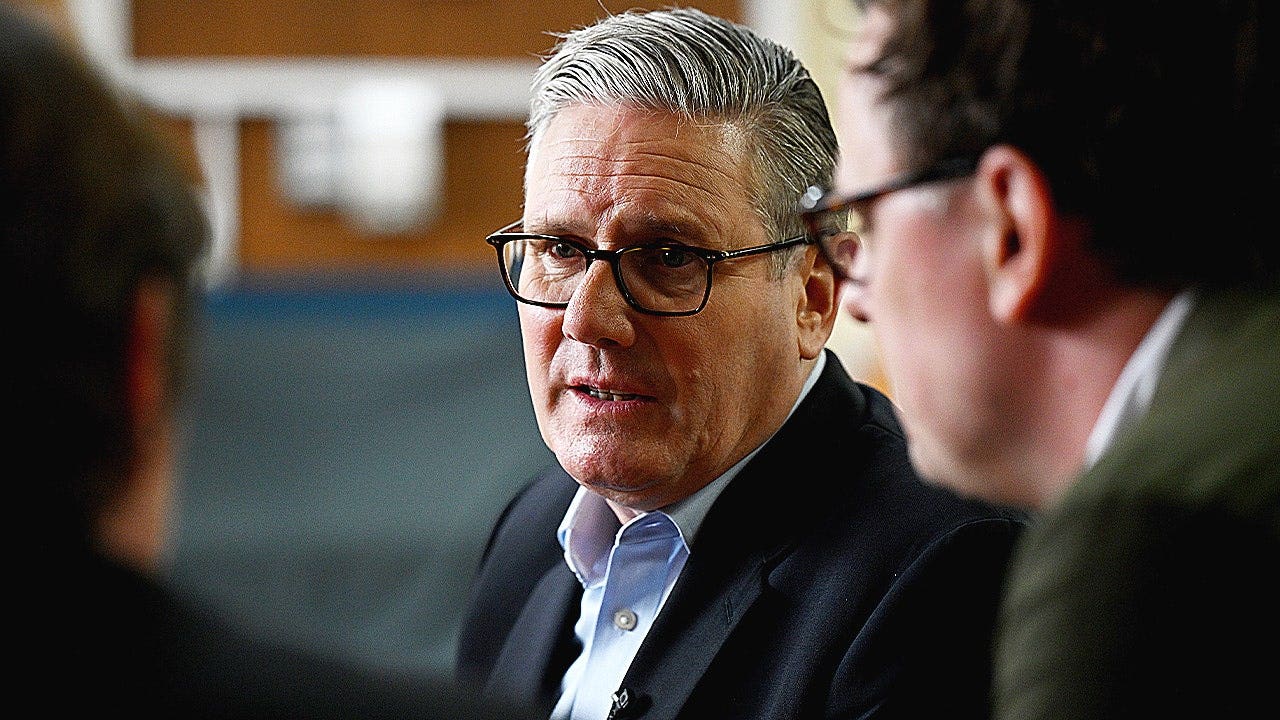
Although those calling for Starmer to go represented just 15% of the parliamentary party, it was by no means clear they would not be followed by more. Photograph: Carl Court/Getty ImagesView image in fullscreenAlthough those calling for Starmer to go represented just 15% of the parliamentary party, it was by no means clear they would not be followed by more. Photograph: Carl Court/Getty ImagesAnalysisStarmer began the day damaged and then things got worsePippa Crerar Political editorA growing number of Labour MPs are in no mood to heed calls from the PM’s allies to keep faith with their leader
“Has Keir done enough to survive?” was the question anxious Labour MPs were asking each other throughout Monday, after the speech regarded by many as crucial to Starmer’s chances of political survival.
But the anxiety for many of them – badly bruised by Thursday’s election crushing – did not stem from concern the prime minister might be ousted. But that he would not.
Starmer began the day already damaged. As many as 40 MPs had called for him to set out a timetable for his departure. Leadership contenders were circling. He faced an unlikely stalking horse in backbench MP Catherine West.
At the London community centre where he was giving his speech to Labour members, the few senior party figures present looked tense. Starmer, in shirt sleeves and without a tie, arrived with furrowed brow.
“I take responsibility for not walking away, not plunging our country into chaos, as the Tories did time and again, chaos that did lasting damage to this country. A Labour government would never be forgiven for inflicting that on our country again,” he told the audience.
“I know that people are frustrated by the state of Britain, frustrated by politics, and some people are frustrated with me. I know I have my doubters, and I know I need to prove them wrong, and I will.”
The prime minister’s problem, however, is that a growing number of his own MPs are unlikely to change their minds.
“I always bought the argument that changing leader would undermine all our promises about stability, however bad things were. But it’s gone too far – we can’t go on like this,” said one previously loyal backbencher.
Others felt that while Starmer had diagnosed the problem – that the British people were tired of a status quo that had let them down – he didn’t have the solution.
“Keir said in his speech that incremental change won’t cut it. But we’ve been in power almost two years. If he really understood the scale of response needed, he’d have talked about it before now,” said another MP.
Within hours of the speech, Catherine West, the Labour MP who announced a challenge to Starmer’s leadership on Saturday, changed course to say she instead wanted him to plan for an orderly transition.
“I am hereby giving notice to No 10 that I am collecting names of Labour MPs to call on the prime minister to set a timetable for the election of a new leader in September,” she said, kicking off a de facto confidence vote.
The names came steadily throughout the day. By 6pm, more than 60 Labour MPs, including three junior frontbenchers, had called for Starmer to quit. But they were, by the time of publication, an army without a general.
As the working day drew to a close, the flurry escalated, many of them allies of Streeting – including his own PPS – in what appeared to be an orchestrated move. Earlier, many of them had shared their disappointment that he hadn’t yet gone over the top.
Streeting, himself, however, stayed silent, with his team only reiterating that he had been open with No 10 for months that he was preparing for the leadership in the event Starmer’s own fell apart.
Read moreOne close ally insisted that he had no plans to “pull the house down” by mounting a coup against the prime minister – not least because he would not necessarily win against a soft left candidate, but as the day went on, an imminent move by Streeting felt almost inevitable.
Many of the other MPs speaking out were backers of Andy Burnham – and deeply frustrated that their man is unable to challenge Starmer officially because he is not in parliament – and has yet to find a seat.
Instead, they hope to put him under such intense pressure that he has no option but to allow Burnham to return in the event of a byelection. Labour’s ruling national executive committee, which blocked him last time, also appeared to be softening.
Angela Rayner, long thought of as the most likely successor to the Labour crown – despite her tax problem – has in recent weeks seen her stock among soft left MPs fall, at the same time as Burnham’s has risen.
Her public remarks on Monday fell short of calling for Starmer to go, although she said that he had been wrong to block Burnham from running in the Gorton and Denton byelection, hinting that she could now throw her weight behind him.
Despite his speech, Starmer ended his day in a worse position than it had begun. Although those calling for him to go represented just 15% of the parliamentary party, it was by no means clear they would not be followed by more.
Apart from three cabinet ministers who appeared on broadcast media over the course of the day, none of his top team publicly rallied around as they did when Anas Sarwar, Labour’s leader in Scotland, urged him to go in February.
Read moreEach new letter further undermines the prime minister’s already drastically weakened authority, adds to the political instability of his government, and raises the likelihood of a direct challenge.
Starmer’s closest allies urged MPs to pause. “Everybody needs to calm down and take a deep breath. If you want to be seen as a credible governing party, the idea that you come into power promising stability, and then 20 months later decapitate your leader, is just madness,” one said.
But for now, many MPs don’t seem to be listening.