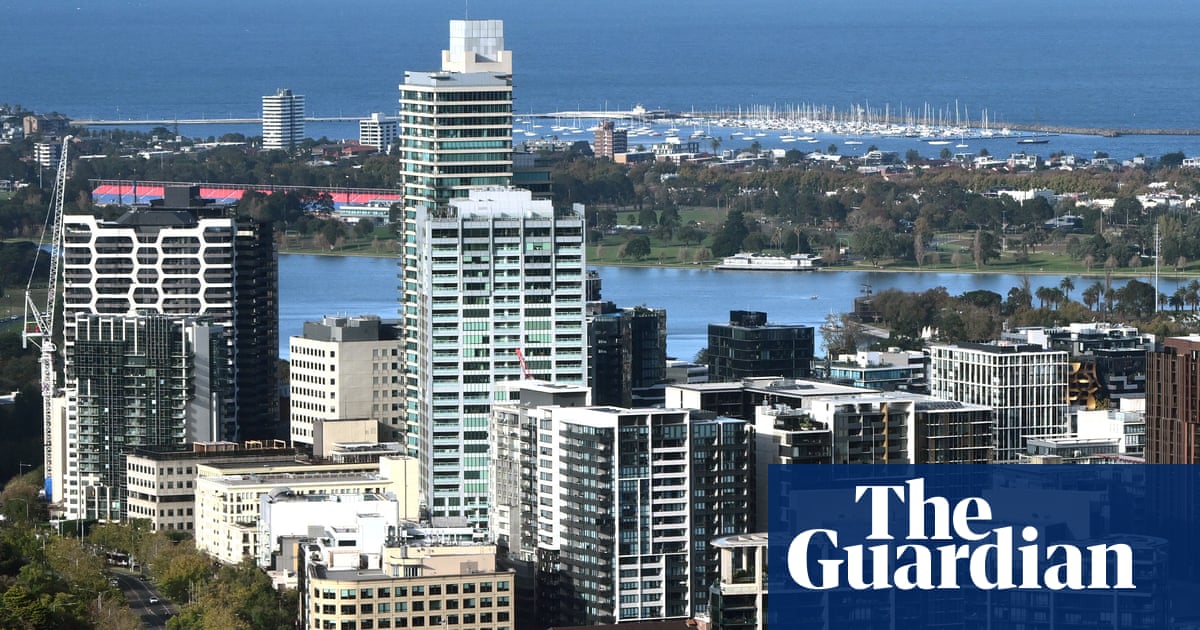
While extra land tax in Victoria spurred warnings about less rental supply and higher rents, the investor taxes actually seem to have helped Victorians enter the housing market without pushing up their rents. Photograph: Joel Carrett/AAPView image in fullscreenWhile extra land tax in Victoria spurred warnings about less rental supply and higher rents, the investor taxes actually seem to have helped Victorians enter the housing market without pushing up their rents. Photograph: Joel Carrett/AAPAnalysisChanging tax rules for investors won’t shrink housing supply or raise rents. Just look at VictoriaJonathan Barrett and Luca IttimaniLabor’s anticipated reforms are not a panacea, but they could nudge Australia toward a more equitable trajectory
Get our breaking news email, free app or daily news podcast
The Albanese government is preparing to unveil a budget that will recast housing as shelter – rather than a financial tool – in changes that have already sparked heated warnings that rents will rocket and housing supply will be curtailed.
It is now clear that Labor will usher in changes to negative gearing and capital gains tax designed to make property less attractive to new investors.
The government will have ample protection for existing property investors, known as grandfather provisions, which will give it some protection from a political backlash as it transitions Australia away from an unfair system without burning it to the ground.
To be clear, if the anticipated changed settings – a clampdown on negative gearing for future purchases and a less generous CGT discount – means a property is no longer attractive to prospective investors, that’s not a bad thing.
Since 2020, investors have increased their share of new home loans from less than 30% to more than 40%, according to Australian Bureau of Statistics data, while owner-occupier levels have fallen.
This is part of a long-term trend, given that the proportion of housing stock owned by investors has been rising for decades.
Traditionally, investors pursued different types of properties to owner-occupiers, but the tax incentives – including the Howard era 50% CGT discount – have been so good that the distinction has narrowed.
That has pitted investors against owner-occupiers across the country.
Michael Fotheringham, the managing director of the Australian Housing and Urban Research Institute, puts it this way: “It has become easier to buy a second, third or fourth home than it is to buy your first home – that’s a problematic policy setting.”
The favourable arrangements have allowed investors to overpay for properties in the knowledge they’ll use negative gearing to their advantage, before richly profiting upon sale, backed by a generous CGT discount.
This rewards poor decision-making by allowing the investor to recoup their overspend through tax deductions, insulating them from the consequences of paying too much for something.
While Australia’s housing crunch has been exacerbated by housing shortages and poor planning by a string of state and federal governments, the favourable tax settings for investors has made it worse.
Predictions of a market collapse or explosion in rents stemming from the budget reforms rely on an assumption that there will be a mass exodus of investors.
In reality, any divestment – if indeed the new policies cause divestment – simply means the properties will be put up for sale and bought by another investor or an owner-occupier.
There is no loss of housing stock, and one more renter may just find a permanent home.
Read moreGiven new-built properties acquired after budget night are set to be exempt from the tax changes, any warnings about impacts on supply are largely moot. If anything, investors may be more enthused to support new builds than they were previously.
Labor’s anticipated changes are not a panacea, and more supply is critical, however the reforms will gently push Australia on to a more equitable trajectory.
Political reforms are usually met with dire warnings that do not come to pass, with Victoria a prime example.
In 2023, Daniel Andrews lumped the state’s 860,000 property investors with an extra $1,300 a year of land tax, on average, for Victoria’s Covid debt repayment plan.
Landlords complained and the Property Council of Australia warned rental supply could fall and push rents up.
Victoria’s rental stock fell about 3%, from 680,000 in June 2023 to 661,000 in December 2024, with the decline concentrated in the cities. It’s hovered at that point ever since.
Rents did not spike, with price growth slowing from mid-2023 to mid-2025 in Melbourne, according to Cotality data. Today, rents are rising at an annual pace of 5% or more in most Australian cities, but not in Melbourne.
With fewer rental properties available, rents might have been expected to pick up, but the loss of supply was balanced by easing demand. More renters began buying homes.
Victoria already had more first home buyer loans than other states and has seen its lead grow since September 2023, ABS data shows.
Other states have seen first home buyer numbers stay flat.
Melbourne’s home prices have also been slower to rise than other cities. Its steady supply of new homes has helped but ABS data shows it also hasn’t seen the investor boom that has hit Brisbane and Perth.
The taxes have not killed off property investment. The number of investor home loans in Victoria rose 10% from 2023 to 2024, then another 20% in 2025. Loan Market data suggests there have been even more investor loans in 2026 up to April than in the same period last year.
Higher investor taxes seem to have helped Victorians enter the housing market without pushing up their rents.
There’s no reason more Australians won’t enjoy the same benefits.