Keir Starmer has said he takes "responsibility" for Labour's poor election performance, but also for putting matters right again. "I know I have my doubters and I know I need to prove them wrong, and I will," he said.
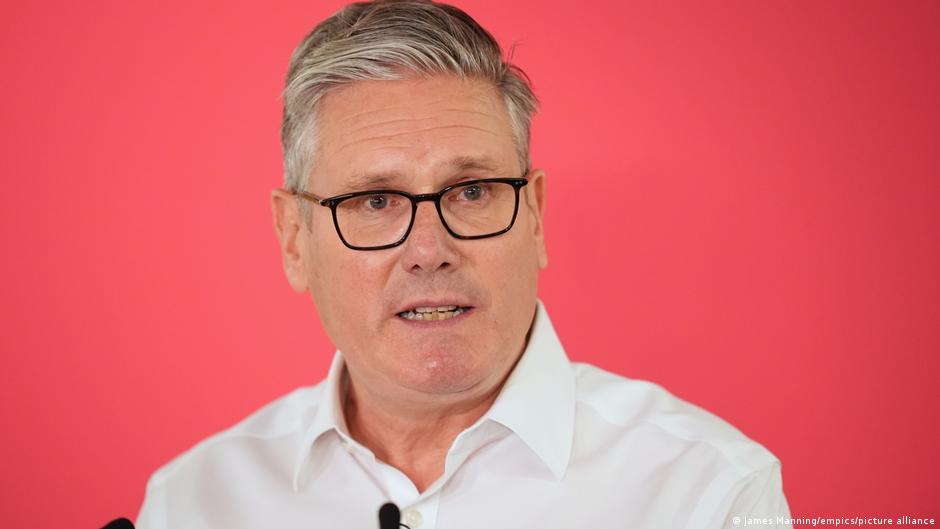
https://p.dw.com/p/5DZQrStarmer often evoked his working class background in a speech where he said the status quo was failing working people too oftenImage: James Manning/empics/picture allianceAdvertisementBritish Prime Minister Keir Starmer struck a combative tone in London on Monday, saying he had no intention of resigning after heavy election defeats around the country last week.
This comes amid public pressure and even some voices within his party urging him to rethink his position.
"The election results last week were tough. Very tough," Starmer said. "It hurts, and it should hurt. I get it. I feel it. And I take responsibility. But it's not just about taking responsibility for the results."
He said it was also incumbent on him to explain how the UK government planned to do better, saying the country was facing "dangerous times and dangerous opponents."
"If we don't get this right we will go down a very dark path," Starmer said. "And I take responsibility for not walking away, not plunging our country into chaos, as the Tories did time and again. Chaos that would do lasting damage this country."
He said he knew that he had his doubters and needed to prove them wrong, and said he would do so.
Starmer was speaking a few days after his Labour Party suffered heavy losses in English municipal elections as well as in elections for the national parliaments in Scotland and Wales — both historical Labour heartlands.
Labour lost more than 1,400 council seats around England, leaking influence both to Reform UK on the populist right and the Greens on the populist left.
It slipped from 36.2% of the vote and 30 seats to 11.1% and nine seats in the Welsh Senedd parliament, going from the largest party to a distant third, behind the Welsh nationalists Plaid Cymru and Reform UK.
And to the north, Labour saw the Scottish National Party reassert its dominance of the Holyrood chamber, despite its own major difficulties in recent years. Reform won as many Scottish seats as Labour; the Greens, the Conservatives and the Liberal Democrats were all close behind.
Various policy U-turns, communications problems and the protracted scandal over Peter Mandelson's appointment as US ambassador had put Labour under pressure since its 2024 general election win.
Over the weekend, a relatively junior MP and former low-level minister, Catherine West, urged her colleagues to launch a challenge to Starmer's leadership by Monday. If they did not, she would consider doing it herself, West said.
Labour's high profile former deputy leader Angela Rayner stopped short of breaking faith with Starmer, but on Sunday evening she did issue a lengthy shopping list of achievements she felt the party needed to prioritize, saying things "must change — now."
Starmer largely focused on Labour's English and all-UK political rivals the Conservatives, Nigel Farage's Reform and Zac Polanski's Greens, rather than the resurgent nationalist parties in Scotland and Wales.
In particular, he was critical of the populist threat he faces from either flank.
"We're battling Reform and the Greens. But on a deeper level, we're battling the despair they exploit," Starmer said. "Neither Nigel Farage nor Zac Polanski offer this country the serious and progressive leadership that these times demand."
The prime minister also tried to evoke his working class roots and to say how he understood the dissatisfaction in large parts of Labour's traditional voter base.
"My late brother Nick spent all his adult life going from one job to the next. The status quo did not work for him," Starmer said, also noting how his sister was a care worker who did long and difficult hours for relatively low pay.
"She didn't even get sick pay during the pandemic," he said. "The status quo didn't work for her."
He said he wanted to be a prime minister for those people for whom the status quo was not working and to show, "I am their prime minsiter and this is their government."
"Strength through fairness, that is my compass in this world," he said, saying these values would be "writ large" in Wednesday's King's speech outlining his govermment's plan for the coming legislative period.
Takeaways from King Charles III's US Congress speechTo view this video please enable JavaScript, and consider upgrading to a web browser that supports HTML5 video
Starmer also referened the economic shock amid the war in Iran during his speech.
He said he sympathized with voters asking themselves, "How can I be paying the price for a war thousands of miles away that I don't support, that Britain isn't involved in?"
"And it's not a new thing, is it? For two decades, Britain has been buffeted by crisis after crisis: the 2008 financial crash, the Tory austerity that followed it, Brexit, COVID, the Ukraine war, on and on it goes," he said.
The response he said, was always an attempt to revert to "a status quo that has failed working people time and time again."
"Our response this time must be different: a complete break," he said.
On this front, he outlined three areas of change, arguably all falling short of this complete break: Plans to look into nationalizing the struggling British Steel company, plans to move closer to "the heart of Europe" after Brexit (but stopping well short of major moves like rejoining the Single Market and Cutstoms Union), and trying to provide more employment and training opportunities for young people.