play Live Sign upShow navigation menuplay Live Click here to searchsearchSign upFeaturesRisks and rewards in France-Kenya partnershipNairobi's partnership with Paris has sparked criticism, with many worried that Kenya's interests will be subordinated to a neo-colonial power.
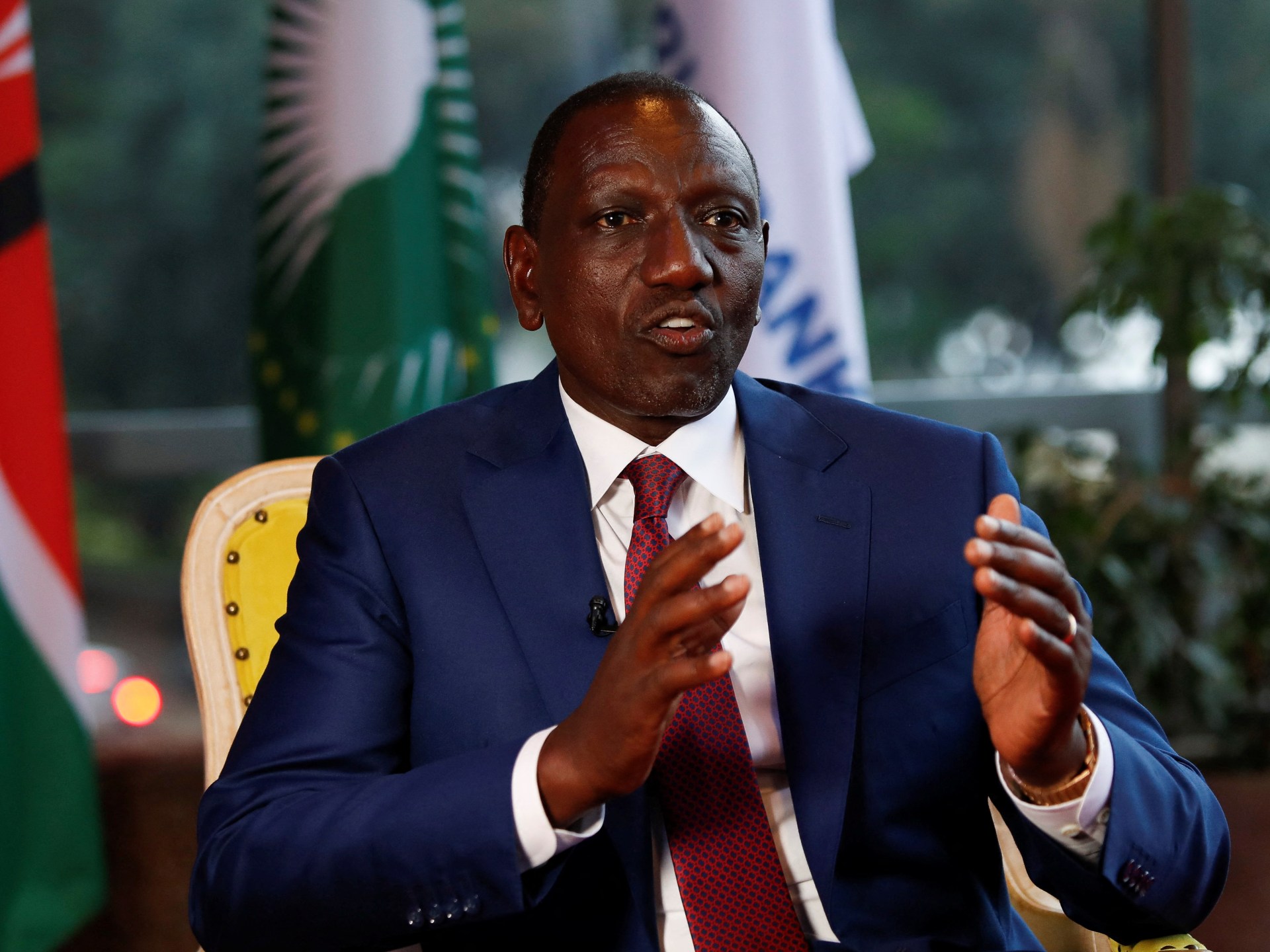
xwhatsapp-strokecopylinkgoogleAdd Al Jazeera on GoogleinfoSince President William Ruto took office, Kenya has opened itself up to partnerships with Western countries, positioning itself as the most stable and accessible country in the region [Reuters]By Vivianne WanderaPublished On 11 May 202611 May 2026Kenya is hosting the Africa Forward 2026 summit in partnership with France, the first of its kind held outside a Francophone country.
The summit, which brings together African leaders and business executives from across the continent and beyond, has sparked criticism at home and abroad.
Since President William Ruto took office, Kenya has opened itself up to partnerships with Western countries, positioning itself as the most stable and accessible country in the region.
However, France’s colonial past continues to haunt Paris as it has lost influence in several former colonies in West Africa.
In response, French President Emmanuel Macron turned to Kenya, a country known for its openness to European investment.
So, what are the benefits and losses for either side of the Kenya-France partnership?
France and Kenya signed a defence cooperation agreement in April 2026. It was preceded by the arrival of 800 French troops in Kenya’s coastal city of Mombasa for a joint training exercise with the Kenya Defence Forces (KDF).
After the agreement’s signing, critics warned that Kenya could risk falling under the influence of a neo-colonial power, citing France’s history of unequal partnerships in West Africa.
The automatic five-year renewable deal includes partnerships in maritime security, intelligence, peacekeeping and humanitarian assistance and disaster response. France has already deployed 600 military personnel to Kenya, with officials saying they will provide training for KDF personnel.
The agreement grants French forces diplomatic-style immunity in Kenya and requires disputes to be resolved through diplomatic channels rather than Kenyan courts.
It also allows convicted French personnel to serve sentences in France and gives Paris primary jurisdiction over offences committed by its soldiers on Kenyan soil.
Critics say the agreement favours France over Kenya and secures Paris’s strategic interests in the Western Indian Ocean, a key region for global shipping lanes, military positioning, and counterterrorism operations.
They have also warned that while Kenya has quickly ratified defence cooperation agreements with five countries, China, Zimbabwe, the Czech Republic, Ethiopia, and France, it could risk coming under the influence of neo-colonial powers, which may interfere in its economic and political affairs and significantly undermine the country’s sovereignty.
France has also been accused of undermining African leaders, with Macron facing condemnation after saying African leaders in the Sahel forgot to say thank you to France.
“None of them [Sahel countries] would be a sovereign country today if the French army had not deployed in the region,” Macron told French ambassadors in Paris in January 2025.
Speaking to Al Jazeera, Kenyan politician Nelson Koech, who is also the chair of the National Assembly Departmental Committee on Defence, Intelligence, and Foreign Relations, denied that France has been granted immunity.
“It is completely untrue… we have said crimes like murder must be tried in Kenya,” he stated.
“It doesn’t mean that because the French have had a bad relationship with West Africa, we cannot have a partnership with them. France has continued to support Kenya, not only in this agreement but also in different projects in this country,” Koech added.
Koech also said that a defence cooperation agreement does not mean that French forces deployed to Kenya will be in the country permanently. However, sources in parliament told Al Jazeera that France has been pushing to add a permanent troop presence in Kenya.
For France, Kenya offers political stability, economic opportunities, and strategic access to the Western Indian Ocean. For Kenya, the partnership promises investment, infrastructure development, security cooperation, and increased international influence.
France is currently Kenya’s fourth-largest foreign direct investment partner. According to Kenyan government data, Kenya is the largest consumer of French products in East Africa. Today, France ranks among the largest investors in Kenya, having invested 1.8 billion euros ($2.1bn) over the past decade.
As of 2026, at least 140 French companies operate in Kenya, up from 40 in 2013, showing growing interest in the Kenyan economy. In March 2026, Business France East Africa, the French agency promoting business ventures between French companies and East Africa, in partnership with the French Chamber of Commerce in Kenya, launched a business guide to help French investors navigate opportunities in Kenya.
France is also the fifth-largest provider of foreign direct investment in Kenya, supporting about 46,000 direct jobs.
For Kenya, military and defence engagement with France complements existing security agreements with countries like the UK and the US, who both maintain bases in Kenya. It is seen as advantageous for Kenya’s counterterrorism efforts against threats such as al-Shabab
by Patricia Rodrigues, Africa Director at Control Risks
Critics argue that while French businesses have easy access to the Kenyan market and French nationals have visa-free entry to Kenya, Kenyan citizens are not afforded the same privileges, casting doubt on whether the partnership is truly equal.
Patricia Rodrigues, the Africa director at the Control Risks consulting firm, told Al Jazeera that both African and European authorities increasingly seek equal and mutually beneficial bilateral partnerships.
“Neither side is looking to be free from the influence of the other,” she explained. “The goal is to deepen strategic economic ties in a turbulent trade and geopolitical context. Both sides want to move away from models that prioritise the export of raw materials from Africa for processing abroad and away from aid-based relationships that create dependency.”
Rodrigues added that France, under Macron, is eager to strengthen ties with East and Southern Africa after facing rising anti-French sentiment in West Africa, particularly in the Sahel. Kenya’s position as a hub for Eastern Africa makes it a strategic entry point for France in the region, she said.
“For Kenya, military and defence engagement with France complements existing security agreements with countries like the UK and the US, who both maintain bases in Kenya. It is seen as advantageous for Kenya’s counterterrorism efforts against threats such as al-Shabab,” Rodrigues said, referring to the Somalia-based armed group.
The France-Kenya summit is expected to mark a significant turning point in relations between the two countries and, potentially, in France’s engagement with Anglophone Africa.
With growing French investment, expanding military cooperation, and deepening diplomatic engagement, both countries seem determined to strengthen ties at a time when global powers are competing for influence in Africa.
However, the summit is likely to intensify debate over sovereignty, accountability, and whether the relationship is truly balanced. Since 2024, Kenya has faced deadly waves of political unrest, with citizens protesting against President Ruto’s unpopular policies, including crackdowns on demonstrations and restrictions on press freedom.
If Kenya were to allow French forces permanent residence in the country, this could further inflame tensions, as the government braces for potential protests ahead of the country’s budget season.
Kenyan politician Caleb Hamisi told Al Jazeera that the defence agreement leaves Kenya vulnerable as a proxy in international disputes, and has become highly unpopular among Kenyans.
He pointed to the risk that foreign forces stationed in the country could involve Kenya in military operations or disputes that serve the strategic interests of other powers, rather than Kenya’s national priorities.
“Kenya has borne the brunt of international military-interstate relations that often present her as a proxy ground, and thus, susceptible to collateral war damage,” Hamisi said.
According to him, the presence of French forces in West Africa posed a security threat and a unilateral benefit to France, with little tangible gain for the host country. He said that the parliament should carefully examine disputed clauses in earlier defence agreements with major powers.
“It is incumbent upon the drafters of the agreement and the Kenyan plenipotentiary [negotiator] to consider contentious clauses in previous DCAs [defence cooperation agreements] with military superpowers before committing Kenya to an international defence agreement,” Hamisi told Al Jazeera.
The success of this partnership may therefore depend on whether future agreements deliver mutual benefit, transparency, and respect for Kenya’s national interests, rather than creating another chapter of foreign influence in Africa, disguised as cooperation.