Nearly a decade after his first-term visit, Trump returns to Beijing amid tensions over tariffs, Taiwan and tech rivalry
4-MIN READ4-MINJane Caiin BeijingPublished: 9:00am, 11 May 2026Nine years after his lavish first visit to China as US president, Donald Trump is scheduled to head back to Beijing on May 14-15. Beijing has not confirmed the date yet. With tensions over tariffs, Taiwan and tech rivalry still simmering, the summit will test whether the world’s two biggest powers can stabilise their fractious relationship.What to expectPragmatic deals over grand resetsDon’t look for a historic breakthrough. The focus is expected to be on extending the trade truce, locking in fresh Chinese purchases of American goods, and keeping tensions from boiling over.
Watch for announcements on Boeing jets, agricultural products, energy deals, rare earth supply stability, and cooperation on fentanyl.
Through sanctions and public calls, the US is pressing China to use its influence on Iran to end the crisis in the Middle East. However, Beijing blames the US and Israel for the conflict and is resisting the sanctions. This mutual mistrust risks turning the Iran issue into a fresh source of friction during the summit. Other thorny geopolitical issues might include North Korea and the South China Sea.
Short-term wins for US exporters are likely, but deeper structural problems, such as AI and other technological competition, supply chain security, and the Taiwan issue, are unlikely to be solved in one visit.
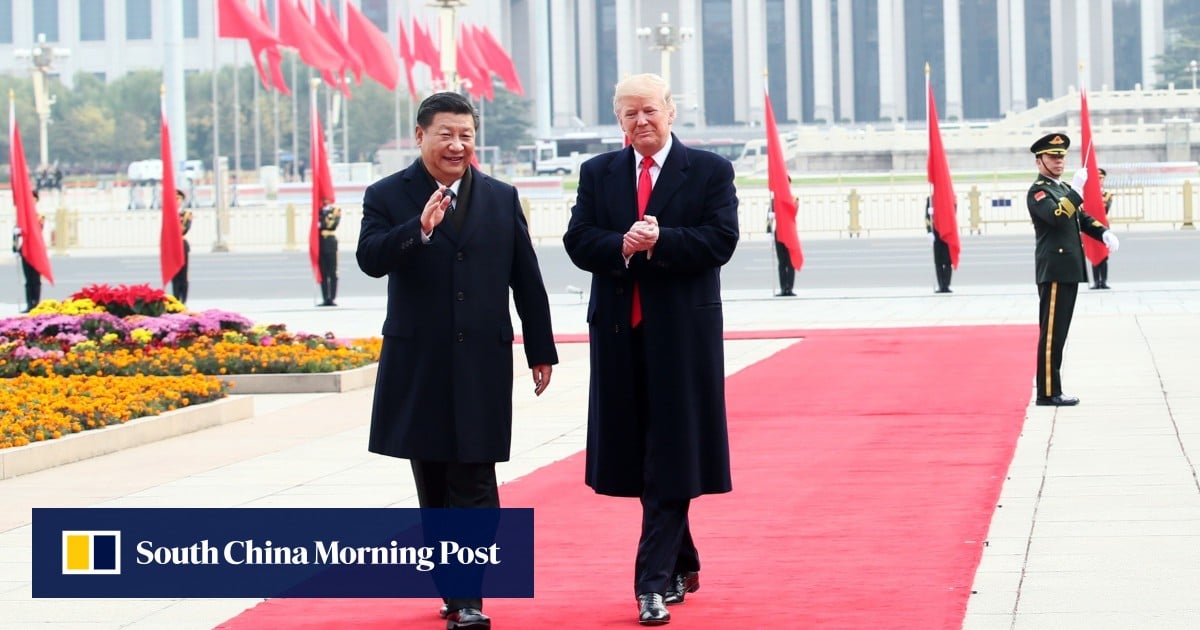
Anticipate the full red-carpet treatment, grand banquets and plenty of Trump handshakes with Chinese President Xi Jinping. Trump is likely to highlight his “great relationship” with Xi, again.
Melania Trump's fashion diplomacy during her China visit
Melania Trump's fashion diplomacy during her China visitFlashback to 2017: the glamorous first visitTrump was offered a “state visit-plus” reception on his November 2017 trip. He and Melania were treated to a private tour of the Forbidden City – including a Peking opera performance – as well as a lavish state dinner alongside Xi and first lady Peng Liyuan. Trump openly praised Xi as a “very special man” and China as a “great country”. The two leaders have maintained a personal rapport in the years since, even as ties between Washington and Beijing have soured.The trip produced headline-grabbing business deals worth more than US$250 billion, covering everything from energy projects and Boeing aircraft to agricultural products. Many involved letters of intent rather than firm contracts, but they gave Trump the “wins” he wanted to showcase back home.Post 2017: a deteriorating relationship2018 trade warIn the second half of 2018, less than a year after the visit, Trump slapped tariffs on hundreds of billions of US dollars of Chinese goods. Beijing hit back with tariffs of its own. The goodwill of 2017 quickly evaporated.
In his second term, Trump launched his aggressive “America first” approach, imposing steep tariffs on Chinese goods, while citing trade imbalances, fentanyl flows and national security concerns. China retaliated with its own duties, and the tit-for-tat spiral pushed US tariffs to a peak of 145 per cent in April 2025.
These flashpoints – along with tech export bans and supply chain decoupling – shifted the US-China relationship from wary engagement to open strategic rivalry.
Arguably the most watched issue. Beijing sees Taiwan as part of China to be reunited by force if necessary. Most countries, including the US, do not recognise Taiwan as an independent state, but Washington is opposed to any attempt to take the self-governed island by force, and is committed by law to supplying it with weapons. Beijing has ramped up military patrols near Taiwan in recent years. Any signal from Trump on US support for the one-China policy will be closely watched.