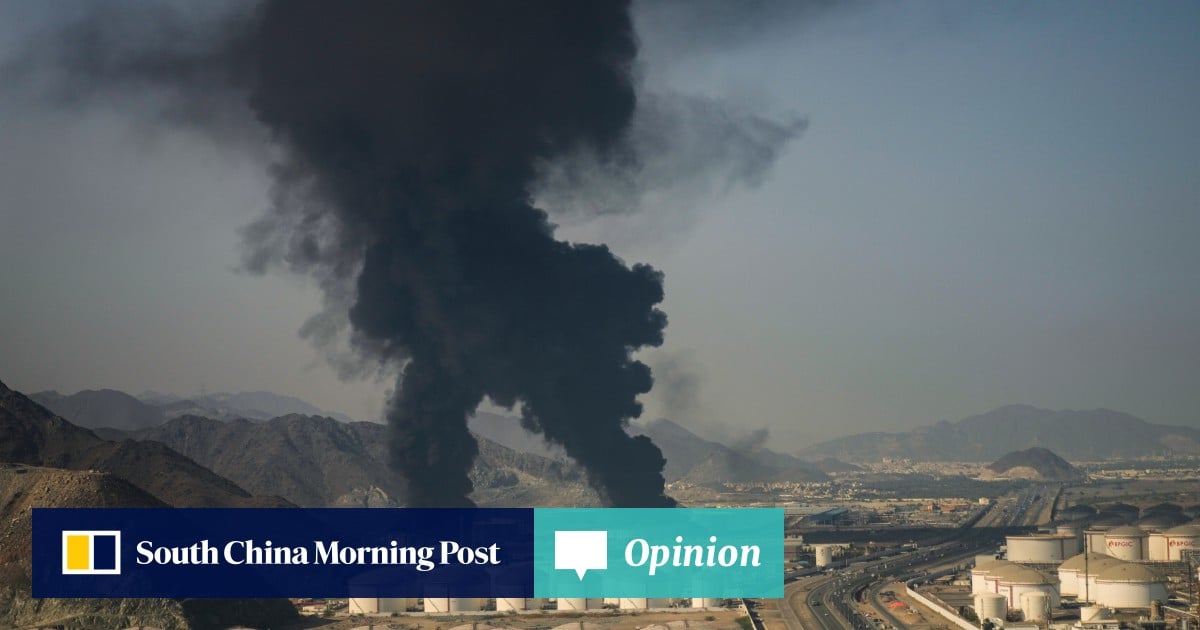
The fighting over oil production quotas was the symptom. Security realignment is the disease
3-MIN READ3-MIN ListenAsad UllahDr Asad Ullah is a postdoctoral researcher in international politics at Shandong University, specialising in Middle East conflict, diplomacy and geopolitical strategy. Published: 5:30am, 11 May 2026On April 28, the United Arab Emirates informed the Organisation of Petroleum Exporting Countries (Opec) it was leaving. Three days’ notice. No call to Riyadh beforehand, apparently. The grievance about production quotas was years old: Abu Dhabi had threatened to quit in 2021. What’s changed has nothing to do with the barrel count. It is about who underwrites Abu Dhabi’s security when it acts on a decision Riyadh opposes.After Iran struck UAE infrastructure, Abu Dhabi sent only a foreign minister to the Gulf Cooperation Council’s emergency session. Instead, it leaned on the US-Israel axis built quietly since the Abraham Accords. That realignment produced a moment without precedent: Israel deployed an Iron Dome system to defend Emirati airspace, a first for a foreign nation that is not the United States. It rendered obsolete the assumption that Gulf producers share a threat environment that makes collective discipline rational. They no longer do.The Opec exit made visible what the shift had made possible. Security architecture, not quota arithmetic, is what holds a cartel together.
Opec has always been a political institution. The standard account of Opec is that it is a production cartel coordinating output to protect revenue. That is technically accurate and analytically insufficient. Its founding logic was sovereign solidarity, the assertion by post-colonial states that they would collectively control a resource the West had long treated as its own. That required a shared threat environment, a sense that members needed each other because the alternative was exposure. For 50 years, Gulf states had that.
The fiscal asymmetry deepens the rupture and makes it permanent. The UAE’s fiscal break-even oil price sits below US$50 per barrel. Saudi Arabia’s exceeds US$90. These are not negotiating positions. They are incompatible survival strategies.