Jewish American Heritage Month should be a celebration of the contributions Jews have made to American life. From medicine, law, business, and philanthropy, to Hollywood, the civil rights and labor movements, and even America’s Christmas playlist, Jews have helped shape this country in outsized ways.
But there’s a paradox. Jews are facing levels of hostility not seen in generations. And for those driving that hostility, Jewish American achievement is not a cause for celebration but an opportunity to spread hatred and suspicion.
How can so few people have so much impact? Why are Jews overrepresented in so many professions and industries? What sinister, devious tactics must they have used?
That approach, turning Jewish contribution into conspiracy, is plain antisemitism. Jews aren’t overrepresented. We’re overcontributing.
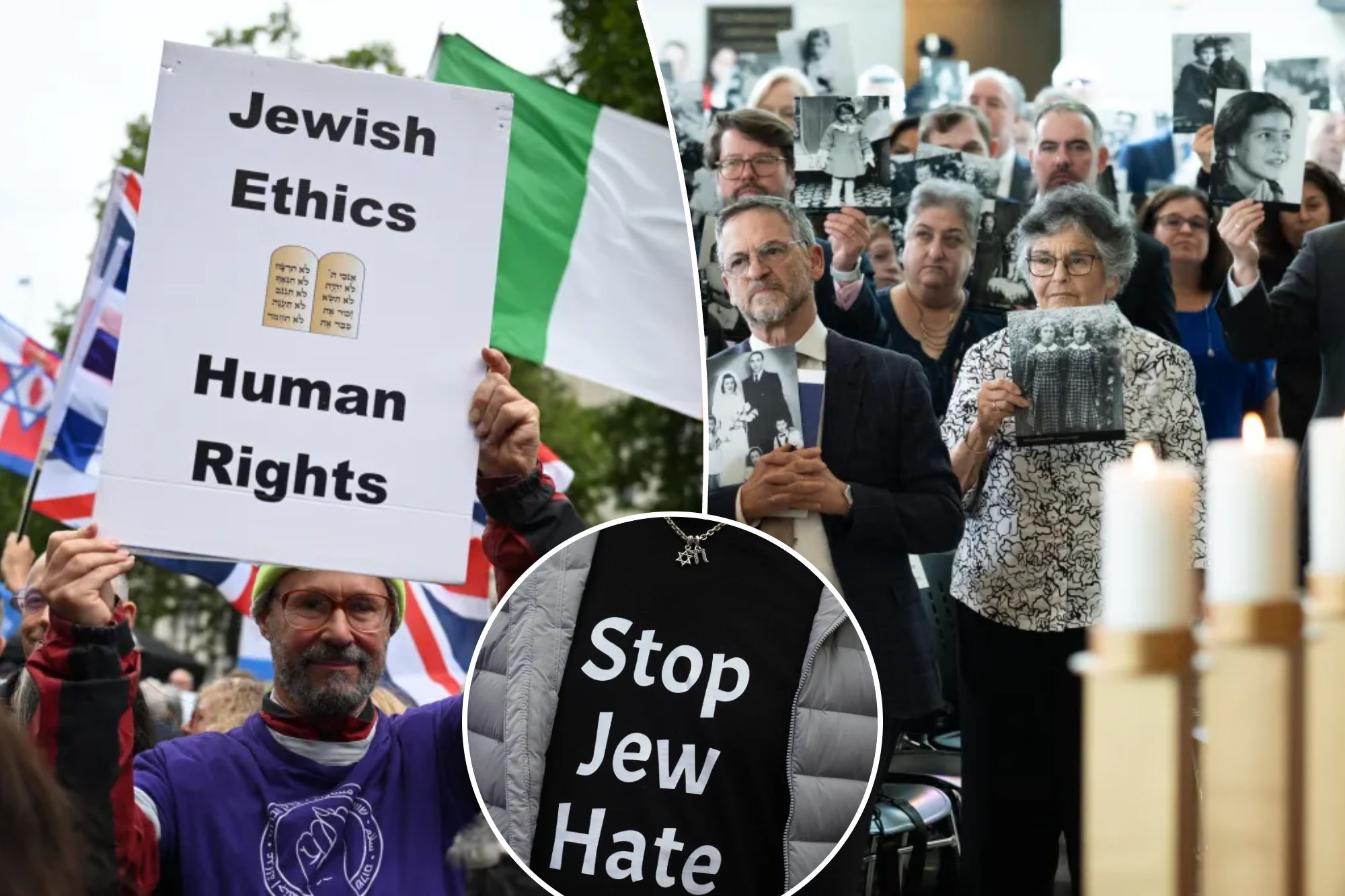
Since October 7, hatred towards Jews has surged around the world, including here. Jews have been vilified, attacked, and even murdered, like in Bondi, Manchester, Colorado, and Washington, DC.
Around the world, Jews are having variations of this conversation: Are we safe here? Do we have a future here? Is it time to leave here? What is striking is not that we are the first Jews to have that conversation: it’s that until recently, and especially in the US, we were the first generations of Jews not to have them.
Every Jewish community is descended from people who had that conversation in one place, and built a new life and new communities in another. The old country’s loss was America’s gain. Or so we thought.
Unfortunately, for all the interest in Jews, our alleged power and influence, and the Jewish state, ignorance about Jews persists.
Indeed, many of those most obsessed about Jews often seem to know the least about them. Take the commentator who explained away the terrorist targeting of a Michigan synagogue because it was called Beth Israel and was therefore expressing support for the State of Israel. Clearly, she wasn’t aware that Jews are called the People of Israel regardless of where they live.
Ignorance isn’t just an absence of knowledge but an empty vessel into which hostile actors inject hatred. And social media provides an unparalleled delivery system to pump poison into impressionable minds.
Consider this data: a Harvard-Harris poll in December 2023 found that 67% of Americans aged 18-24 agreed that “Jews as a class are oppressors and should be treated as oppressors.” A YouGov poll found that 30% of Americans under 30 either believed, or were open to the idea, that the Holocaust was a myth.
These numbers point to a chilling reality: the Jewish story is increasingly being told not by Jews but by those who hate them.
And young generations of Americans are being barraged with it from both sides of the political spectrum.
On the left, progressives who would be among the first victims of Islamist ideology wave its flags and chant its slogans. On the right, figures who claim to champion Western civilization provide cover for the ideology that seeks to destroy it: claiming America would have no issue with the Islamic Republic of Iran if it wasn’t for Jewish meddling.
Add to that, the manosphere “influencers” telling young men their lives suck because of the Jews (and women, obviously). Antisemitism shapeshifts, adapting to the language and culture of its time and place.
Jewish American Heritage Month is one chance to correct course. Education is another. But instead of offering education about Jews, some are offering indoctrination and disinformation about the Jewish state.
It seems unlikely that the rise in antisemitic attitudes among the young is unconnected to concerted attempts to feed them attitudes that are hostile to Jews.
This moment calls for greater investment in accurate teaching about Jewish history, identity, antisemitism, and the Holocaust.
It is also why we – one of us a democratically elected public school board member and the other the former Israeli Envoy for Combating Antisemitism – worked together to draft a resolution for Los Angeles Unified School District, the largest K-12 district in the State of California, to commemorate Jewish American Heritage Month for the first time ever.
And to make sure it was not just performative, we recommended curriculum such as Eighteen, to encourage schools, students, families, and community members to participate in appropriate educational and cultural activities that honor the history and contributions of Jewish Americans. Young people cannot be expected to reject dangerous myths if they have never been taught the facts.
Jewish American Heritage Month is a chance for Jewish Americans to tell our story, not just a symbolic box to check. The values that have driven Jewish Americans to overcontribute – education, self-reliance, justice, speaking up – are not just Jewish values, they’re American.
America provided a home in which Jews could thrive, and, in turn, Jews helped shape America.
Noa Tishby is a two-time New York Times bestselling author and Israel’s former Special Envoy for Combating Antisemitism. Nick Melvoin represents district 4 of the Los Angeles Unified School Board of Education.