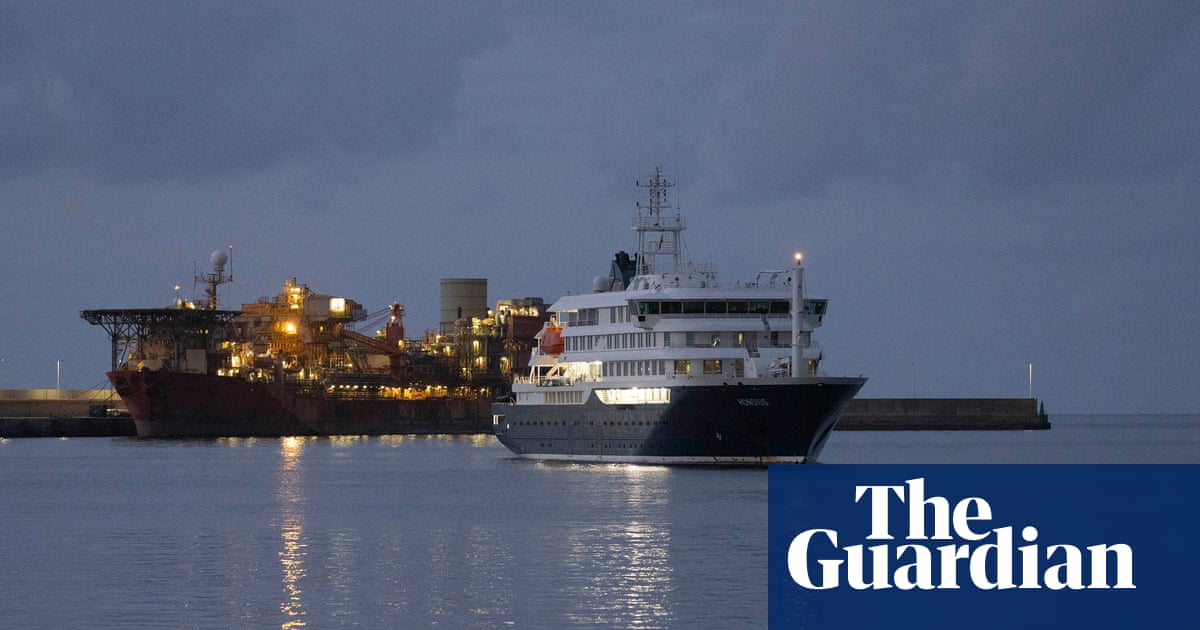
MV Hondius entering the port of Granadilla de Abona to anchor. Photograph: Miguel Barreto/EPAView image in fullscreenMV Hondius entering the port of Granadilla de Abona to anchor. Photograph: Miguel Barreto/EPACruise ship hit by hantavirus arrives in Tenerife to evacuate passengersMV Hondius anchors offshore carrying 146 people as authorities scramble to get planes to take them home
The cruise ship at the centre of a deadly outbreak of hantavirus has arrived in Tenerife for the evacuation of those onboard.
The ship arrived in the Canary Islands in the early hours of Sunday morning carrying 146 people, after three people died of the virus and eight more became ill.
While nobody onboard the vessel has symptoms, passengers and crew have been confined to their cabins in the last few days to help halt the spread of the virus, which is only transmitted through very close contact.
They were each being screened for hantavirus, which can cause flu-like symptoms leading to respiratory arrest and death, in some cases.
The 19 passengers and three crew from the UK were to be flown from Tenerife to Merseyside for hospital quarantine at Arrowe Park hospital in Wirral.
Those from elsewhere will take separate flights to their home countries, after reassurance from the Spanish government and the World Health Organization (WHO) that they will not come into contact with people in Tenerife.
Spanish citizens were to be the first to disembark, with Spain’s health minister, Mónica García, confirming their plane was ready to take off when the passengers arrived.
Next would be a flight to the Netherlands, which would transport citizens of Germany, Belgium, Greece and some of the crew.
Flights to the UK, Canada, Turkey, France, Ireland and the US would follow later on Sunday.
On Monday, a Dutch refuelling plane would pick up any passengers who had not yet been evacuated, authorities said.
The last scheduled flight would be to Australia with six people, departing on Monday afternoon.
They were being asked to isolate for 42 days from their point of potential exposure, which for most of the passengers would be many days ago.
View image in fullscreenPassengers and crew on the hantavirus-stricken cruise ship MV Hondius after arriving at the port of Granadilla in Tenerife. Photograph: Manu Fernández/APThe MV Hondius is anchored slightly offshore of the southern commercial port of Grenadilla, and passengers will be brought in groups of five to 10 to the dock by small boat.
This would only happen when planes were on the asphalt ready to receive them, the president of the Canary Islands, Fernando Clavijo, said.
Flights to some countries were yet to be arranged, as authorities scrambled to get planes in place on Sunday.
Winds off the coast of the island were expected to pick up from Monday, meaning any people from countries where flights were not arranged may be stuck onboard.
Authorities have sought to make clear that the virus, though serious, would not result in another pandemic.
However, the director general of the WHO, Dr Tedros Adhanom Ghebreyesus was asked at a press conference in Tenerife late on Saturday night whether allowing passengers to travel all over the world and relying on them to self-isolate with no oversight could cause further outbreaks.
“Based on our assessment, what you have said is not going to happen,” he told the media.
Some crew will stay aboard, going on to pick up supplies at Santa Cruz port in the north of Tenerife and then returning the ship to the Netherlands, where it is from.
View image in fullscreenMedical personnel in the port of Granadilla. Photograph: ANP/ShutterstockThe polar cruise ship arrived at the Canary Islands after spending days stranded off the coast of Praia, the capital of Cape Verde. Local authorities would not allow the ship to dock amid fears of a wider outbreak overwhelming the healthcare system of the small island nation.
Fears of a new pandemic were unfounded, the WHO said, because hantaviruses did not spread as quickly as Covid-19 and treatment was highly effective if the virus was caught quickly enough.
However, a broad incubation period, lasting between a few days and eight weeks, means infected people might have the opportunity to pass on the virus before any symptoms become apparent.
For this reason, the WHO is putting together an international co-ordinated response, particularly in tracing those who left the vessel since the onset of the outbreak more than a month ago.
Several countries have come together to solve the logistical challenge of tracing people who have been in close and prolonged contact with 29 people who disembarked on 24 April in the remote southern Atlantic island of St Helena.
Two British people are self-isolating in the UK because they could have been exposed to the virus before getting off about a month ago. Neither has symptoms.
A specialist army team and medical personnel have been parachuted on to the British overseas territory of Tristan da Cunha with medical aid and equipment, the Ministry of Defence (MoD) has said, after a British national disembarked on to the island, where they live, with a suspected case of hantavirus.
Experts in several countries are now trying to solve the mystery of how the virus, which originates from rats and mice, came to be on board the MV Hondius and how it has spread to so many people.
The first patient, a 70-year-old Dutchman died on 11 April, with his 69-year-old wife also later becoming ill. She died on 26 April upon arrival at the emergency department of Johannesburg hospital.
On 2 May, a German passenger died aboard the ship after also testing positive for the virus.