The ongoing blockade of the Strait of Hormuz is affecting African nations particularly badly. But there are potential solutions for mitigating the drastic effects on the continent in the short, medium, and long term.
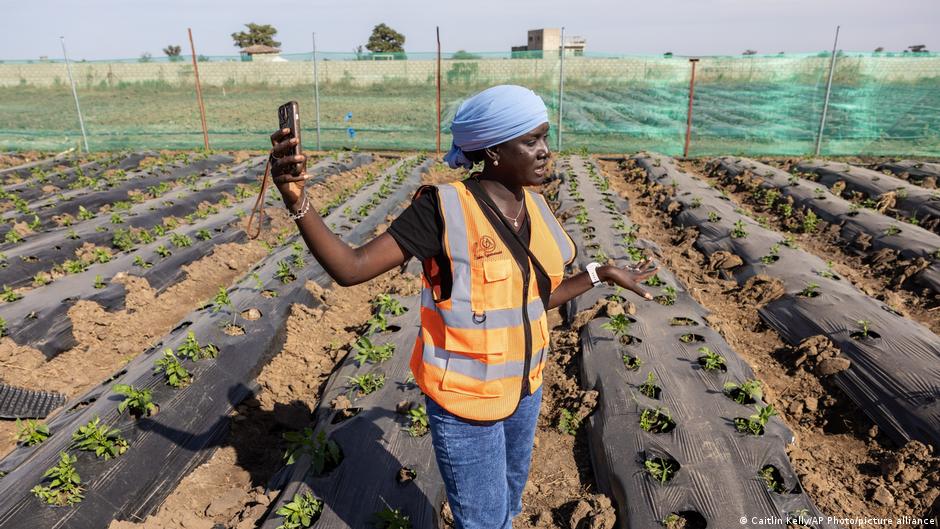
https://p.dw.com/p/5DTgnHow can African farming communities obtain fertilizers, which are becoming scarce worldwide as part of the current crisis? Image: Caitlin Kelly/AP Photo/picture allianceAdvertisementFor more than two months, there have hardly been any merchant ships passing through the Strait of Hormuz amid the ongoing blockade. Africa is being hit by the full brunt of the situation in the Middle East, with canceled flights, long lines at petrol stations, and barren fields across the continent.
Left without access to a significant portion of their global supply chain, fertilizer industries have also been deeply affected by the crisis.
Any resumption of free maritime traffic through this strategically important strait — as was the case prior to the US-Israeli strikes on Iran earlier this year — is still a long way off; and even then, it would likely take months for markets to stabilize and for production lines and logistics to return to normal.
It's understandable that African institutions and governments are currently operating in crisis mode, with no end to the blockade in sight. Some are even looking for ways to prevent more severe consequences to follow, such as the risk of famine or national bankruptcies.
Willy Nyamitwe, Burundi's African Union (AU) ambassador and current chair of the Permanent Committee of Ambassadors, told DW that the AU "is monitoring the situation around the Strait of Hormuz very closely because it affects a number of strategic goods that are essential to African economies."
With several African countries already deeply indebted, the prospect of inflation-driven depreciation of national currencies as a result of the Iran war could further exacerbate the situation.
"The situation is critical," said Anja Berretta, director of the Africa Economic Program at the German Konrad Adenauer Foundation in Nairobi, Kenya.
"Especially when it comes to fertilizers, we were already facing a similar situation in 2022 when Russia launched its war of aggression against Ukraine; after all, Russia and Belarus were two of the most important fertilizer producers."
Back then, as now, there were fears of famine across Africa; but that serious shock scenario never materialized," Berretta told DW, adding that back then, African nations had responded with a flexible approach, for example by providing financial assistance through the African Development Bank (AfDB).
The shortage of fossil fuels in the current crisis is already notably crippling many parts of the continent.
In Ethiopia, diesel is now being prioritized for public transportation, leaving private customers without petrol; in Juba, the capital of South Sudan, rolling blackouts are being used to reduce the output of the country's oil-fired power plant.
Meanwhile, The Gambia has started subsidizing fuel with more than €5.8 million (around $6.8 million) in tax revenue, while Zimbabwe has turned to blending fossil fuels with ethanol.
Africa's aviation industry is also being hit hard by the global kerosene shortage, with flight operations affected across the continent.
Africa's fuel crisis: Is Dangote the answer? To view this video please enable JavaScript, and consider upgrading to a web browser that supports HTML5 video
Shortages and steep price hikes for chemical fertilizers have so far been less in the spotlight as part of the Hormuz crisis but are nevertheless equally critical.
Before the Iran war began, nearly 50% of the sulphur used in phosphate fertilizers globally had passed through the Strait of Hormuz; the proportion was also high for the chemical precursors urea and ammonia.
The South African grain producers' association, Grain SA, reported that in April, ammonia prices were already more than 75% higher than just a year earlier; urea was also reported to be about 60% more expensive.
National emergency protocols for shortages in diesel, petrol, and kerosene have been in place in many places since the beginning of the Iran war; however, similar solutions for fertilizers are yet to fully materialize.
An initiative spearheaded by UN Secretary-General Antonio Guterres, calling on the warring parties to allow the transit of fertilizers to developing countries through the strait, is yet to be implemented.
The model for this idea is the Grain Agreement, which enabled the safe export of Ukrainian grain from July 2022 to July 2023 with Russia's approval to prevent food shortages.
Meanwhile, there's another quick-fix solution that has also proven effective in times of crisis: African importers could pool their fertilizer procurement efforts — in the same way that the EU leveraged its market power to secure a rapid and affordable supply of COVID-19 vaccines.
Berretta believes that this is a realistic option which would also be easy to implement: "We're not talking about technical capacities or financing; African countries would simply have to say, 'Let's do this together now.'"
Even if a comprehensive solution to this end through the AU were to fail, regional communities such as the West African ECOWAS or the East African Community could still achieve success in this area.
Based on their agricultural surface footprint, countries in sub-Saharan Africa already use fertilizer quite sparingly: According to data from the UN's Food and Agriculture Organization (FAO) and the World Bank, farms in the region use an average of 20.5 kilograms of fertilizer per hectare, compared to just under 144 kilograms on average globally.
This World Bank data, however, dates back to 2021, prior to the onset of the war in Ukraine, and will likely have adjusted somewhat in the past five years.
If fertilizer usage is reduced even further in Africa, there is a risk of lower yields for staples such as corn, rice, and wheat, leading subsequently to food inflation. Africa therefore urgently needs fertilizer supplies, as the next planting season has already begun in most places.
In order to become less susceptible to external threats like the wars in Ukraine and Iran in the long run, the most secure strategy would be to ramp up domestic fertilizer production capacities.
How the Iran war threatens East Africa's economyTo view this video please enable JavaScript, and consider upgrading to a web browser that supports HTML5 video
The current major players in this field are Morocco and Egypt, both of which have large phosphate deposits but also rely on sulphur imported from the Gulf states for production.
However, the Nigerian Dangote Group meanwhile also intends to expand production, and is planning to open new urea plants in Nigeria and Ethiopia.
Berretta thinks that the best approach is to produce and distribute fertilizers on a large industrial scale in a few select locations across Africa: "Not every country has the ideal conditions to establish its own fertilizer production. This is where regional supply chains play a very important role; you need to identify three or four countries in a region where the conditions are such that fertilizer production can be established, and they then turn to supplying the entire region."
This is where the African Continental Free Trade Area (AfCFTA) would come into play — because when products aren't held up at national borders for customs, the potential for private investors to step in grows significantly greater.
Although the AfCFTA has been in place since 2021, various obstacles continue to hinder the smooth cross-border movement of goods under its provisions.
"The AfCFTA is a central part of the solution," said AU Ambassador Nyamitwe. "At the African Union, we believe that through accelerated implementation of the AfCFTA, African states can build more resilient regional value chains in critical sectors such as agriculture, energy, health, and manufacturing."
Iran war triggers fertilizer crisis for India's farmersTo view this video please enable JavaScript, and consider upgrading to a web browser that supports HTML5 video