Video Gen Arnold Punaro on US response to Iran's threats in Strait of Hormuz Retired U.S. Marine Corps Gen. Arnold Punaro discusses Iran's attempts to control the Strait of Hormuz and U.S. military options. He emphasizes focusing on nuclear and economic pressure to bring Iran to the diplomatic table.
On May 1, President Donald Trump sent letters to congressional leaders declaring that hostilities with Iran "have terminated." The statement was legally timed. The ceasefire imposed on April 7 has held — no exchange of fire between U.S. and Iranian forces since that date. Trump’s letter cited that record to sidestep the War Powers Resolution’s 60-day clock, which would have required congressional authorization or withdrawal of forces by May 1 — Day 62 of the conflict.
The legal argument is thin. The constitutional argument is weaker. But the deeper problem is strategic: declaring the war "terminated" and ending it are not the same thing.
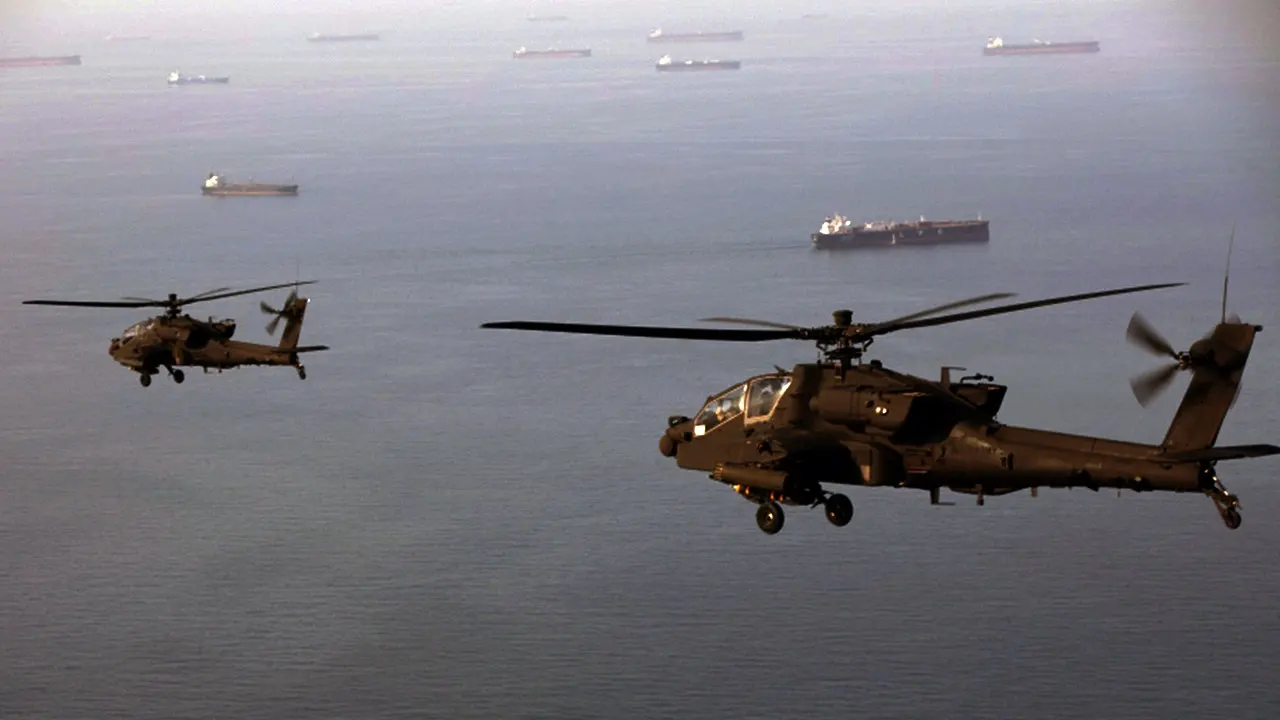
As of this writing, the U.S. Navy is blockading Iranian ports. Project Freedom — Trump’s initiative to guide hundreds of stranded commercial vessels out of the Strait of Hormuz — launched Monday, May 4, with guided-missile destroyers, more than one hundred land- and sea-based aircraft, and 15,000 service members.
Iran’s military launched drones and small boats at U.S. ships on the first day of the mission. The IRGC declared that any vessel transiting the strait must coordinate with Tehran first. A nation at peace does not deploy 15,000 troops to force merchant ships through a contested waterway.
TRUMP AIMS TO RESET WAR POWERS CLOCK WITH CONTROVERSIAL BID TO BYPASS CONGRESS
Cargo ships in the Gulf, near the Strait of Hormuz, as seen from northern Ras al-Khaimah, near the border with Oman’s Musandam governance, amid the U.S.-Israeli conflict with Iran, in United Arab Emirates, March 11, 2026. (Reuters)
This is not the end of a war. It is the beginning of a more dangerous phase.
Trump told reporters May 1 he would not seek congressional authorization because "nobody’s ever asked for it before." History doesn’t support that. The letter itself is the tell — it concedes "the threat posed by Iran to the United States and our armed forces remains significant." The administration declared victory and warned of danger in the same paragraph.
WHY TRUMP’S WAR SPEECH FAILED: DECLARING VICTORY BUT STILL BOMBING IRAN BACK TO THE ‘STONE AGES’
Wars end when the political objective is secured. That is the standard Clausewitz set, and it is the standard I applied throughout this conflict — from the night Operation Epic Fury began on February 28 to last week’s legal maneuver. As I argued at the one-month mark, the administration still had no coherent political end state. Nothing since has changed that assessment.
There is no ambiguity about what U.S. forces accomplished. Iran’s navy was gutted, its air defenses wrecked, its missile production disrupted. American men and women executed with precision and discipline under fire. Defense Secretary Pete Hegseth said the U.S.-Israeli campaign had struck more than 15,000 targets across Iran since the war began.
Military success does not automatically produce strategic success. That lesson is written in blood from Vietnam to Afghanistan. I have made this argument repeatedly in these pages. The campaign’s tactical success does not resolve what comes next.
HEGSETH DECLARES 'DECISIVE MILITARY VICTORY' OVER IRAN
Iran’s regime is intact and its leadership survived.
Its nuclear capability was set back — not eliminated. Before strikes began, Iran held roughly 440 kilograms of uranium enriched to 60% — short of the 90% purity required for weapons-grade, but sufficient starting stock for an estimated ten devices if further enriched.
ROBERT MAGINNIS: DON’T BE MISLED—IRAN ISN’T DAYS AWAY FROM A NUCLEAR BOMB
The International Atomic Energy Agency (IAEA) lost all verification access on February 28 and cannot confirm the current location or status of that stockpile. Fordow, the hardened underground enrichment facility, appears to have sustained damage but was not destroyed.
The distinction is critical: enriched uranium is not a weapon. A deliverable device requires warhead design, miniaturization and delivery system integration — capabilities whose status no inspector can now verify.
A nation at peace does not deploy 15,000 troops to force merchant ships through a contested waterway.
Iran’s grip on the Strait of Hormuz—the transit point for 20% of the world’s crude oil — is very real, and the regime has not relinquished control. It demands that vessels coordinate with the IRGC and pay tolls.
INSIDE IRAN’S MILITARY: MISSILES, MILITIAS AND A FORCE BUILT FOR SURVIVAL
On Monday, May 4, Iranian forces reportedly harassed U.S. naval assets and targeted a tanker affiliated with the UAE’s state oil company in what the Emirates called "acts of piracy." A regime extorting international shipping from waters it does not legally own is not a defeated adversary. It is a regime recalibrating for the next phase.
Project Freedom is necessary. Hundreds of commercial vessels are stranded in the Gulf, many running low on food, fuel and water. The International Maritime Organization estimates up to 20,000 seafarers are aboard those ships.
THE WAR HITS HOME: WHY FINANCIAL PAIN AND ECONOMIC UNCERTAINTY THREATEN TRUMP’S DRIVE TO TOPPLE IRAN’S REGIME
The operation tells you where Washington stands: the U.S. is deploying the equivalent of a small war to reopen a waterway that should never have been closed.
A container ship sits at anchor as a small motorboat passes in the foreground in the Strait of Hormuz off Bandar Abbas, Iran, Saturday, May 2, 2026. (Amirhosein Khorgooi/ISNA via AP)
The first phase was kinetic — airstrikes, naval engagements, destroyed targets. The second is strategic — a contest over energy control, economic pressure, political endurance and time, measured in who outlasts whom.
FINISH THE JOB: WHY A HALF WAR WITH IRAN IS THE MOST DANGEROUS OUTCOME
Iran’s strategy is simple: survive. Tehran doesn’t need to defeat the United States — only to outlast Washington’s will. As I argued in April, if the regime endures, Iran wins. It signals that by testing maritime boundaries, resisting concessions and threatening escalation — not from strength, but from patience.
This conflict does not end in the Strait of Hormuz. China purchases approximately 90% of Iran's oil exports and holds economic leverage over Tehran that Washington does not. As Trump prepares for talks with Chinese President Xi Jinping, that leverage becomes inseparable from broader great-power competition. Beijing can use it to stabilize the situation — or exploit American fatigue to deepen it. Washington should press hard now, before an open-ended ceasefire hardens into permanent ambiguity.
TRUMP DELAYS XI MEETING AS IRAN CONFLICT LETS US STRONG-ARM CHINA’S OIL SUPPLY
Washington's domestic calendar only sharpens the problem. With midterm elections less than six months away and slim Republican majorities in Congress, the administration faces mounting pressure at home. Gas prices have climbed from $2.98 a gallon before the war to $4.53 a gallon, with analysts warning of $5 a gallon if the strait does not reopen. Americans are watching those numbers. So are members of Congress who voted for no authorization and may be asked to defend that record in November.
LIZ PEEK: DO DEMOCRATS HATE PRESIDENT TRUMP MORE THEN THEY LOVE AMERICA?
There will be pressure to declare success and move on. That would be a mistake. We imposed real costs on Iran and demonstrated military dominance. But the core problem — a revolutionary regime with nuclear ambitions and a stranglehold on global energy chokepoints — was checked, not changed.
The nuclear question — enrichment levels, stockpile location, and weaponization progress — remains open and unverifiable. Declaring those hostilities "terminated" does not make them so.
WINNING THE BATTLES, LOSING THE WAR? AMERICA MUST DEFINE THE ENDGAME IN IRAN
The Iran conflict has not concluded. It has evolved. Converting military success into lasting strategic gain requires three things Washington has not yet done.
First: a verifiable nuclear settlement — not a pause on enrichment but a monitored accounting of Iran’s stockpile and a permanent answer on weaponization. A ceasefire that leaves 440 kilograms of enriched uranium behind closed IAEA doors is not a strategic victory. It is a delayed crisis.
CLICK HERE FOR MORE FOX NEWS OPINION
Wars end when the political objective is secured. That is the standard Clausewitz set, and it is the standard I applied throughout this conflict — from the night Operation Epic Fury began on February 28 to last week’s legal maneuver.
Second: real pressure on China. Beijing absorbs Iranian oil and extends the regime’s endurance. Every barrel China buys is leverage Washington surrenders.
Third: a defined end state in political terms, not kinetic metrics. What condition must Iran meet? Our men and women in uniform deserve an answer. So does the country.
CLICK HERE TO DOWNLOAD THE FOX NEWS APP
Project Freedom’s first day told us everything about the second phase: Iran fired on our ships, denied the transit happened, and demanded the world route its commerce through IRGC checkpoints. The harder fight has already begun. This time, we need a plan to finish it.
CLICK HERE TO READ MORE FROM ROBERT MAGINNIS
Robert Maginnis is a retired U.S. Army infantry officer, senior fellow for National Security at the Family Research Council, and the author of 14 books. His latest, "The New AI Cold War: Liberty vs. Tyranny in the Age of Machine Empires," examines the global contest for AI supremacy and its implications for freedom.
Get the recap of top opinion commentary and original content throughout the week.
By entering your email and clicking the Subscribe button, you agree to the Fox News Privacy Policy and Terms of Use, and agree to receive content and promotional communications from Fox News. You understand that you can opt-out at any time.
You've successfully subscribed to this newsletter!