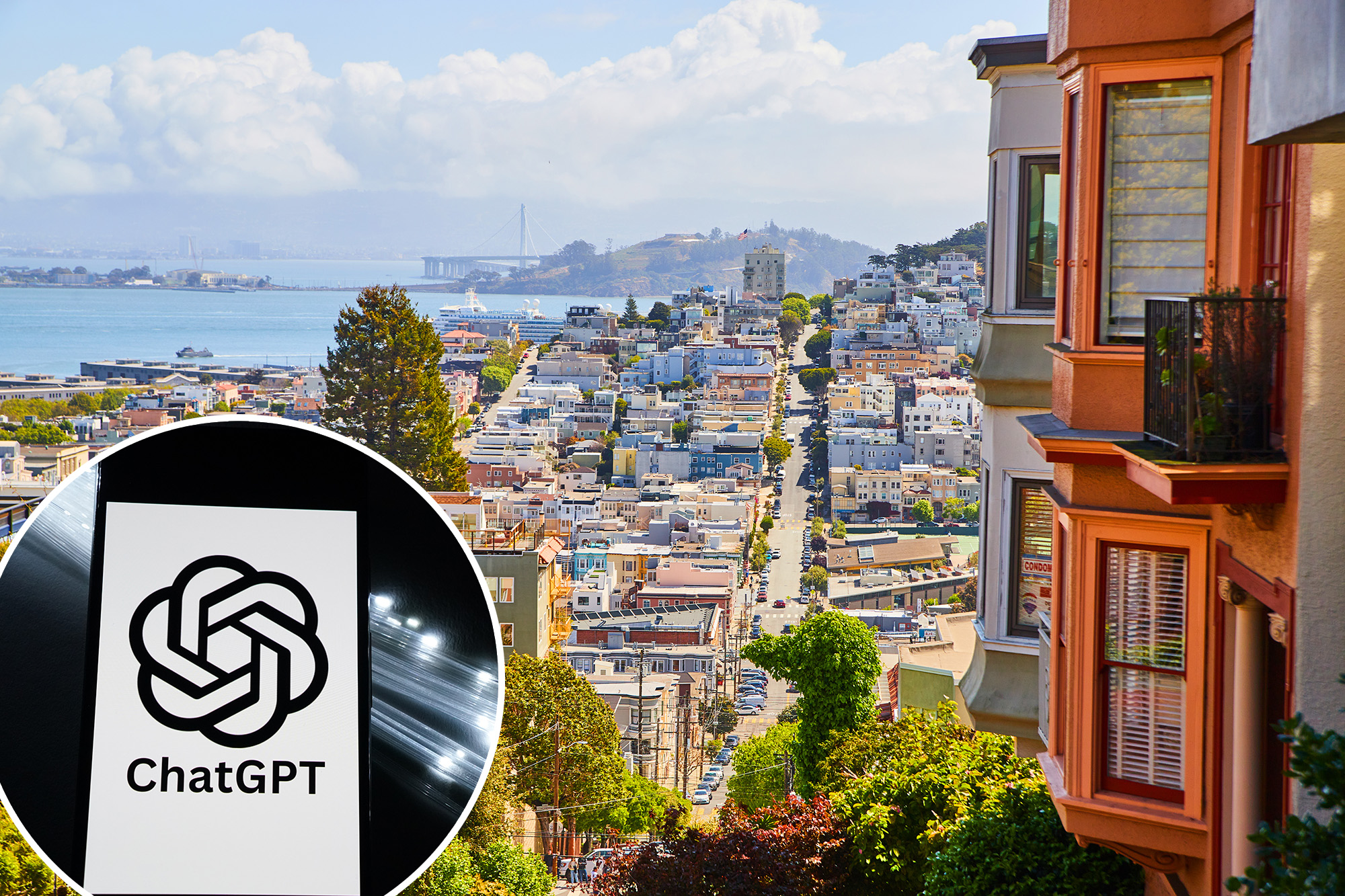
San Francisco was written off as tech workers were laid off and remote work became the norm. Then came the robots — and with them, a real estate revival nobody saw coming.
Since OpenAI unleashed GPT-3.5 on the world in November 2022, home prices in the Bay Area’s wealthiest ZIP codes have rocketed 13.4%, more than twice the gains posted by the next tier down, according to a Redfin analysis.
The city that skeptics were eulogizing is suddenly one of the hottest luxury property markets in the country.
The engine behind it is simple: artificial intelligence has become the most lucrative industry on Earth, and its heart beats in Silicon Valley.
OpenAI, Anthropic, Google DeepMind and a wave of heavily-backed startups are all headquartered within miles of each other, and they are paying their talent accordingly.
Redfin Premier agent Ali Mafi has watched the frenzy up close.
“There has been an influx of AI companies opening up shop and they’re giving employees giant compensation packages,” he said. “Some people are getting $1 million bonuses. Homes are getting dozens of offers, which is driving up prices and causing many to sell for hundreds of thousands of dollars over the list price. It’s reminiscent of 2020.”
That comparison to the pandemic buying frenzy is telling. Back then, rock-bottom mortgage rates sent prices soaring uniformly across all price points, with gains running close to 20% across every market segment.
What’s happening now is fundamentally different — and more unforgiving. The AI windfall is concentrating wealth at the very top, and the housing market is reflecting that with brutal precision. Luxury ZIP codes are booming while the most affordable neighborhoods are quietly losing ground.
Redfin Senior Economist Yingqi Xu has a name for it.
“Luxury homeowners in Silicon Valley saw their housing wealth jump during the pandemic, and now it’s jumping again thanks to the advent of artificial intelligence and the high-paying jobs that come with it,” he said.
“Meanwhile, some owners of lower-end properties have missed out on the AI boom, with home prices in the most affordable Bay Area ZIP codes declining over the past two years. It’s another sign of the K-shaped economy taking shape in the Bay Area, with AI lifting the fortunes of some households and neighborhoods much more than others.”
Nowhere else in the country looks like this. In New York, luxury ZIP codes actually underperformed after ChatGPT’s debut. Los Angeles and Seattle saw gains spread relatively evenly across price tiers.
The broader numbers underscore just how far the market has swung.
The San Francisco metro’s median sale price hit a record $1.7 million in March, a 14.4% year-over-year jump that ranked as the largest gain among the 50 biggest U.S. metros and the steepest increase the city has seen in eight years.