Now experts are warning “The Big One” could be even worse than feared due to a horrific domino effect that could wipe out the West Coast.
ScienceDaily this week highlighted a concerning study from Oregon State University showing a seismic event on the Cascadia subduction zone could trigger the San Andreas fault line.
“We’re used to hearing the ‘Big One’ – Cascadia – being this catastrophic huge thing,” said Chris Goldfinger, a marine geologist at the college and lead author of the study.
“It turns out it’s not the worst-case scenario.”
Goldfinger says if both faults went off, it would be a multi-state and international emergency situation spanning from San Francisco, Portland, Seattle, to Vancouver.
“We could expect that an earthquake on one of the faults alone would draw down the resources of the whole country to respond to it,” Goldfinger said.
“And if they both went off together, then you’ve got potentially San Francisco, Portland, Seattle and Vancouver all in an emergency situation in a compressed timeframe,” he added.
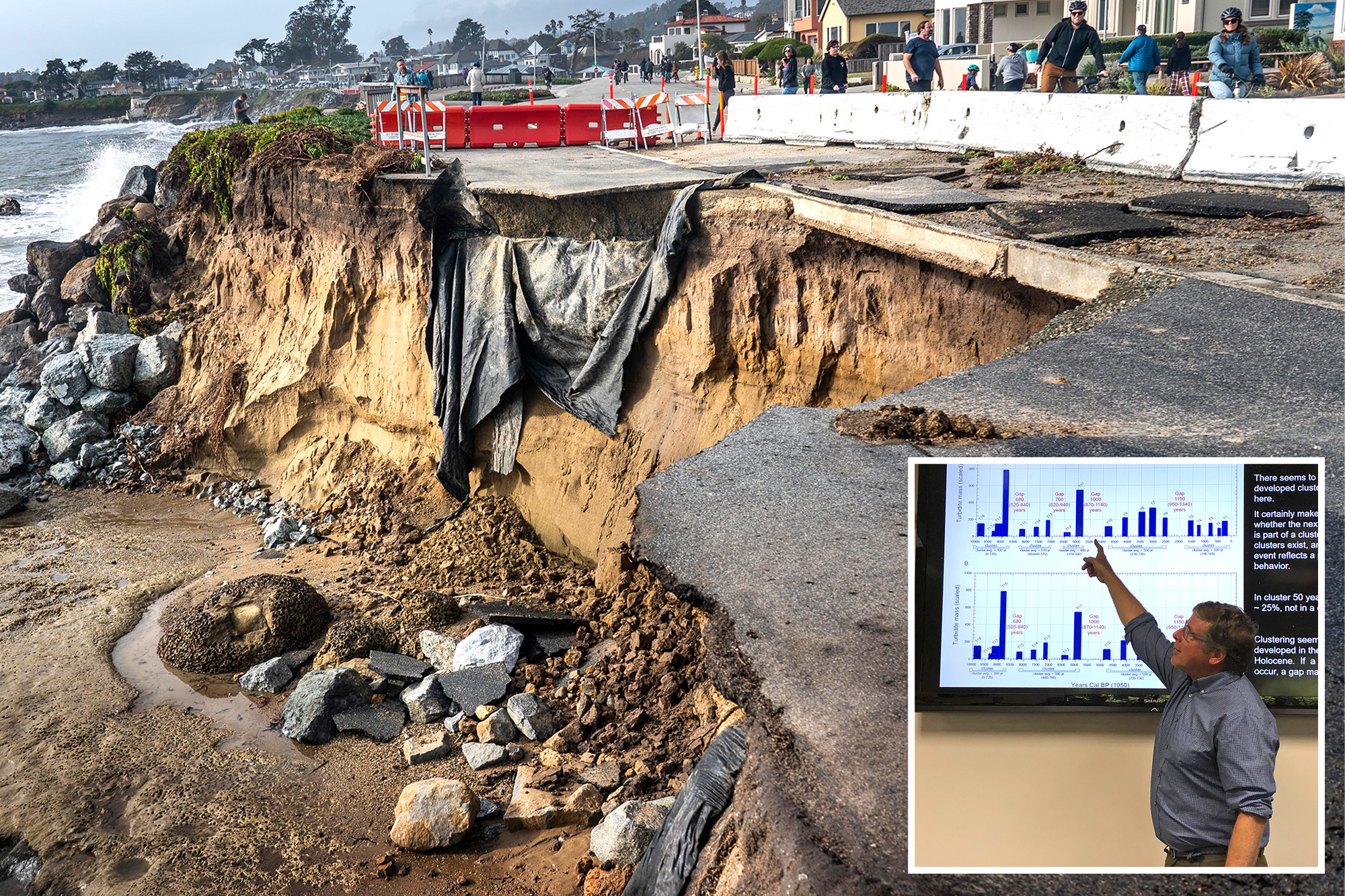
The scientist led a team examining ancient sediment, which had layers called turbidites, from both fault systems and found “similarities in timing and structure, suggesting the seismic synchronization between the faults.”
Goldfinger wouldn’t have made the fateful finding if it weren’t for an accident.
He found the sediment back in 1999, when he went 55 miles south of Cape Mendocino in California and into the San Andreas zone instead of in the Cascadia subduction zone due to a navigational error.
Drilling in the area, they found a sediment core to examine that led them to their simultaneous quake finding.
Using carbon dating, they found unique layering in the cores that was explained by their double earthquake theory.
He said there were very few instances of the simultaneous quakes in the last 1,500 years — just three, he said. The most recent was in 1700, he said, when fault ruptures were just “minutes to hours apart.”
The original study was published in September 2025 and was titled: “Unravelling the dance of earthquakes: Evidence of partial synchronization of the northern San Andreas fault and Cascadia megathrust.”
Only one observed example of the synchronized earthquake has been seen — in Sumatra, three months apart in 2004 and 2005.