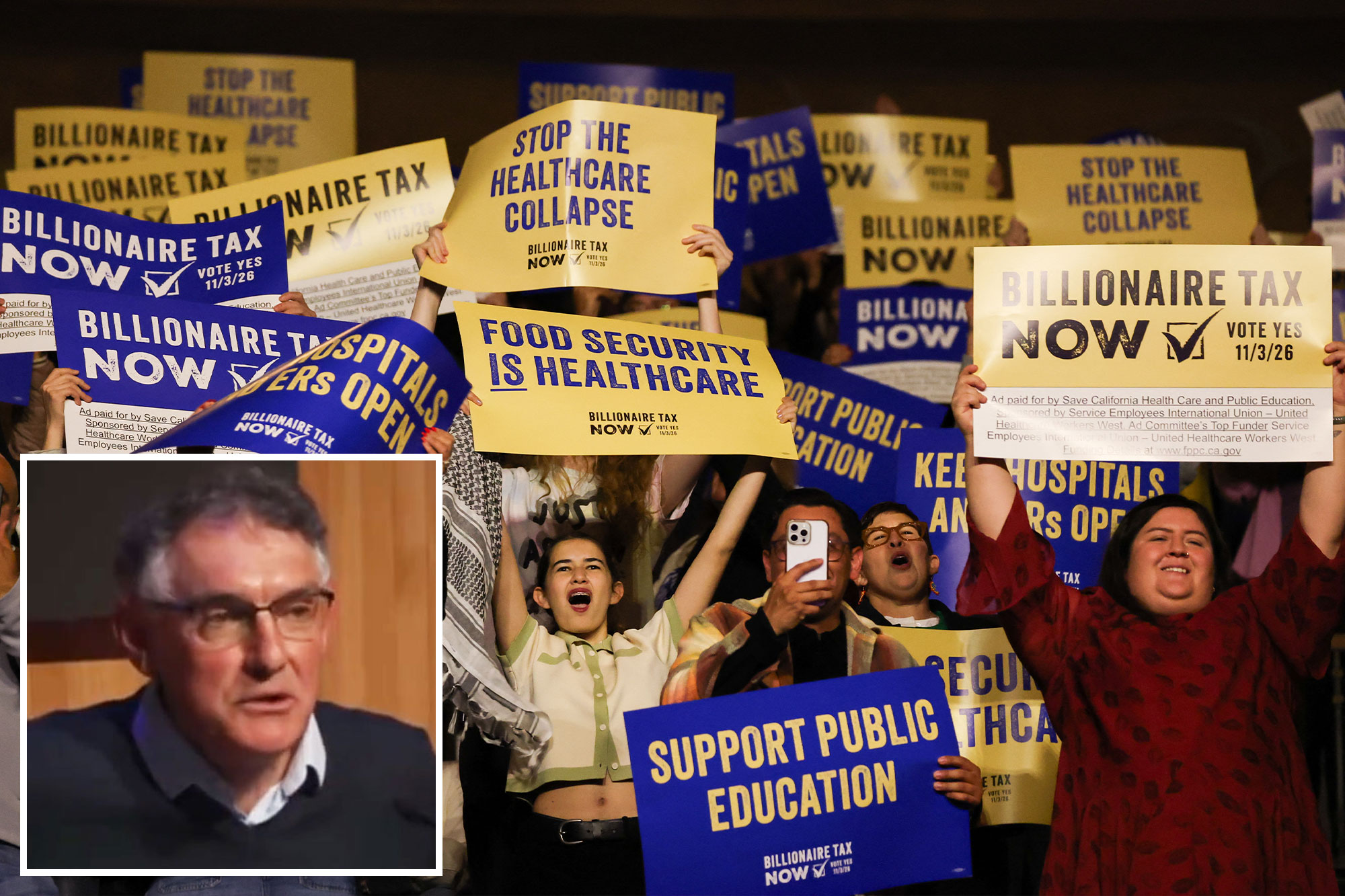
A key architect of California’s controversial billionaire tax acknowledged this week that the proposed one-time levy may end up becoming permanent.
Economics professor Emmanuel Saez made made the admission during a Tuesday debate against Arthur Laffer, the father of trickle-down economics, at the University of California, Berkeley.
The billionaires tax — proposed by the Service Employees International Union–United Healthcare Workers West — would impose a one-time 5% levy on California residents with assets exceeding $1 billion.
Supporters say the tax is needed to address healthcare funding gaps tied to cuts to Medicaid and other federal programs implemented last year.
The proposal has yet to formally get on the ballot in November for voters to decide on it, but supporters recently announced that they had the required number of signatures for it to qualify.
The debate’s moderator pressed Saez about the possibility of the levy being more than a one-off, noting that previous California taxes initially deemed temporary after the Great Recession ended up getting extended.
“There’s been discussions of having another proposition to make it permanent,” said the moderator, who asked what would make the billionaire tax different.
Saez responded that the current proposal is focused on an “emergency funding need” for health care.
“It’s going to be an experiment. We see the results, and then we decide whether that experiment works, is promising,” he explained.
“If there is another one, I don’t think it’s going to be a one-time tax. You can’t surprise billionaires more than once.”
If the measure is adopted, the conversation could shift to establishing a permanent billionaire tax at a lower rate that lasts for several years, Saez said. The public will see whether other governments adopt California’s proposal or similar wealth tax initiatives, he added.
“It is true, I’m not there to pretend that it’s one, once, and never again — no wealth tax will ever happen after that one. You can’t commit to that,” he noted.
Laffer argued that billionaires who have already fled the state — including notable tech figures like Google co-founder Sergey Brin — may not return to California after the one-time tax expires over fears the state would do it again.
The proposed tax has sparked an election year fight with campaign ads and competing ballot initiatives. Many Democrats, including Gov. Gavin Newsom, also are against the billionaires tax, arguing it would hurt the state’s economy.
Billionaire gubernatorial candidate Tom Steyer, a Democrat, said at Wednesday night’s debate that he would vote for the proposed one-time tax, but “it doesn’t go far enough.”