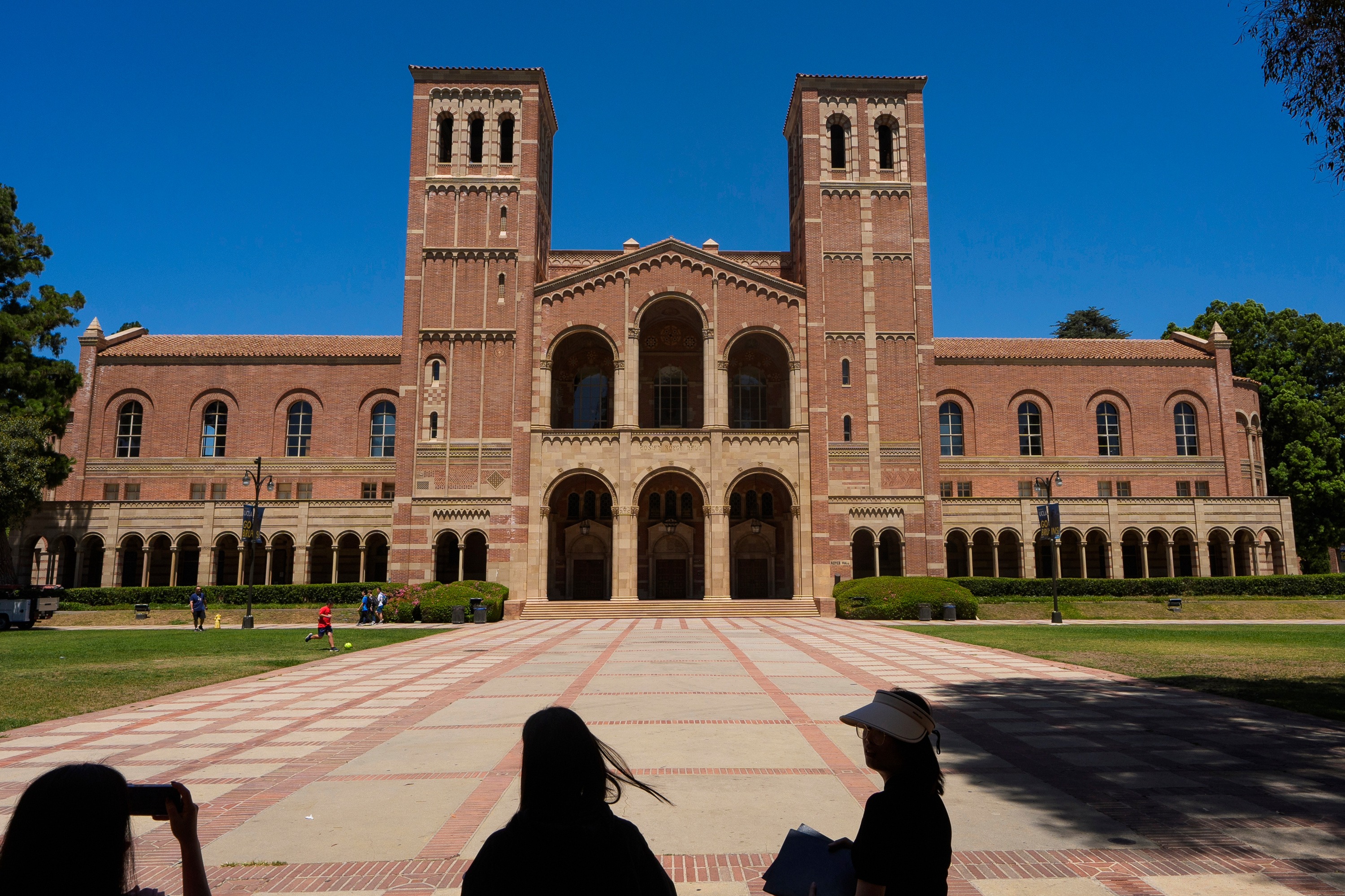
The University of California Los Angeles (UCLA) School of Law is in the midst of a free-speech emergency.
When a major American law school teaches its students that the right way to respond to political opponents is to silence them, something has gone wrong.
And when it then attempts to protect those disruptive students from public criticism by threatening other students’ speech, it’s a crisis.
That’s just what happened at UCLA this past month.
Last month, the local chapter of the Federalist Society, a conservative lawyers’ group, hosted a lecture by James Percival, the general counsel of the Department of Homeland Security.
Even by the disappointing standards of a campus shout-down, this one was particularly egregious: Protesters filled the room and began disrupting the even before the introductions were even finished.
They shouted; they booed; they sounded their cell phone ringtones on cue. About 50 protesters — mostly students later staged a distracting walk-out.
Students had every right to protest Percival. They could have rallied outside, criticized him online, or written op-eds in the Daily Bruin. Better yet, they could have asked tough questions, and made clear they despise the administration’s immigration policies. That is protected speech.
At a public university like UCLA, the First Amendment protects both the invited speaker’s right to speak and the students’ right to protest. But it does not allow one group of students to stop another group from hearing an invited speaker.
That is not protected protest. It’s mob censorship.
After video of the disruptions spread online and in the media, Assistant Dean of Student Affairs Bayrex Martí warned the Federalist Society not to identify publicly those students visible in the clips.
“If that information is shared despite the tenor of some online commentary, and an implicated student reports [prohibited] behavior,” the dean wrote, “the student organization and/or individual students could be connected to it . . . and subjected to campus processes.”
Translated from administrator-speak: If you merely identify the people who disrupted your event, and someone else later misbehaves, you may be investigated, too.
That is an astonishing message from a law school.
The First Amendment protects the right of both Federalist Society members and student hecklers to publish the names of private individuals depicted in publicly available videos. Event attendees were told beforehand that the event would be filmed and had no reasonable expectation of privacy about their presence or conduct in the room.
Worse, UCLA’s concern for adult law students facing online criticism was seemingly selective. Student protesters had already named and mocked Federalist Society members online. UCLA apparently saw no need to warn them.
The viewpoint-discriminatory message was hard to miss: If protesters identify Federalist Society members, that is campus politics. If FedSoc identifies protesters, that could become a disciplinary matter.
UCLA has yet to show any recognition of the profound miseducation it is providing its students about free speech, civic debate, and the role of the legal profession.
This mess is not just a campus speech problem. It is a legal education problem.
Simply put: Do today’s students understand what lawyers do?
Civil disagreement and the willingness to engage seriously with opposing arguments — even when objectionable — are central to the practice of law. The adversarial process relies on attorneys vigorously defending their claims and pointing out the weaknesses in the opposing arguments.
Effective advocates do not win by drowning out the other side. They win by understanding and out-arguing their opponents.
The students most opposed to the administration’s immigration policies had the most to gain from hearing Percival. Lawyers who hope to fight DHS policy must understand DHS’s reasoning and legal arguments. They chose not to.
UCLA should have treated that choice as the problem. Instead, it warned the students who hosted the event that their own protected speech could drag them into a disciplinary process.
These misplaced priorities are bad enough from law students. They are much worse from a public law school that seems happy to teach students that disruption works, criticism is harmful, and administrators may pick favorites when the politics get hot.
If this is how America is training its future lawyers, we’re all in trouble.
Jessie Appleby is an attorney with the Foundation for Individual Rights and Expression.
California Post News: Facebook, Instagram, TikTok, X, YouTube, WhatsApp, LinkedInCalifornia Post Sports Facebook, Instagram, TikTok, YouTube, XCalifornia Post Opinion California Post Newsletters: Sign up here!California Post App: Download here!Home delivery: Sign up here!Page Six Hollywood: Sign up here!