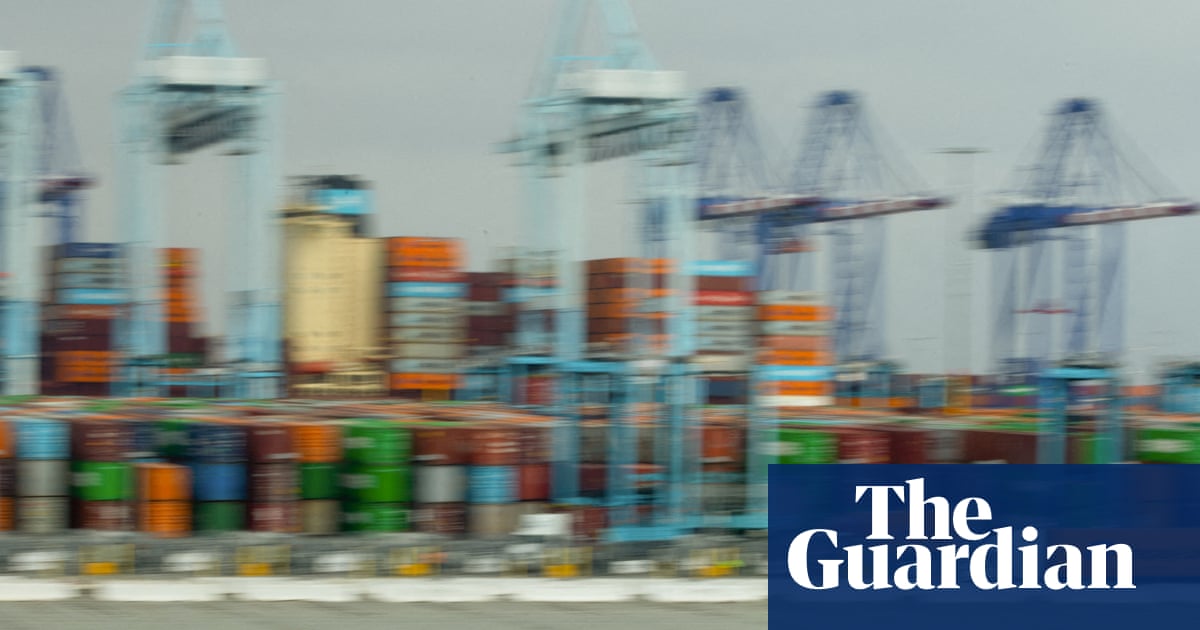
Maersk said demand for its shipping containers remained strong as it reported first quarter results. Photograph: Mike Blake/ReutersView image in fullscreenMaersk said demand for its shipping containers remained strong as it reported first quarter results. Photograph: Mike Blake/ReutersReopening strait of Hormuz would have limited impact on cargo flows, says MaerskCEO of Danish shipping group says increased costs due to higher fuel bills passed on to customers
The boss of the shipping company Maersk has said the reopening of the strait of Hormuz would have a “limited impact” on cargo flows, as the industry grapples with a sharp rise in energy costs.
Vincent Clerc, chief executive of the Danish shipping group, said its fuel bill had nearly doubled since the start of the conflict, adding as much as $500m (£367m) in costs per month, but it had passed this on to its customers through higher freight rates.
“The reopening of the strait of Hormuz, whether it happens in the days to come or the months to come, will have limited impact on cargo flows,” he said in an interview with BBC News.
The strait, a key shipping channel through which a fifth of the world’s oil and gas normally passes, has been effectively shut since late February, triggering the increase in energy prices.
On Wednesday, the US president, Donald Trump, wrote on social media that “assuming Iran agrees to give what has been agreed to… the already legendary Epic Fury will be at an end, and the highly effective Blockade will allow the Hormuz Strait to be OPEN TO ALL, including Iran.”
However, the shipping industry could continue to face elevated fuel costs, as well as concerns around their ability to travel safely to and from the Gulf.
More than 800 ships and roughly 20,000 crew members remain stranded west of the narrow waterway. This week, Maersk said the US-flagged ship, Alliance Fairfax, which is operated by its subsidiary Farrell Lines, had exited the strait without incident, accompanied by US military.
Clerc said: “What really are the most important factors to consider is first, our ability to mitigate the cost increases we have been suddenly faced with.
“So far, we have been successful with both our cost measures and the commercial measures that we have put in place to mitigate the impact of these increases to our financials.”
But he added that the “secondary effect” could be higher inflation and demand destruction, which “could create a softened market environment in the second half of the year”.
Maersk, which transports goods around the world via sea, road, rail and air, said demand for its shipping containers remained strong, and maintained its profit guidance for the year.
The group reported a 2% drop in revenue to $13bn in its first quarter of the year, though that was ahead of expectations. It added that it still expected container demand to grow by 2% to 4% this year.
However its shares, which are listed in Copenhagen, fell by as much as 4% in early trading on Thursday.