Europe’s Airlines Are Heading for a Much Bigger Fuel Bill Mark Nichols Mon, November 2, 2026 at 11:12 AM EST 4 min read RYAAY +5.08% NVDA +1.04% AF.PA +5.15% RYAAY +5.08% Explore stocks on Coinbase Trading disclosure Trading disclosure The above button links to Coinbase. Yahoo Finance is not a broker-dealer or investment adviser and does not offer securities or cryptocurrencies for sale or facilitate trading. Coinbase pays us for certain activity generated through this link. Prices displayed are informational.
Our analysts just identified a stock with the potential to be the next Nvidia. Tell us how you invest and we'll show you why it's our #1 pick. Tap here.
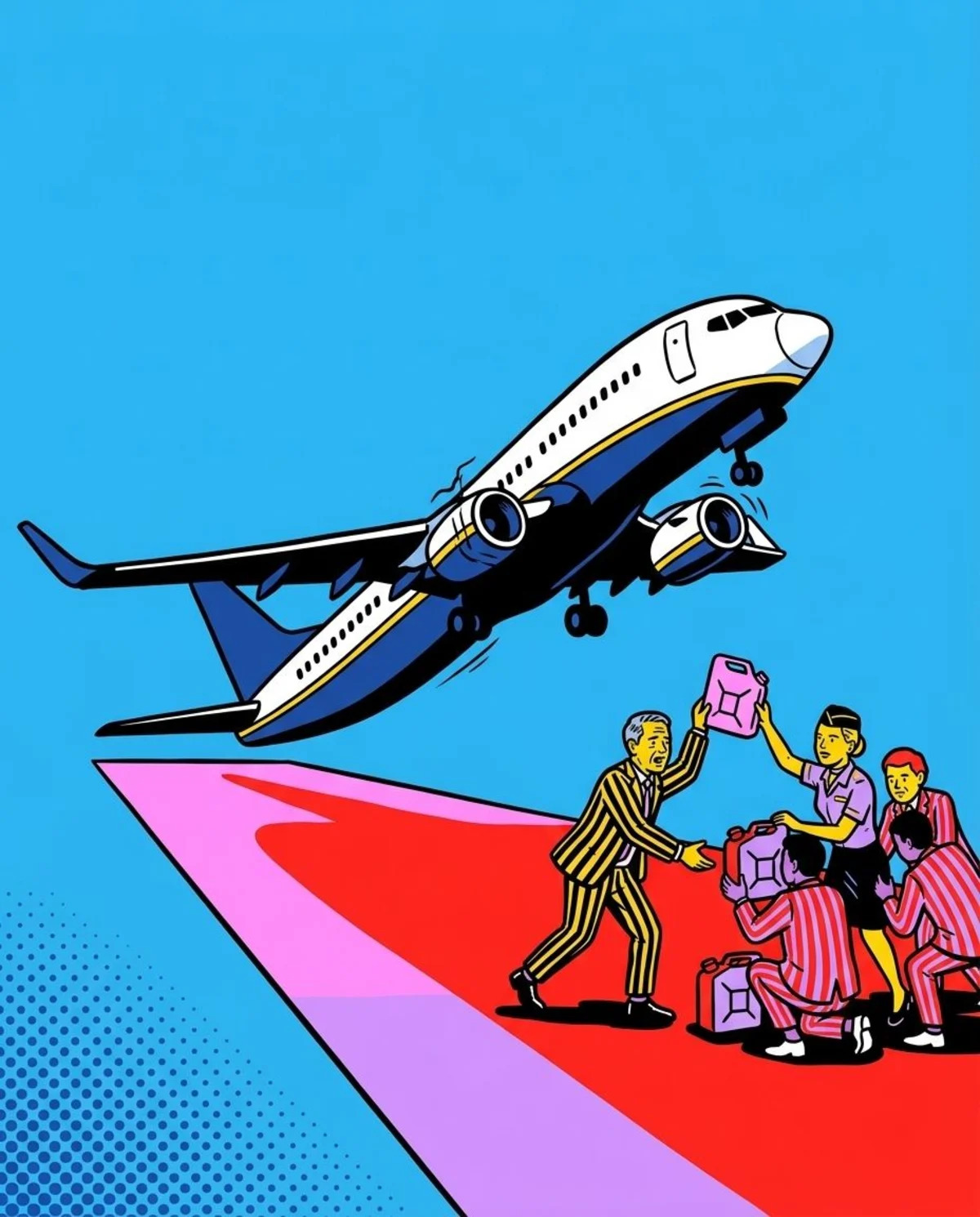
European airlines spent this year partly protected from the Middle East oil shock by fuel hedges agreed when prices were much lower. That protection starts disappearing next year, and Ryanair says its own bill could jump by about a third, creating pressure for higher fares, cost cuts and lower industry capacity.
Air France-KLM's rally as crude fell shows the other side: airline earnings are unusually sensitive to every sign of diplomatic progress or escalation in the Gulf.
Ryanair reported first-half profit after tax of €2.15 billion (about $2.4 billion), down 15% from €2.54 billion a year earlier as operating costs rose 10% and the price of its unhedged jet fuel roughly doubled.
Traffic still grew 6% to 125.8 million passengers, but average fares fell 4% to €55.70 as conflict-related uncertainty encouraged later bookings and forced the airline to price more aggressively. The bigger warning concerned next year.
Ryanair has around 80% of its fuel requirements hedged through March 2027 at about $67 a barrel. For the following financial year it is only 25% hedged, at roughly $95 a barrel.
Based on current forward prices, chief executive Michael O'Leary expects the fuel bill for the year ending March 2028 to rise by about €2 billion, or roughly one-third.
He estimates Ryanair would need fares to increase around 20%, equivalent to about €10 per passenger, to offset that cost completely. Management thinks European short-haul prices will rise by double digits but is not confident the full 20% can be achieved.
Ryanair is therefore examining pay freezes, airport-cost negotiations, lower crewing ratios and greater use of artificial intelligence.
Oil markets offered some relief on Monday. Brent crude dropped roughly 4% as talks involving Iranian and Qatari officials raised hopes of progress toward ending the US-Israeli conflict with Iran.
Airline shares responded immediately. Air France-KLM rose around 2% in early trading, Lufthansa gained about 1.6% and the broader travel sector outperformed.
Fuel is one of the largest and least controllable costs in aviation, which makes hedging crucial when prices become volatile.
The problem is that many airlines entered 2026 with cheap protection locked in before the Middle East conflict drove jet-fuel prices sharply higher. As those contracts expire, companies either have to hedge at much more expensive prices or accept greater exposure to the spot market.
One stock. Nvidia-level potential. 30M+ investors trust Moby to find it first. Get the pick. Tap here.
Jet fuel has also risen more aggressively than crude because refining constraints and supply disruptions widened the premium for aviation fuel itself. Recent prices have been roughly double pre-war levels, so a modest move in Brent does not restore airline economics. That's why Monday's oil drop helps sentiment without solving the problem.
Air France-KLM can rally 2% because lower crude improves the expected cost curve, but Ryanair's guidance shows how much damage has already been embedded into forward budgets if high prices persist. The pressure will not fall evenly.
Ryanair has one of Europe's strongest balance sheets, owns most of its aircraft and historically operates with lower unit costs than major rivals. Even so, it says fare increases alone may not cover the extra fuel expense.
Higher-cost carriers with more debt, leased aircraft and weaker hedging positions could face even more pressure, encouraging them to cut marginal routes and reduce capacity.
That is where the fare story becomes important. Fewer seats combined with higher fuel costs gives airlines a strong incentive to raise ticket prices, particularly during peak periods.
European airfares were already 5.8% higher year on year in September, while Ryanair now expects double-digit increases across short-haul markets next year.
Consumers may absorb much of the energy shock even if airlines fail to protect margins.
Everything depends on the Middle East conflict and how quickly oil and jet-fuel markets normalize.
If diplomacy produces a durable de-escalation, crude and refining margins could fall sharply enough to make new hedges more affordable, which would reduce the pressure on 2027 fares.
If not, airlines will enter the summer with substantially more expensive fuel and less protection than they had this year.
Ryanair's next moves on labor costs, routes and capacity will provide an early indication of how aggressive that adjustment becomes. Competitors are likely to make similar calculations as their own hedges roll off.
Air France-KLM's rise shows how quickly airline stocks can bounce when oil falls. Ryanair's €2 billion warning is a reminder that one good day in crude does not erase a much larger cost problem already approaching.