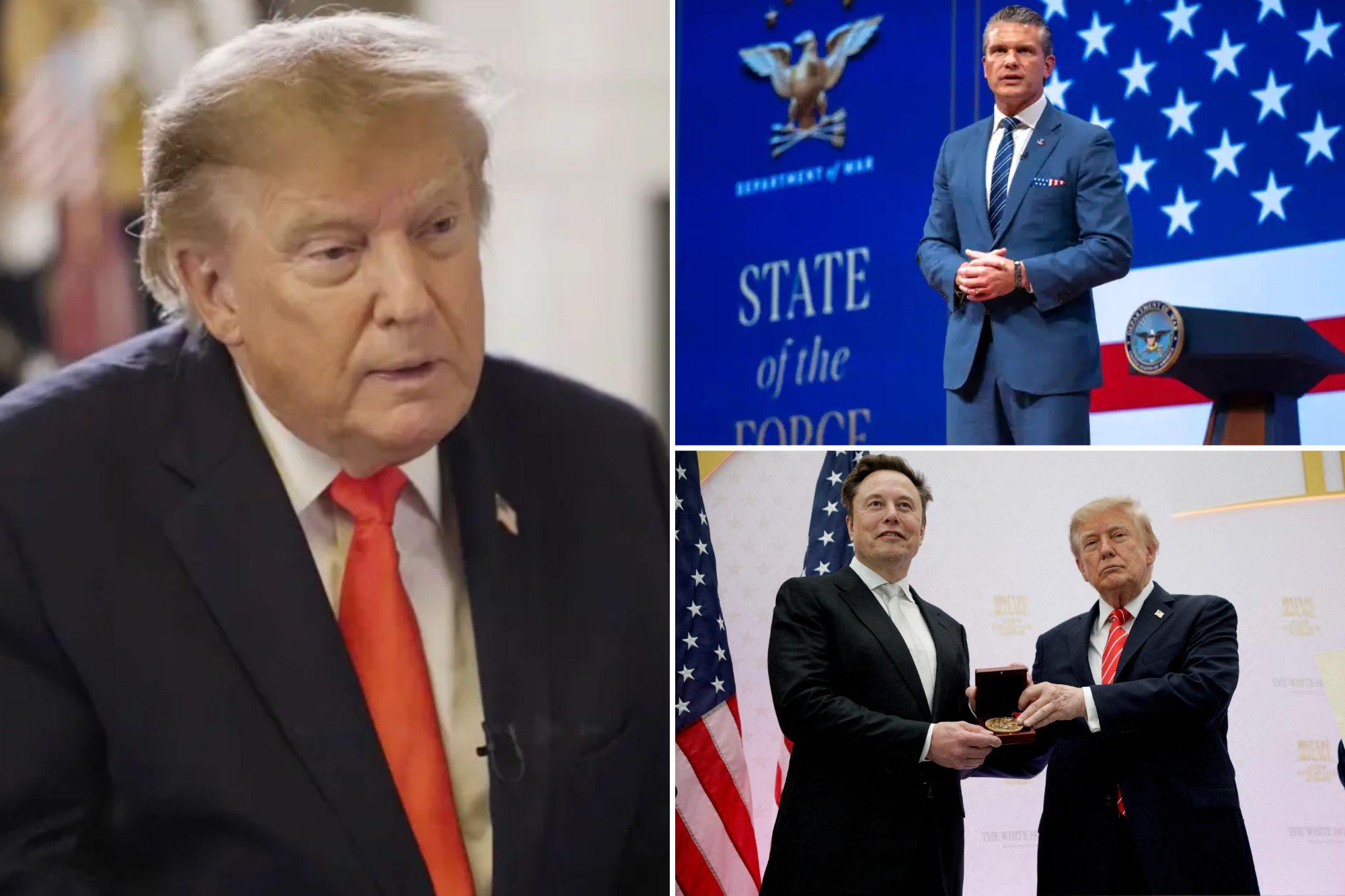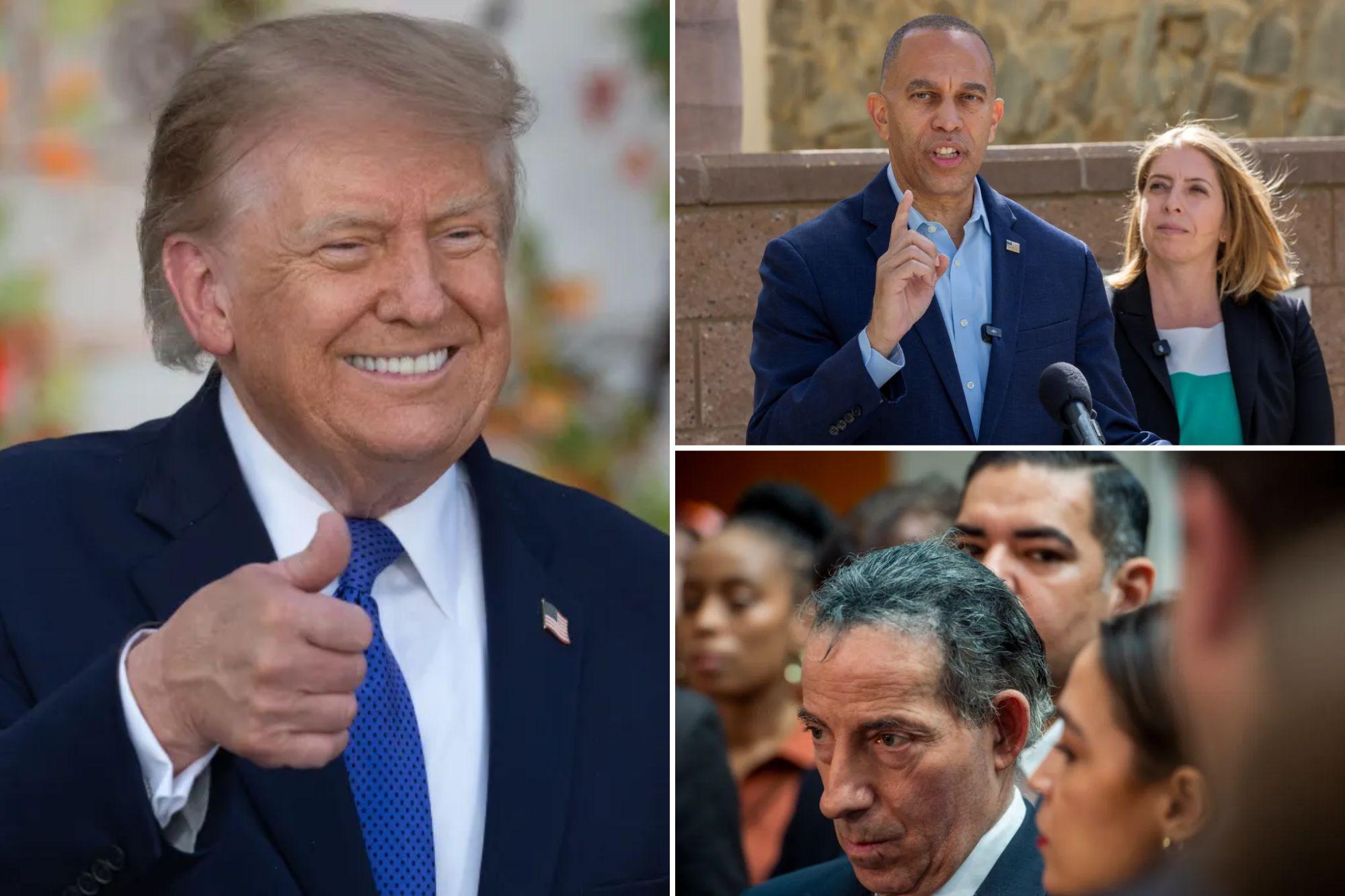
Make New York Post a Preferred Source WASHINGTON — President Trump’s allies are bracing for legal bills that could reach into the millions as Democrats ready for investigations if they win the Tuesday midterm elections — but the administration is preparing to fight back and has a new tool to drag out proceedings.
The White House counsel’s office has added attorneys in anticipation of Democratic congressional gains and received offers of assistance from some outside law firms — as lower-level administration officials take out legal insurance to protect themselves.
Trump was impeached twice during his first term after losing 42 House seats in the 2018 midterms and Democrats are expected to aggressively investigate a wide range of actions this time, including alleged corruption and business dealings of Trump’s family and relatives of other top officials.
The scale of Republican woes depends on whether the GOP loses one or both chambers. A less-likely but possible loss of the Senate would multiply probes and associated legal costs.
In a major development, the Justice Department’s Office of Legal Counsel in August issued an opinion asserting that the president can assert executive privilege over “communications that he has with advisers who do not work for the Executive Branch.”
This new assertion offers former officials, outside allies, relatives and potentially even businesses a shield to balk at demands for their testimony and documents — likely resulting in court proceedings that can take months to resolve.
Officials and experts believe this assertion will dramatically slow Democrats’ inquiries, which in the House likely will be spearheaded by Rep. Robert Garcia (D-Calif.) on the oversight committee and Rep. Jamie Raskin (D-Md.) on the judiciary committee.
“At a certain point, Democrats are likely going to be forced to lessen the scope of targets because right now it’s clear that their biggest risk is having a net of targets that is far too wide,” a Republican operative told The Post.
Trump’s second-term team has been — at least until now — less prone to defections and hardened into a more loyal and smaller circle following the years of investigations that dogged the president during his four years in political exile.
A White House official told The Post that Trump has a “cohesive team” that’s “willing to fight back” more so than during his first term, and “we will see everyone fight back pretty hard.”
Trump’s likely assertion of executive privilege over virtually any communications with himself will throw a novel wrench into Democratic investigations.
“The OLC opinion, by extending executive privilege to private individuals, creates a new constitutional defense that will enable the White House and private individuals advising the president to refuse to comply with congressional subpoenas,” said University of Kentucky law professor Jonathan Shaub, an expert on executive privilege.
Shaub, who served in President Joe Biden’s White House counsel’s office and at the OLC under President Barack Obama, told The Post that “if Democratic investigations target private individuals and subpoena information or communications relating to their interactions with President Trump, those advisors can rely on the opinion to refuse to answer questions or provide documents.”
A similar court fight erupted in Trump’s first term when former White House Counsel Don McGahn refused in May 2019 to testify about alleged obstruction of justice by Trump during Special Counsel Robert Mueller’s Russia investigation. The ensuing legal battle ended two years later — after Trump had left the White House — when McGahn agreed to a private interview.
“Those cases tend to take a very long time to work their way through the court and the appellate process,” Shaub said.
“Democrats sued McGahn to enforce their subpoena very quickly after he refused to testify, but the case took almost two years and continued until after the ensuing election, by which point the case had largely lost its salience.”
But it won’t be so simple for Trump to quash the probes. Democrats could target email, phone and social media companies with subpoenas as a workaround. Or they could attempt to unilaterally assert inherent contempt to fine or imprison targets — reviving little-used legislative powers.
“Private companies, such as cellular carriers or email providers, are much more likely to provide information in response to a subpoena rather than try and use the OLC opinion to shield themselves,” Shaub said.
“If they are served with a congressional subpoena, I do not think they will give the OLC opinion any weight. If the White House or a private individual wants to stop them from complying, including by relying on the executive privilege arguments in the OLC opinion, they would likely have to sue the company and ask a court to block release of the documents.”
Another option would be to forge ahead without a thorough investigation — as arguably occurred during the 2019 impeachment of Trump for pressuring Ukraine to investigate alleged Biden family corruption. In that instance, many officials testified, but a swath of underlying and potentially supporting documents was not secured before the House vote.
Trump was impeached a second time in 2021 for allegedly inciting an insurrection to challenge the 2020 election results. In that instance, the House impeached him exactly one week after his supporters pillaged the Capitol, with little investigation and his own words largely used as evidence.
The then-Republican-held Senate acquitted Trump in 2020 of abuse of power and obstructing Congress following his first impeachment and acquitted him in 2021 by a narrower margin.
The investigations are expected to be a bonanza for lawyers in Washington as administration officials and allies scramble to protect themselves from what could be massive bills.
It’s unclear if the administration will have a concerted legal defense fund for lower-level staff, who often are paid poorly. In some cases, defense work is expected to be provided pro bono — though many staffers aren’t leaving anything to chance and are taking out insurance policies.
Hans von Spakovsky, senior legal fellow at the conservative Advancing American Freedom advocacy group, founded by former Vice President Mike Pence, said “anyone who goes to work for the federal government these days should pay the premiums for federal employee liability insurance.”
“I did that when I was at the Justice Department to cover potential legal costs if I somehow got investigated,” von Spakovsky said. “Never had to put in a claim but the premium cost was not very expensive.”
Annual premiums for one policy circulating among administration staff cost about $350 for $300,000 in coverage or about $500 for double the anticipated legal fees.
Some Trump-aligned groups, flush with cash this year, potentially could recycle leftover money from the campaign, particularly the Republican National Committee, which in the past paid some of Trump’s own criminal defense bills.