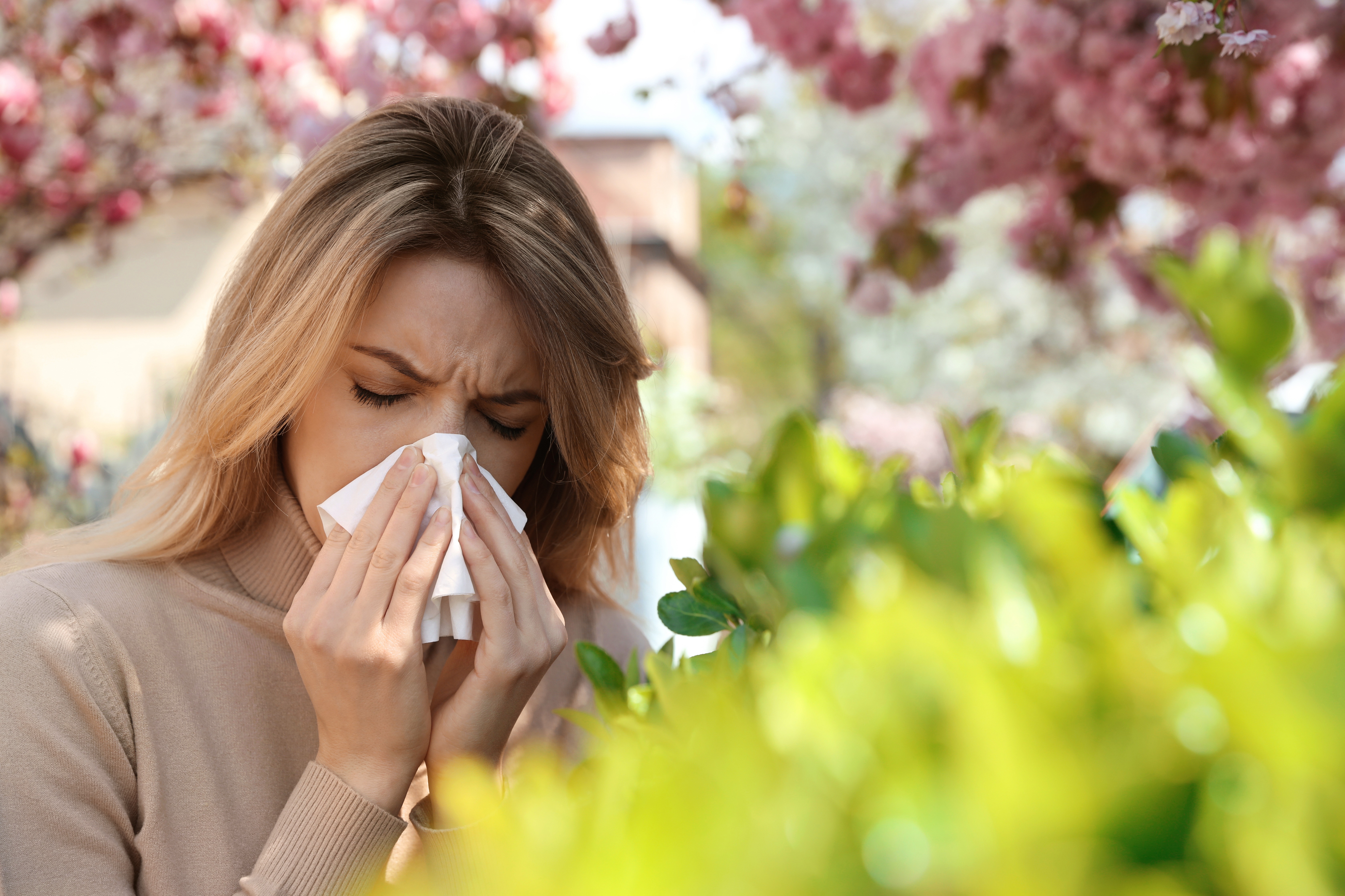
Spring in NYC is famously fickle — we have to prepare for everything from slushy snow and gloomy rain to gusty wind and even “pollen tsunamis.”
Wait, pollen tsunamis? Before you consult your Farmers’ Almanac, a pollen tsunami is a significantly longer and more intense allergy season buoyed by warmer temperatures, rising carbon dioxide levels and increased air pollution.
Pollen seasons have lengthened by about 20 days, while pollen concentrations have jumped by 21% over the past three decades, Dr. Clifford Bassett said, citing research from 2021.
It could be a cold — or it could be allergies. It might be difficult to discern unless you see a medical professional. New Africa – stock.adobe.com Allergy sufferers already know it’s worse than ever — and it’s not over yet. Bassett said the tsunami will reach its first peak in May.
“A 15-year study of the NYC metro area by the AAAAI National Allergy Bureau confirmed the seasonal pattern: tree pollen dominates and peaks in May, grass pollen peaks in June and ragweed dominates from August through October,” Bassett, an allergist and immunologist at Schweiger Dermatology & Allergy Group in Manhattan, told The Post.
Ahead of the first pollen wave, Bassett shares five symptoms that signal it’s time to see a board-certified allergist.
Bassett said he sees this vexing visage — dark circles under the eyes, puffy eyelids and creased lines beneath the lower lids — every day at the office.
“Patients come in convinced they just look tired or old,” he said. “It’s not aging — it’s allergic inflammation backing up blood flow around the eyes.”
A noggin that’s foggin’ typically means difficulties with concentration and memory. About 30% of allergy patients report these troubles.
“For kids, it can look like attention problems at school,” said Bassett, who wrote “The New Allergy Solution.” “For adults, [the brain] operates at 60% all day, and we’re not sure why.”
Studies confirm that allergies significantly contribute to chronic fatigue.
Allergies can keep you up all night, tossing and turning, if you don’t have a plan to tackle them. LIGHTFIELD STUDIOS – stock.adobe.com “Congested nasal and sinus passages physically obstruct the airway at night, leading to mouth breathing, snoring and restless sleep,” Bassett explained.
“When sleep suffers night after night, everything cascades — fatigue, mood, irritability, appearance, performance at work and school.”
Postnasal drip — when excess mucus from the nose and sinuses drips down the back of the throat — often causes a cough that might be easily mistaken for a cold symptom.
If the cough lingers for weeks instead of days, Bassett said allergies should be considered.
“Allergic inflammation swells the eustachian tubes, [causing] that plugged-up, underwater feeling that people often blame on sinus problems,” Bassett said.
“Many patients come in thinking they have ‘bad sinuses’ or ‘a cold every spring’ — and it turns out they have specific, treatable allergies they never knew about,” Bassett said.
Here are Bassett’s six tips for nipping your allergies in the bud.