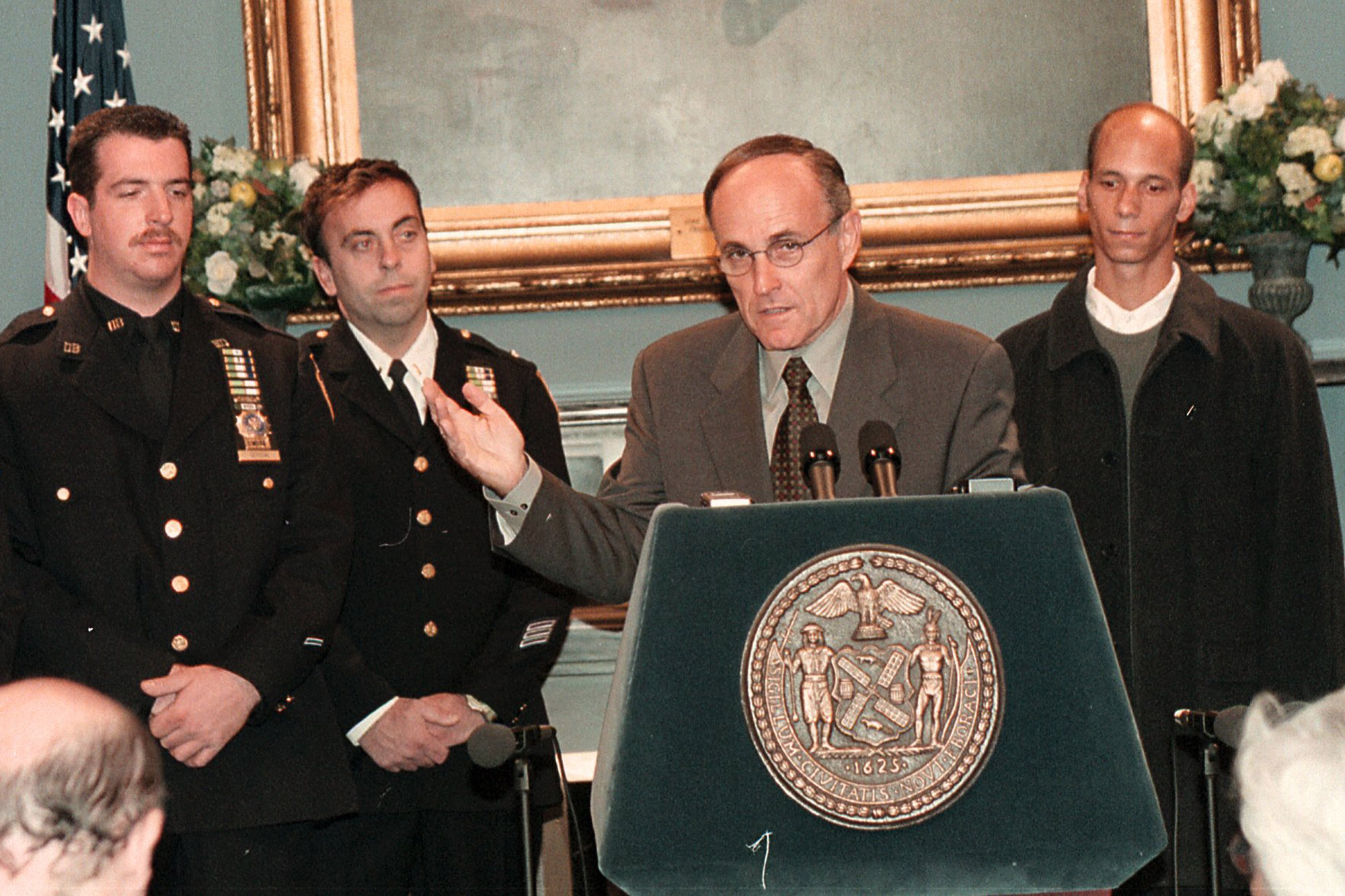
Rudy Giuliani congradulates hero cops Det. Donald Brown, Det. Gregg Gerson their commanding officer Lt. Brian Bovino and a civilian Peter Fraustagli who participated in the rescue of a drowning victim. New York Post The report that Rudy Giuliani has turned a corner in his battle with pneumonia and is breathing on his own in a Florida hospital is certainly worth cheering.
“Just yesterday he was in critical condition, so I’m incredibly grateful to share that he is now conscious, off the ventilator, and even cracking jokes,” his son Andrew told The Post on Tuesday.
It was separately reported that his condition was so serious when he arrived at the hospital that a priest had given him last rites.
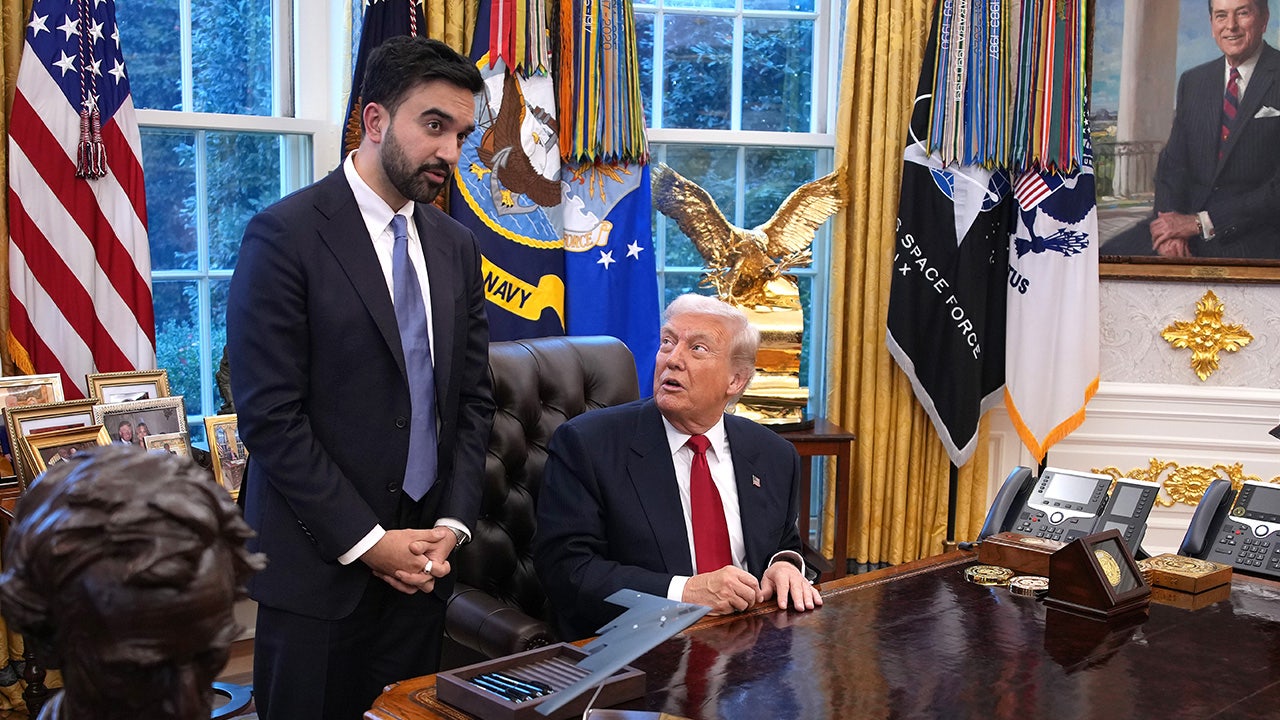
Almost as remarkable as his improvement is the enormous outpouring of well wishers, with even Mayor Mamdani joining the chorus.
“I think he is someone that we as New Yorkers know well.
And he’s been a fixture in our city’s politics and public life for so many years.
And I know that many New Yorkers are concerned by the reports that he’s in critical condition, and so we do keep him and his family in our prayers at this time,” Mamdani said.
Such is the deep and justified respect that far surpasses politics and party lines for the Man Who Saved New York.
Without Giuliani’s two terms in City Hall, New York would not be nearly the place it is today.
It surely has its flaws, but ever since his tenure, it has been the safest big city in America.
That is owing to the fact that he proved that crime could be reduced and controlled, meaning no mayor since has had the luxury of pretending there is nothing he can do when blood is shed.
Until Giuliani came along, there wasn’t much hope that Gotham could recover from the violent crime wave that wrecked the city and its economy in the late 1980s and early 1990s.
Although the socialist Mamdani and the conservative Giuliani don’t agree on much, it is a fact that the current mayor is the most recent in a long line whose performance has benefited from critical reforms and standards Giuliani established.
Chief among them is the NYPD’s weekly release of major crime statistics for the five boroughs.
It is now a routine report card that grew out of Giuliani’s early actions when he took office in 1994.
He had defeated incumbent David Dinkins on a pledge to turn around the city, which was mired in a collapse of the quality of life.
Crime was Public Enemy No. 1, with the number of murders surpassing 2,000 a year for the first time.
Coming soon after the fiscal crisis, when the police force was shredded by layoffs, Gotham was experiencing a sharp population decline as public safety became an oxymoron.
Whole neighborhoods were burned out and crime knew no boundaries.
It was not unusual for a single precinct in The Bronx to suffer 100 homicides in a year.
Even school children were not immune from violence, leading many parents to rely on a desperate safety valve.
They gave their children “muggers’ money” with instructions to quickly turn it over if a potential assailant threatened them.
That was the city Giuliani inherited, and history has recorded the rapid and extraordinary comeback under his leadership.
The number of murders fell dramatically, by more than 60%, to 767 in 1997, the last year of his first term.
The decline continued, though less sharply, in his second term, with 649 murders reported in 2001, his final year in City Hall.
Then came the horrors of 9/11, when his remarkable strength and stamina kept the city together in the very worst of times.
Mayor Michael Bloomberg followed with a sharp focus on rebuilding and crime.
In 2013, his 12th and last year in office, the city reported a total reduction of murders by yet another 50%, to 332.
The long-term impact of safe streets and neighborhoods led to an economic and jobs explosion that made the city shine as a national powerhouse and worldwide attraction.
Tourism boomed, as did construction and the city grew by more than 1 million people.
Eric Adams, a former police officer elected mayor in 2021, understood the transformation, and was fond of saying that “public safety is the prerequisite to prosperity.”
The fact that in 2026, crime statistics are still being published by the NYPD on a weekly basis is a testament to Giuliani’s commitment to reforming the department and disclosing its performance.
Nor is it an accident that the current commissioner, Jessica Tisch, served major roles under previous commissioners, and guided the department’s embrace of the technological revolution, which is essential for real time management of crises and patterns.
Just the other day, Tisch released new data showing that, compared to last April, crime in the city last month had fallen by 9.5% overall.
Her report is a direct descendant of the changes that began when Giuliani, along with his first commissioner, Bill Bratton, and a brilliant young transit cop named Jack Maple, created a reporting system called CompStat.
In addition to crime reports being made public, the system was used inside the department to deploy cops and other resources to hot spots and to measure the performance of commanders.
Those who didn’t react quickly to crime in their precincts and sectors were reprimanded in front of their peers, and were replaced if improvements didn’t come quickly.
The accountability focus, combined with the “Broken Windows” theory of enforcement that Giuliani also embraced, revolutionized modern policing.
Consider that, prior to CompStat, even commissioners and others in the department generally were not held accountable for rising crime on their beat.
In part that’s because statistics were not often made public, except perhaps at year’s end. And the granular detail and evolving patterns were not even widely and timely known inside the NYPD.
I remember meeting with him in the 1993 campaign, and he was at pains to make it clear that numbers were not the end all and be all of his vision.
“What matters most,” he said, “is that people feel safer. Statistics are important, but if the public doesn’t feel safer, then you still have a problem.”
A former top assistant to Giuliani, recalling the grueling efforts in the early days of the CompStat revolution, called it the equivalent of “the Manhattan Project for crime.”
It’s a fair comparison when you consider how many lives have been saved in New York and elsewhere and how it has changed policing.
In addition, CompStat showed ordinary citizens that their government was looking out for their safety, and set a new standard for future candidates and mayors to meet.
So much so, that, woe to any mayor who even tries to return to the bad old days of keeping the public in the dark about crime.
That’s not going to fly, thanks to Rudy Giuliani.