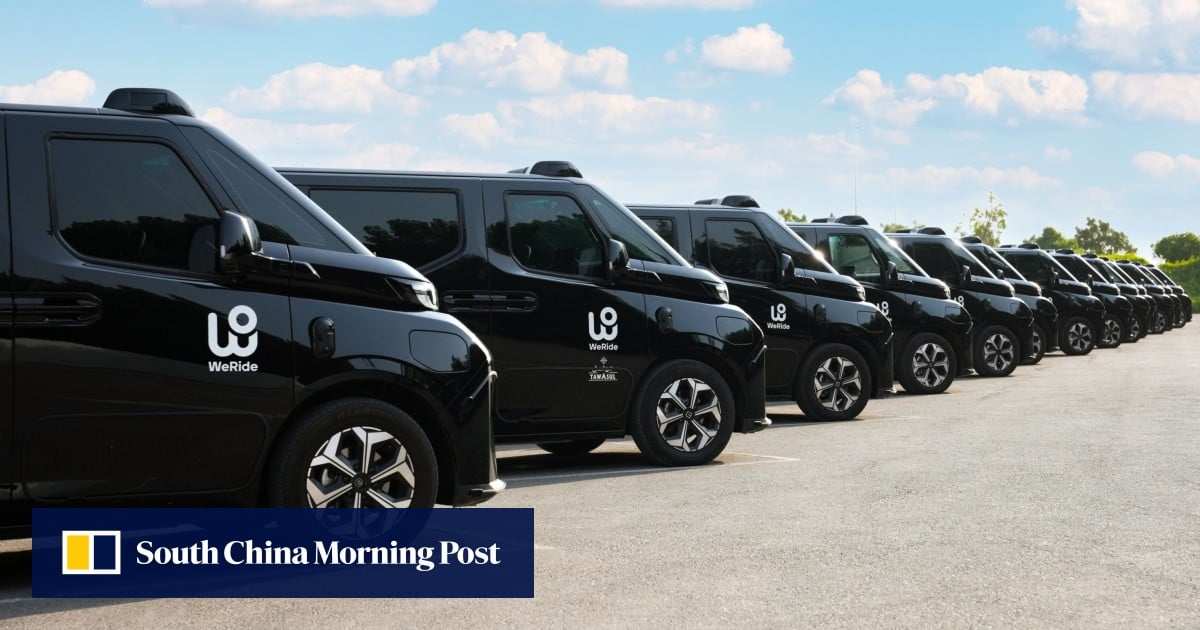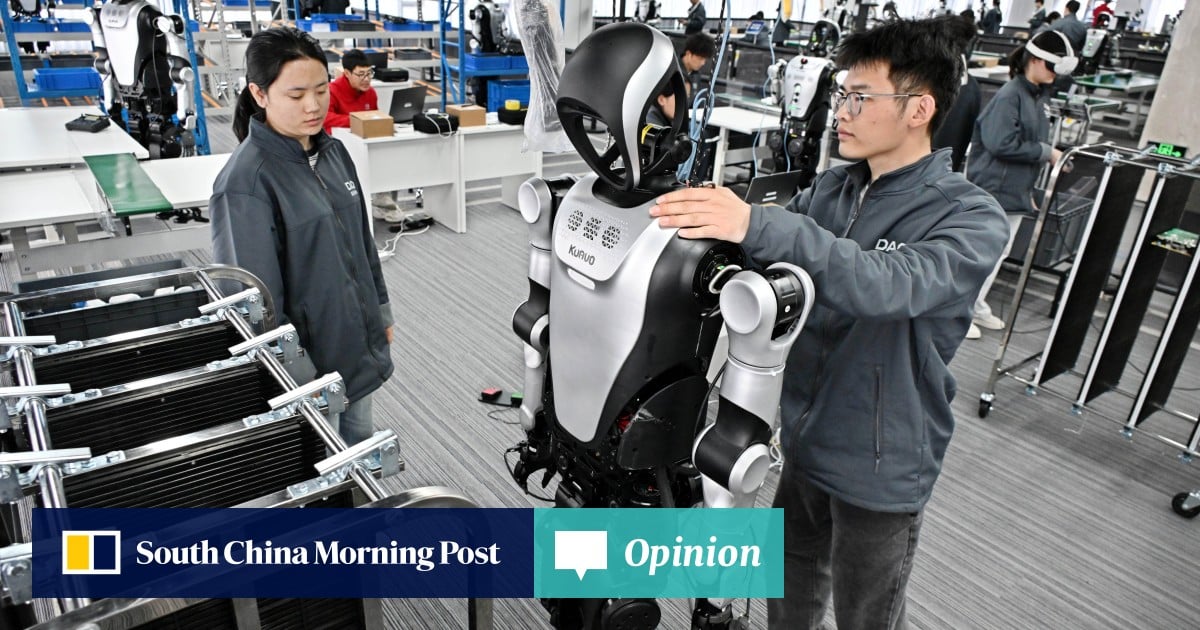
The US still leads in AI development but lags in large-scale deployment behind China, which is rapidly becoming the leader in implementation
3-MIN READ3-MIN ListenMatt TerrellMatt Terrell is an assistant professor in the School of Communication and Media at Kennesaw State University in Atlanta. Published: 4:30pm, 5 May 2026When it comes to artificial intelligence, the United States still dominates the headlines – and, by most conventional measures, the technology itself. American institutions continue to produce a large share of high-impact AI research, and private investment reached over US$109 billion in 2024, nearly 12 times China’s total, according to the Stanford Institute for Human-Centred AI.At the same time, the economics of AI are rapidly improving. Training and deployment costs have fallen dramatically in recent years, making large-scale adoption increasingly viable across industries. By these metrics, the US appears to be winning the AI race. But there is growing evidence this may not be the race that matters most. Because, while the US excels at building AI, China is moving more decisively to use it.Across industries – from logistics to healthcare – China is not simply adopting AI tools. It is reorganising systems around them. By 2024, China had more than 600 million registered generative AI users and hundreds of models deployed across real-world environments, from hospitals to logistics systems. Adoption is not limited to experimentation; it is embedded in operations.AdvertisementThis difference is not primarily about technological capability. It is about implementation.
Economists have seen this pattern before. During the electrification of manufacturing, factories that simply replaced steam engines with electric motors saw little productivity improvement. Real gains only came when companies reorganised entire production systems around electricity – a dynamic often associated with economist Robert Solow and later expanded by Erik Brynjolfsson in the context of digital transformation.