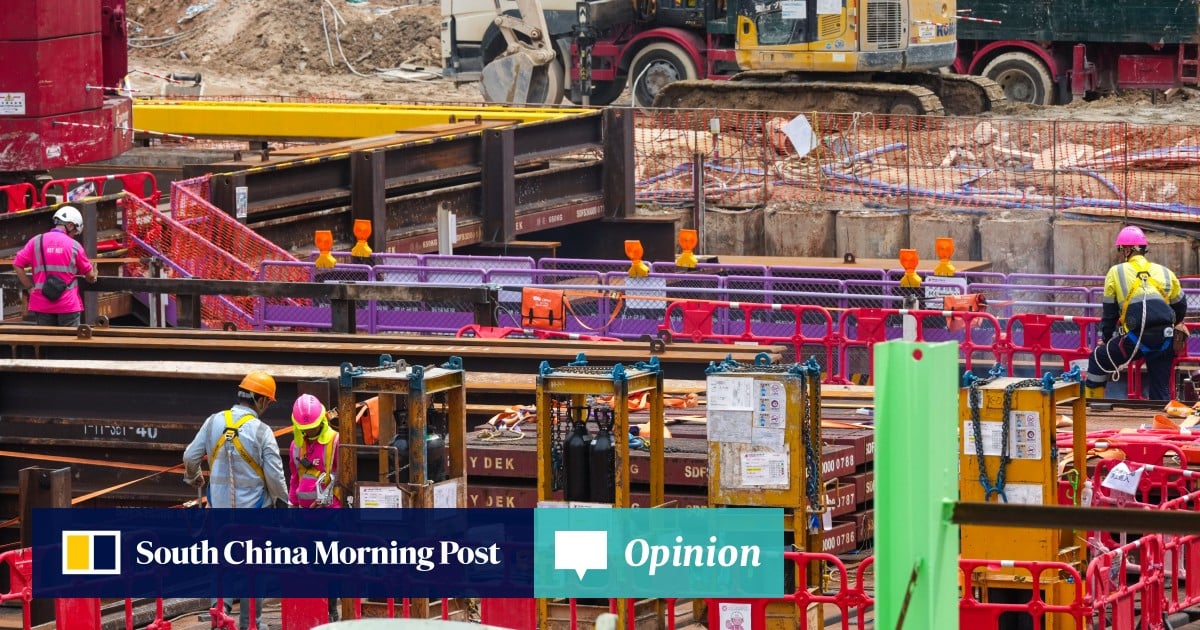
A system that rewards the lowest bidder encourages a race to the bottom, while rewarding bids close to the average promotes honest pricing
3-MIN READ3-MIN ListenRuiwang YuRuiwang Yu is a doctoral student in the Department of Building and Real Estate at The Hong Kong Polytechnic University and a chartered civil engineer. Published: 9:30am, 5 May 2026As Hong Kong prepares for another major push in public works, one question deserves far more attention than it has received: are we buying infrastructure in a way that is sustainable for the construction industry and the public as a whole?
At present, Hong Kong’s tender price evaluation method for infrastructure projects generally gives the highest price score to the lowest bid. That score normally accounts for 60 per cent of the total, with the remaining 40 per cent based on technical attributes. As recent research from New Zealand pointed out, once price is given a weighting higher than 25-30 per cent, it is typically the deciding factor.
Singapore offers a useful contrast. In many public procurements there, the bid closest to the average price receives the highest pricing score, with those that are significantly above or below the norm scoring less well. This is not a rejection of competition. It is a recognition that bids clustering around a realistic market price are often more credible and sustainable than those driven to the bottom.
Tai Po deadly blaze exposes bid-rigging in Hong Kong building renovation market