China is hoping to secure new allies for a future multipolar world order as the partnership between the US and the European powers slides into a crisis.
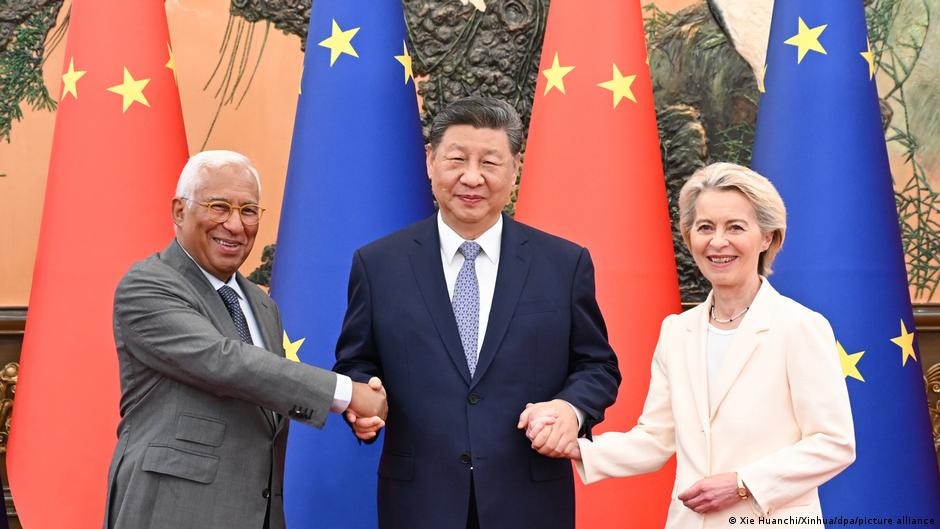
https://p.dw.com/p/5DFC1In July 2025, Xi Jinping hosted the 25th China-EU Summit in BeijingImage: Xie Huanchi/Xinhua/dpa/picture allianceAdvertisement"These days, Europe is losing its significance in global politics and the economy," a law student shouted from the audience during a recent political TV talk show broadcast on Shanghai Media Group (SMG), a Chinese state media outlet. "Are the European elite and the public aware of this?"
The question reflects Chinese public perception of Europe's stagnant economy, a dependent foreign policy, and a lack of defense capabilities. Over 80 years after the end of World War II, European powers are seen as still kowtowing to Washington. And despite intensive efforts, Western Europeans seem incapable of stopping the Ukraine war, which is being waged on their own doorstep by Russia.
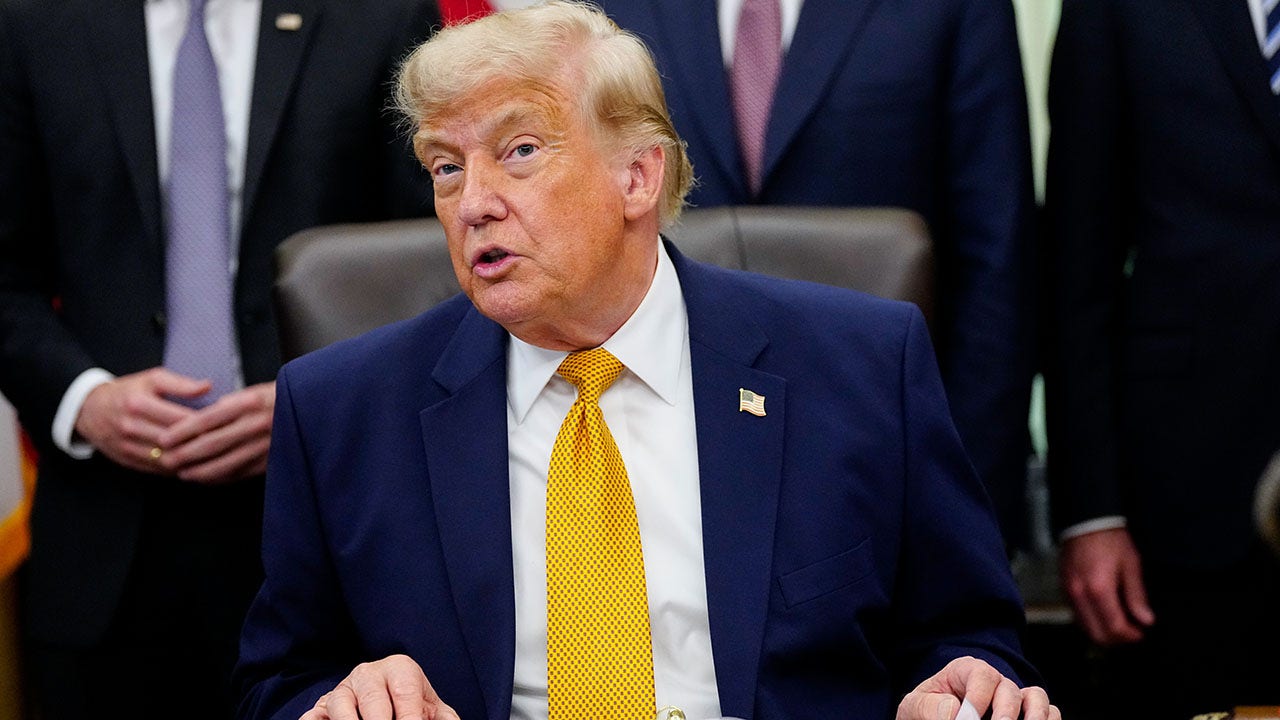
Additionally, US President Donald Trump has thrown the transatlantic alliance into dissaray since his return to office in January 2025. Trump embraced Russian narratives on the war in Ukraine, temporarily cut Kyiv off from military aid, and then threatened to take over Greenland from Denmark. Trump has called the integrity of the NATO alliance into question after the Europeans backed off from joining Trump's war on Iran.
China regards the split as an opportunity. Beijing envisions the future world as a multipolar order, and this shapes the response to its own ongoing rivalry with the United States. China also intends to shape the future — not alone, but alongside Russia and other "like-minded" nations.
Interestingly, China is also increasingly viewing Europe as an independent pole in its plans.
The logic behind this is quite simple. With the United Kingdom and France, Europe holds two veto votes in the UN Security Council. The EU single market is highly attractive to China's export-oriented economy. This has become increasingly apparent in the wake of the trade war initiated by President Trump. And the leadership in Beijing believe that companies in Europe and China can complement each other very well.
Europe still has a lot to offer in terms of technology. China, on the other hand, has the production capacity to manufacture everything at competitive prices. Economic ties between the two are strong. Beijing is hoping to win the EU over as an ally, provided there is political will and enough space between the US and its traditional partners in Europe.
Trade Reset: How Europe is replacing China and the USTo view this video please enable JavaScript, and consider upgrading to a web browser that supports HTML5 video
According to Ding Chun, a professor at Fudan University and chairman of the Shanghai Institute for European Studies, the US has used its dominance at the International Monetary Fund and the World Bank to promote economic programs in Latin America and Europe, thereby cementing a hegemonic position known as the "Washington Consensus."
"But times have changed," Ding told a forum in Shanghai in mid-April.
"A lot of things don't work the way they used to, even in Europe. The younger generation in Europe is fed up with the political establishment. Social media makes election outcomes unpredictable," he said.
Beijing is already challenging the "Washington Consensus" on the global stage.
On April 29, Annalena Baerbock, president of the UN General Assembly, visited Beijing. China's Foreign Minister Wang Yi used her visit as an opportunity to emphasize the need to reform UN institutions and establish the UN as a multipolar world government.
"China is happy to support you in your continued leadership," Wang said.
"As a founding member of the United Nations and a permanent member of the Security Council, China plays an important leading role in upholding multilateralism, safeguarding international law, and promoting the three pillars of peace, development, and human rights," a Chinese Foreign Ministry statement said.
As German foreign minister in 2023, Baerbock once referred to Chinese President Xi Jinping as a "dictator."
Economic powerhouse China — a risky partner? To view this video please enable JavaScript, and consider upgrading to a web browser that supports HTML5 video
Vuk Jeremic, a former President of the UN General Assembly and now a professor at the prestigious French university Sciences Po, told the SMG talk show that transatlantic ties were forged on the common threat of Soviet Communism.
And after the fall of the Berlin Wall, Europe enjoyed decades of tremendous prosperity, Jeremic continued.
It served as a model for the entire world, showing how to overcome the conflicts and divisions of history, how to grow together, and how to work toward shared prosperity and a shared future.
"In the meantime, quite a lot went wrong. Crises began to pile up," Jeremic said, noting that US ties have been shaken.
The 2007–2008 global financial crisis was followed by the 2015 migration crisis in Europe.
"Then came Brexit in 2020 and Donald Trump's first presidency from 2017 to 2021 … The current situation can hardly be described as ideal," he added.
Zhang Weiwei, director of the China institute at Fudan University in Shanghai, told the talk show that it will be difficult for Europe to "decouple" from the US.
He added Europe has also missed out on developing the tech-driven industries of the future, the so-called Industry 4.0. The term, which refers to digital and networked industrial production, was coined in 2011 at Germany's Hannover Messe.
Zhang added there is no lasting competitive advantage for Europe if there isn't a single European option among the top 20 internet high-tech companies. Only US platforms would be used in Europe, and US companies would be the masters of European "big data." Europe tends not to trust Chinese data providers.
Europe's AI push could outsmart US and ChinaTo view this video please enable JavaScript, and consider upgrading to a web browser that supports HTML5 video
"Years ago, people in China believed they could learn from Industry 4.0 in Germany to perfect Chinese industry," said Zhang. "Today, no one talks about it anymore," he added.
Zhang said China's proposals for Brussels are to become an independent, pragmatic partner of Beijing.
"This has to do with the humiliating way Donald Trump has treated Europe since taking office for a second term in January," he said.
"Right now, Europe is taking stock of its situation and realizing that some of its major priorities are simply unattainable without economic and technological cooperation with China," Zhang said.
This article was translated from German