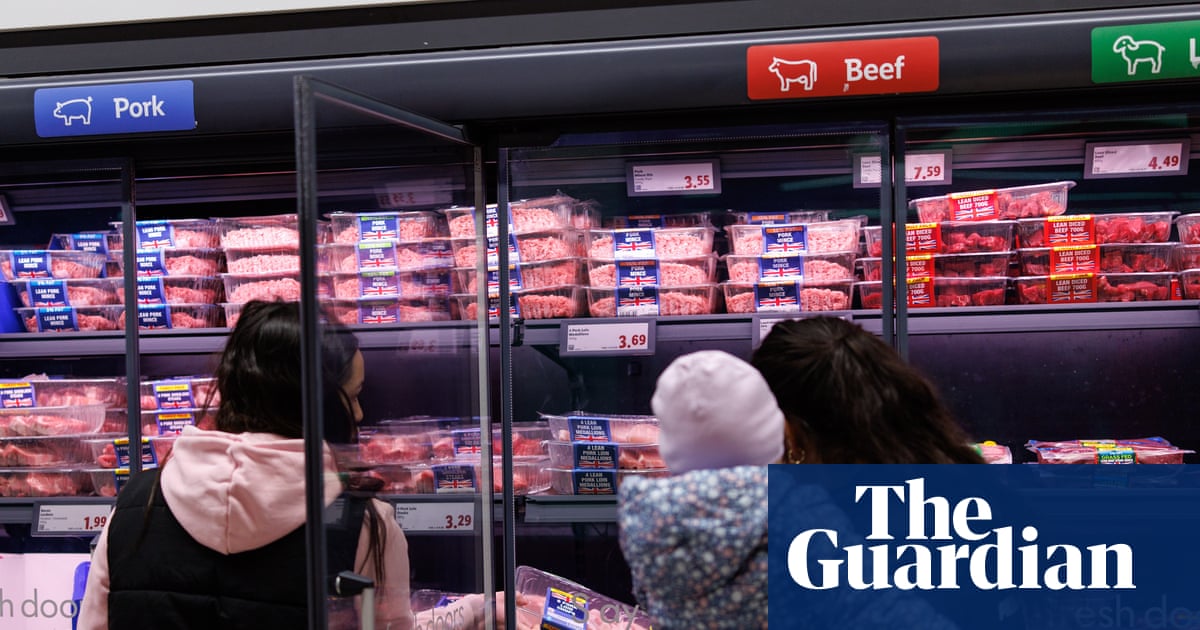
The price of beef is up 64% since the start of the cost of living crisis in 2021, the research found. Photograph: Tolga Akmen/EPAView image in fullscreenThe price of beef is up 64% since the start of the cost of living crisis in 2021, the research found. Photograph: Tolga Akmen/EPAUK food prices on track to rise by 50% since start of cost of living crisisBeef and olive oil costs increase the most as climate and energy shocks drive inflation, research suggests
Food prices are on track to be 50% higher in November than at the start of the cost of living crisis in 2021, new research suggests.
Climate and energy shocks have driven an almost quadrupling of the pace of food price growth, according to new research from the thinktank Energy and Climate Intelligence Unit (ECIU), with costs rising in five years at about the same rate as they had over the previous two decades.
Anna Taylor, the executive director of the Food Foundation, a charity, said: “Food prices rising this high, and this fast leaves families on the lowest incomes with nowhere left to cut except the food on their plate. When that happens, people skip meals, children go hungry, and diet-related illness rises – taking parents out of work and piling pressure on an NHS that can least afford it.”
Read moreThe research suggest that the cost of living crisis, which many voters lay blame on political elites and big business, is likely to continue as an important political issue during 2026. Experts warn the war in the Middle East is likely drive up inflation, which was sent soaring by the Covid pandemic and Russia’s invasion of Ukraine. The Bank of England says food inflation is expected to rise to 7% by the end of the year because of higher prices for fertiliser, energy and transport.
Staples including pasta, frozen vegetables, chocolate and eggs are all at least 50% more expensive than five years ago, while the price of beef is up 64% and olive oil has more than doubled, the ECIU said. The rises reflect the products’ “sensitivity to volatile oil and gas prices, synthetic fertiliser costs, and climate impacts such as droughts, floods, and heatwaves, both in the UK and in key import regions”, the research found.
These forces pushed household food bills up by an average of £605 over 2022 and 2023, the report added, while recently five climate-affected foods – butter, milk, beef, chocolate and coffee – have been responsible for much of the continued pressure on food inflation.
Inflation also appears to have the potential to become more extreme in the near future, the thinktank added.
Chris Jaccarini, a food and farming analyst at the ECIU, said: “Trump’s war in the Middle East is set to drive shopping bills higher as oil and gas prices spike. Scientists are predicting 2027 to be the hottest year on record with climate change combining with the El Niño effect kicking off this year. Three of England’s worst harvests on record have been in the past five years.”
Adjusting for average wages, the ECIU said that food prices have risen by 11% since the start of the cost of living crisis, compounding wage-adjusted rises experienced in other household costs that are difficult to mitigate, including energy and water bills.