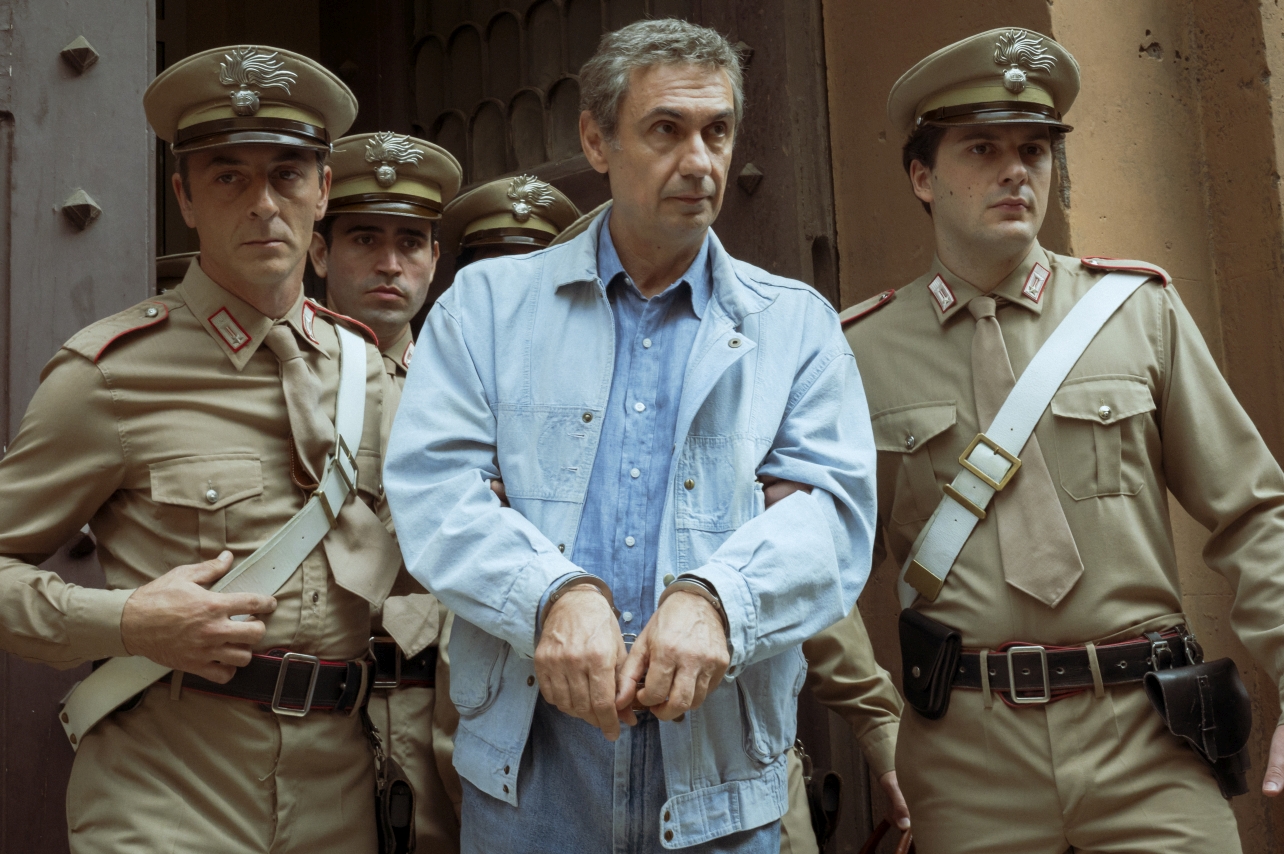
@joelkeller Published Feb. 23, 2026, 10:15 p.m. ET Where to Stream: Portobello Powered by Reelgood More On: mafia Michael Imperioli Says ‘The Sopranos’ Characters Would “Probably” Support Trump Today ‘Casino’ at 30: An Unlikely Thanksgiving Treat From Martin Scorsese and Robert De Niro Stream It Or Skip It: ‘Mob War: Philadelphia Vs. The Mafia’ On Netflix, A Docuseries About The Warring Factions In The Philly Mafia In The 1990s Stream It Or Skip It: ‘Only Murders In The Building’ Season 5 On Hulu, Where Charles, Mabel And Oliver Figure Out If Their Doorman’s Murder Had Mob Ties Portobello tells the bizarre story of Enzo Tortora, the host of Italy’s most popular show, who was arrested in 1983 and accused of being in the Camorra, one of Italy’s most prominent crime families. How did that even happen, given that Tortora had no ties to the Camorra?
Opening Shot: A room full of wigs and hats. In a TV studio in Rome.
The Gist: In 1977, we see the audience come in and the staff scramble to start the sixth episode of the variety show Portobello, created and hosted by Enzo Tortora (Fabrizio Gifuni). It was broadcast in black and white and it was an amiable mix of music acts, inventor presentations, call-in segments, a televised swap meet and other acts. Its mascot was a parakeet named Ramon who never talked.
By that sixth week, it was already proving to be popular, especially among families and the older set. But as time went on, with the show eventually being broadcast in color, the viewing audience grew, reaching 28 million by the early 1980s.
Among those watching was Giovanni Pandico (Lino Musella), who watches from his cell in Poggioreale prison in Naples. He is a part of the Nuovo Camorra Orginazzata, a prominent crime family, where he’s known as “Lil’ Scribe” for his ability to write and type letters for most of the family members. He seems resentful of Tortora’s and the show’s success, mainly because he sent in lace dolls and a letter on behalf of one of his associates, but never got an answer. He then sent a threatening note to Tortora’s home, which raised all sorts of alarm bells with the host.
Also in Poggioreale is Raffaele Cutolo (Gianfranco Gallo), aka “The Professor,” who is the head of the organization. All of the Camorra who are inmates live large there, and The Professor pretty much runs things. But when a massive earthquake hits Southern Italy in 1980, The Professor uses the opportunity to put out hits on some of his enemies on the inside. A retaliatory hit forced the prison’s warden to separate all of the Camorra members and send them to other prisons.
While Tortora raised money for earthquake victims, Pandico continued to foment resentment for the host. He also keeps writing letters to The Professor that never get answered. By 1983, seeing that Cutolo and others are ratting out other Camorra members, Pandico decides to reveal everything to authorities. When they come to him with a phone ledger that has Tortola’s name in it, he confirms that the host is part of the Camorra.
What Shows Will It Remind You Of? Portobello, co-written and directed by Marco Bellocchio and based on a book by Tortora, has a similar pacing to My Brilliant Friend.
Our Take: Bellocchio certainly takes his time to set things up during the 72-minute first episode of Portobello. What he’s trying to do during this first episode is to show just how popular the variety show Portobello was, despite its content being wholesome and a little old-fashioned for the more risqué late ’70s and early ’80s. He is also trying to set up the absurd situation that got Tortola in legal hot water to begin with, which ended up cancelling the show until he was exonerated in 1987, a year before his death.
For a guy who has such an affable TV persona, Bellocchio isn’t shy to show that Tortora was very serious about Portobello. As funny and serious acts come to the production offices to audition for the show, he considers each one carefully, including a woman who cries on demand, but it takes her a few minutes to get going. In an interview with a journalist from the RAI magazine (the network that airs his show), Tortora chafes at the criticism that his program is too wholesome. Even when he gets the threatening note written by Pandico, he takes things far more seriously than his staff does.
What we don’t understand is how Pandico’s resentment of Tortora grew so much that he ratted him out to the authorities, despite the fact that he knew Tortora wasn’t a part of the Camorra. This is a guy who thinks he can telepathically communicate with the people he sees on TV, so he might just be irrational and a bit paranoid; he wouldn’t be the first mafioso with significant mental illness. But over the years, he took a very tiny slight and built it into a mountain of anger so large that it essentially stole four of the final five years of Tortora’s life as he tried to clear his name.
Perhaps as the series goes along, we’ll see not only how Tortora defends himself against these absurd charges, but how Pandico absolutely sticks to his guns about the host, whether he thinks what he said about Tortora is true or not.
Performance Worth Watching: Lino Musella is absolutely seething with anger as the weaselly Pandico.
Sex And Skin: None in the first episode.
Parting Shot: Pandico tells the authorities that Tortora is definitely in the Camorra.
Sleeper Star: Gianfranco Gallo was pretty intimidating as Raffaele Cutolo aka “The Professor.”
Most Pilot-y Line: There is a very long scene where Ramon the parakeet escapes and the staff tracks him to a church. That is one of the scenes that could have been cut to quicken up the pace a bit.
Our Call: STREAM IT. Despite the length and dodgy pacing of the first episode, Portobello is an entertainingly detailed retelling of one of the strangest stories in recent Italian history.
Joel Keller (@joelkeller) writes about food, entertainment, parenting and tech, but he doesn’t kid himself: he’s a TV junkie. His writing has appeared in the New York Times, Slate, Salon, RollingStone.com, VanityFair.com, Fast Company and elsewhere.