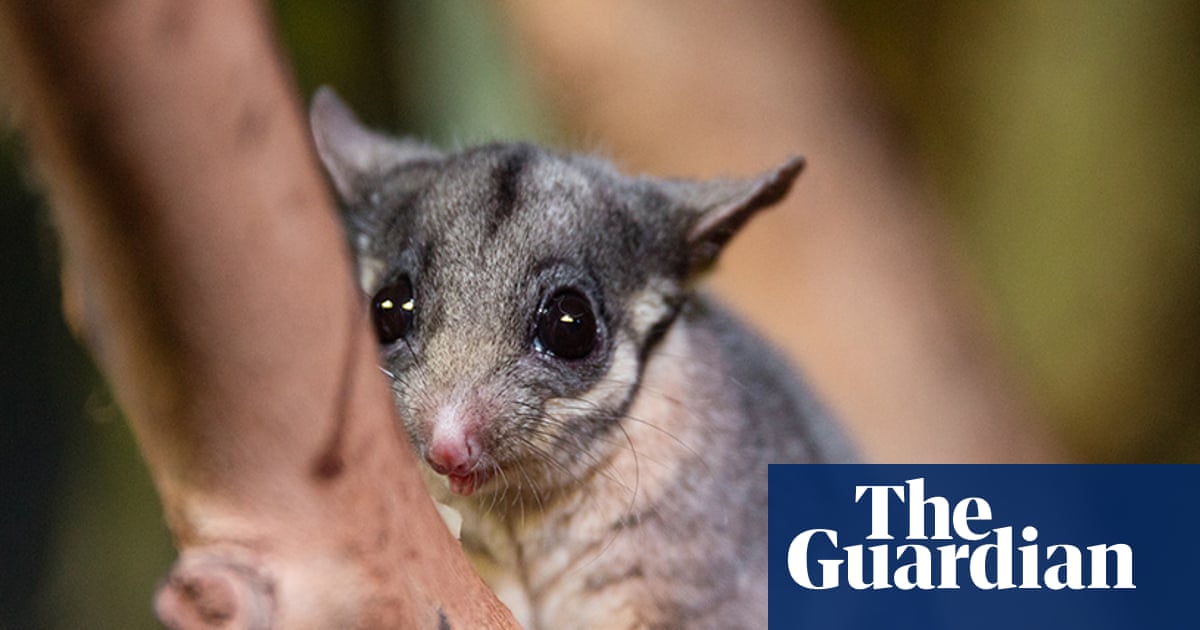
An endangered Leadbeater's possum. Conservation groups say the federal government’s proposed laws will do little protect Australia’s threatened fauna, flora and ecosystems. Photograph: Zoos VictoriaView image in fullscreenAn endangered Leadbeater's possum. Conservation groups say the federal government’s proposed laws will do little protect Australia’s threatened fauna, flora and ecosystems. Photograph: Zoos VictoriaFederal government accused of watering down proposal to protect Australia’s threatened species and ecosystemsWilderness Society says changes undermined intent of national standards intended to reverse decline of plants, animals and ecosystems
Get our breaking news email, free app or daily news podcast
Green groups have accused the Albanese government of watering down a proposal to protect threatened species and ecosystems.
National environmental standards were the key plank of reforms to Australia’s nature laws, passed by the parliament in November.
The government has been consulting on a draft standard for projects of national environmental significance, including endangered wildlife, world heritage areas and the great barrier reef.
Environmentalists have criticised the latest draft which they say removes the requirement for developments to meet specific environmental objectives.
Changes to the draft standard, released Thursday, would mean developers would be considered to have met the objectives if they follow certain processes or “principles” in their environmental assessments – rather than directly demonstrating the required environmental outcomes can be met.
The Wilderness Society said the changes undermined the intent of national standards, which was to reverse the decline of plants, animals and ecosystems.
“The draft standard is a step backwards and will not protect wildlife from extinction or stop the destruction of forests,” biodiversity policy and campaign manager, Melanie Audrey, said.
Audrey said the draft standard for matters of national environmental significance was “riddled with weak language, loopholes and fails to set clear red lines to protect nature”.
WWF-Australia said the latest version of the standard was weaker than the first draft released last year and further removed from the clear, measurable standards proposed by Graeme Samuel.
The former competition watchdog chair’s 2020 review of the Environment Protection and Biodiversity Conservation Act found Australia’s laws had failed nature in part because they were too process-focused. The review recommended national standards that mandated measurable outcomes for the environment to turn the decline around.
Release of the draft standard comes in the same week that Anthony Albanese used a mining conference in Western Australia to announce $45m for state and territory governments to advance plans to allow them to make decisions on federal environmental assessments.
That change would in theory streamline environmental approvals by allowing states to decide whether projects meet the requirements of national nature laws, and they would assess those projects against the new national standards.
The federal environment minister, Murray Watt, said on Thursday the government would release more proposed standards in coming weeks and hoped to have the first set finalised by mid-year. He said the draft for matters of national environmental significance “set clear and enforceable expectations around impacts to our most precious species, habitats and heritage places”.
But the Australian Conservation Foundation said their early concerns that the standard did not “raise the bar for nature” were heightened with the latest iteration.
“As now proposed, the legal test for consistency with the standard will be met if a developer merely confirms they complied with some principles and followed certain processes,” national biodiversity policy officer Brendan Sydes said.
“There’s no requirement for these processes to actually deliver the outcomes and objectives expressed in the standard.”
Policy and innovation lead at the Biodiversity Council, Lis Ashby, said Australia’s populations of threatened species had declined, on average, by 50% over the past two decades.
“This isn’t going to address that at all,” she said.
“Watt said his government’s commitment to addressing extinctions requires law reform that shifts the dial in favour of the environment – this is not doing that.
“It’s giving people a gold star for effort even if the outcomes are terrible.”
Watt told Sky News on Friday the standards would lead to “more clarity about what kind of requirements there will be in order to get an environmental approval, rather than sort of choose-your-own-adventure approach that we have at the moment”.