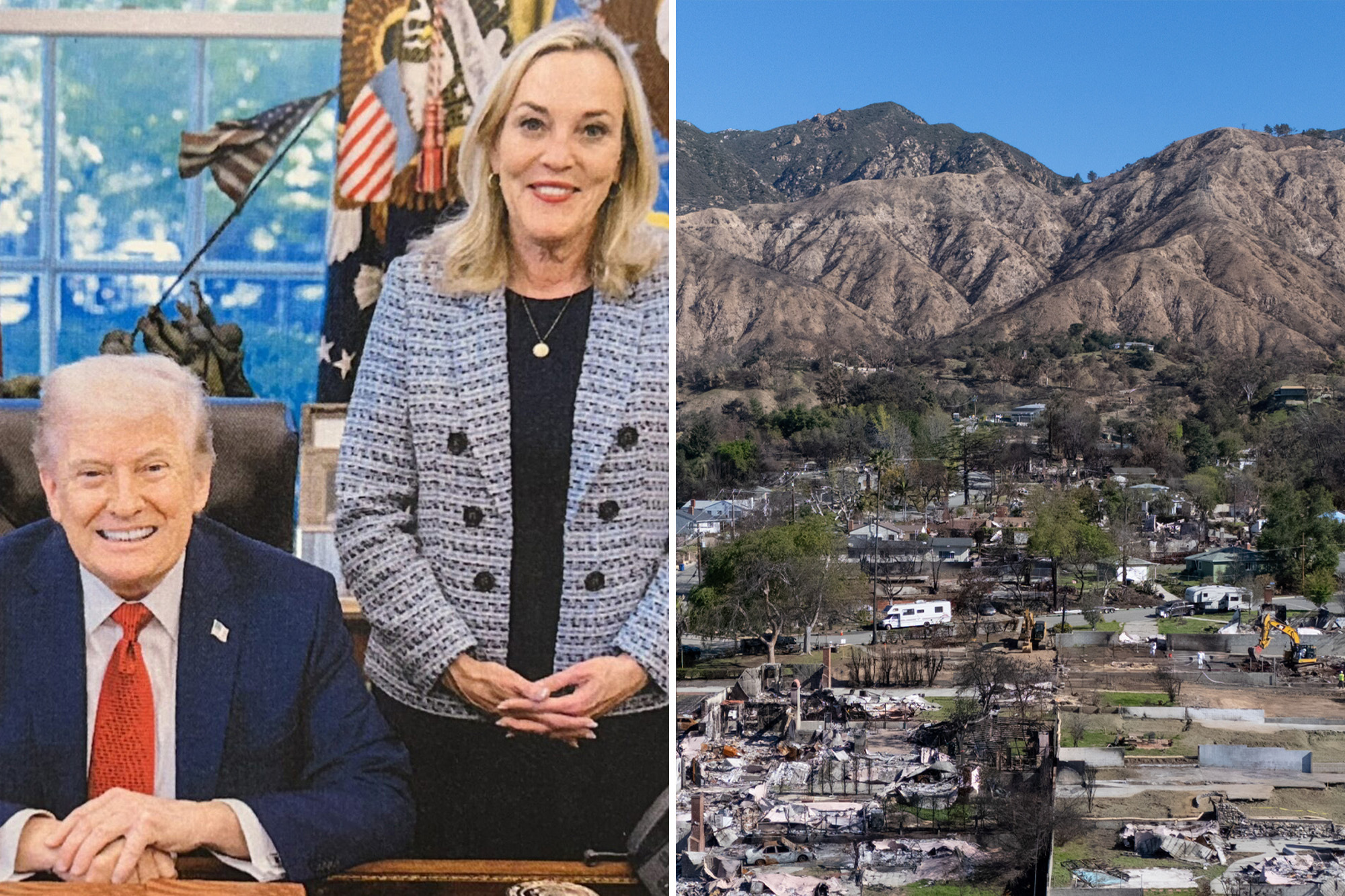
Last week, I walked into the Oval Office and did something too few California leaders are willing to do: I sat down with President Donald J. Trump and advocated directly for the people I represent.
There was no press release drafted in advance, or press conferences afterward to score political points. This was just a direct, candid conversation about devastation still overwhelming our communities — 16 months after hurricane-force winds fueled wildfires that tore through LA County and upended thousands of lives in a matter of hours.
While some in this state have made a sport of Trump-bashing — which the California Post’s editorial board called out just a few days ago — I chose a different path. I chose to go to Washington and do my job.
The families in the unincorporated town of Altadena don’t want political theater. They just want results.
As the LA County supervisor representing Altadena, I see up close a community that is a mirror image of our broader American society. More than 40,000 residents call it home — a community of working families, retirees, small business owners, and multi-generational households.
Some are well-resourced and many are not. I represent a lot of households living paycheck to paycheck. Nearly all shared one thing in common before the wildfires: They owned homes that represented stability, security, and a future for their children. For many, it was heartbreakingly gone in a matter of hours.
Now, more than a year later, our disaster recovery data tell a story that should concern every Californian and make every member of Congress uncomfortable in his or her seat.
According to the Department of Angels’ latest “Community Voices: LA Fire Recovery Report,” which surveyed 2,443 wildfire survivors, more than seven in 10 residents from fire-impacted communities have still not returned to their homes.
Nearly half, 48%, have depleted a significant portion of their savings. Another 43% have taken on debt just to survive.
The two top obstacles to rebuilding are soaring costs and the paralyzing uncertainty around insurance payouts.
These are not cold or abstract statistics. These findings reflect the lived reality and suffering of middle-class families who did everything right — they paid their premiums faithfully for years, followed the rules — and are now navigating delayed claims, lowball estimates, revolving adjusters, and itemization lists so complicated that even attorneys struggle to decipher them.
The insurance system has failed them, and some banks have compounded the pain.
I spoke candidly about all of this in the Oval Office. My advocacy was fueled by real stories of displaced survivors I have met during neighborhood walks or in supermarket aisles, constituents who have shared the gauntlet of roadblocks preventing them from rebuilding. The tales of mortgage companies holding insurance payouts are gut-wrenching and infuriating.
My heart rejoiced when President Trump expressed to me his clear support for helping LA County secure the federal financial resources needed for recovery. He understands that our communities do not need handouts; they need a hand up. He has already directed his administration to pressure the insurance companies to pay what they owe.
When the president of the United States publicly calls out corporations that abandoned survivors in their darkest hour, that is a big deal. That kind of engagement matters, because accountability is a key driver of change.
But here is a hard truth: Presidential support alone is not enough. The resources that wildfire survivors urgently need ultimately depend on congressional action. Appropriations are a responsibility of Congress, and so far, the response has not matched the scale or urgency that this crisis demands.
The president has made his position clear. Now, Congress must do the same.
That is why I will be returning to Washington to meet with members of Congress — Republicans and Democrats, from California and across the country — to make the case that what happened in Altadena is not an isolated event. It is part of a broader pattern of disasters that communities nationwide are confronting with insufficient resources and delayed support.
There is reason to believe that progress and collaboration is possible. During last week’s meeting, LA Mayor Karen Bass and I — leaders from different parties — sat side by side in the Oval Office, united by our shared duty to the people who elected us to public service.
If local leaders can come together with a singular purpose, Congress can as well.
I want to be clear: The families of Altadena are not asking for charity. They built their lives through decades of work, invested in their homes as their American dream that harbored security and were a tangible legacy for their children and generations to come. They deserve action that reflects the urgency of their situation.
Not next year or after the next election cycle. Now.
Kathryn Barger is the supervisor for the 5th district of LA County, representing 2 million people.