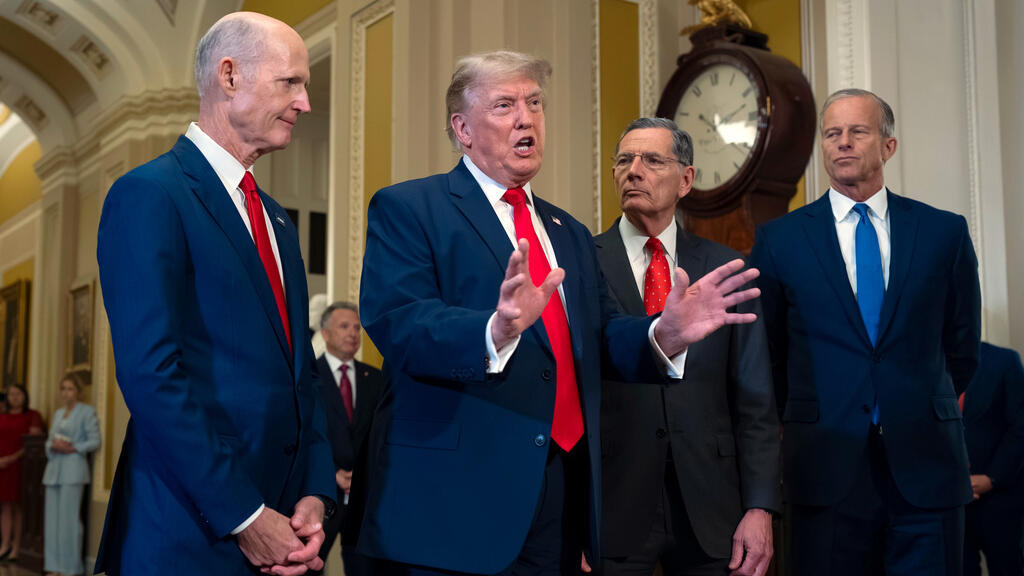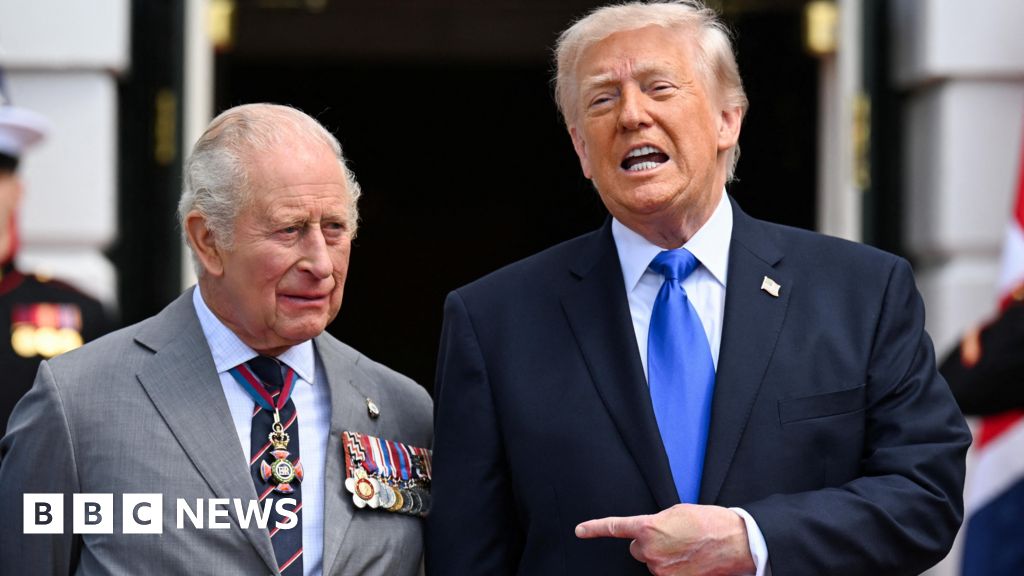
ShareSaveAdd as preferred on GoogleGlenn CampbellScotland political editorReutersDonald Trump had King Charles had persuaded him to change policyThe removal of tariffs on whisky imports to the US matters both economically and politically in Scotland.
President Donald Trump said he was taking the step in honour of King Charles and Queen Camilla's state visit to the US.
But with less than a week to go before the Scottish election, the welcome for the announcement was accompanied by competing claims about who can take credit for the deal.
Economically, whisky is a major export for Scotland and the wider UK.
The Scotch Whisky Association estimates that the US tariffs were costing the industry about £4m a week. The trade body had worked closely with its US counterparts to make the case for a policy shift.
That underlines that this is not a free gift from the US to the UK.
It is a deal that improves trade conditions for Scotch and Irish whiskey being sold to America, as well as US bourbon and used casks coming into the UK market.
It appears to be a zero for zero tariff deal - with import taxes being dropped by both countries.
Politically, the announcement is interesting for at least two reasons.
The first is that it demonstrates that there is still something at least a little bit special about the trans-Atlantic relationship, even if that has come under strain during the Iran war.
The prime minister has faced criticism from President Trump for not joining US military action. That included a jibe about Keir Starmer not being Winston Churchill.
And while Starmer has refused to get directly involved in the conflict, Scotland's First Minister John Swinney has described it as "illegal" and at one point accused Trump of threatening genocide.
Despite all that, it has still been possible for this trade agreement to be reached.
That in turn has created the second feature of political interest - a political squabble over who in the UK can claim credit.
Voters will go to the polls next week in the Scottish Parliament election.
Three Scottish party leaders hurriedly altered their campaign plans on Friday to reflect the significance of the deal.
Both the SNP's John Swinney and Labour's Anas Sarwar managed to get access to whisky distilleries, while the Conservatives' Russell Findlay visited a bar.
These parties all have different takes on who deserves praise for persuading the US president to make special arrangements for Scotch.
For Labour, the Scottish Secretary Douglas Alexander said this was the result of "relentless engagement and negotiation" by the UK government, "opening doors for Scottish exporters across the world".
To be fair, trade deals are made at UK level and the prime minister himself raised whisky tariffs with President Trump when they met at Turnberry last summer.
SNP leader and first minister John Swinney has previously accused the UK government of not giving whisky enough priority in trade talks.
He lobbied the president on his two visits to the UK last year and travelled to Washington to make the case in the Oval Office.
Welcoming the deal, he said that he had made it his "mission to do everything possible to lift US tariffs on our whisky" and that the "hard work has paid off".
To be fair, Swinney did put in a shift and his statement also acknowledges the work of the Scotch Whisky Association and King Charles.
The president messaged Swinney to congratulate him on his contribution to securing an agreement and they spoke on the phone on Friday afternoon.
Trump had previously been clear that it was not any politician but the King who persuaded him to change policy in a way that no-one else could.
For the Conservatives, Russell Findlay - who opposes both the UK and Scottish governments - is content with that explanation and argues that Swinney has a "brass neck" to claim credit.
"The republicans within the SNP would do well to reflect on who we really have to thank," he said.
Reform UK is celebrating the lobbying work by Scottish business and stressing the importance of engaging with the Trump administration.
Both the Liberal Democrats and the Scottish Greens have questioned the president's trustworthiness and the potential for him to go back on his word.
Tougher whisky tariffs were scheduled to be brought in by the US this summer and it's not clear if these have now been scrapped, although the industry is hopeful.
The Scotch Whisky Association has welcomed high level advocacy from wherever it has come and thanked the King for adding some "Royal sparkle" to their campaign.
It is of course possible that everyone involved has played their part and is entitled to raise a glass to Trump's decision on whisky tariffs.